
The quick answer
HbA1c estimates longer-term glucose exposure
What does an HbA1c result tell you?
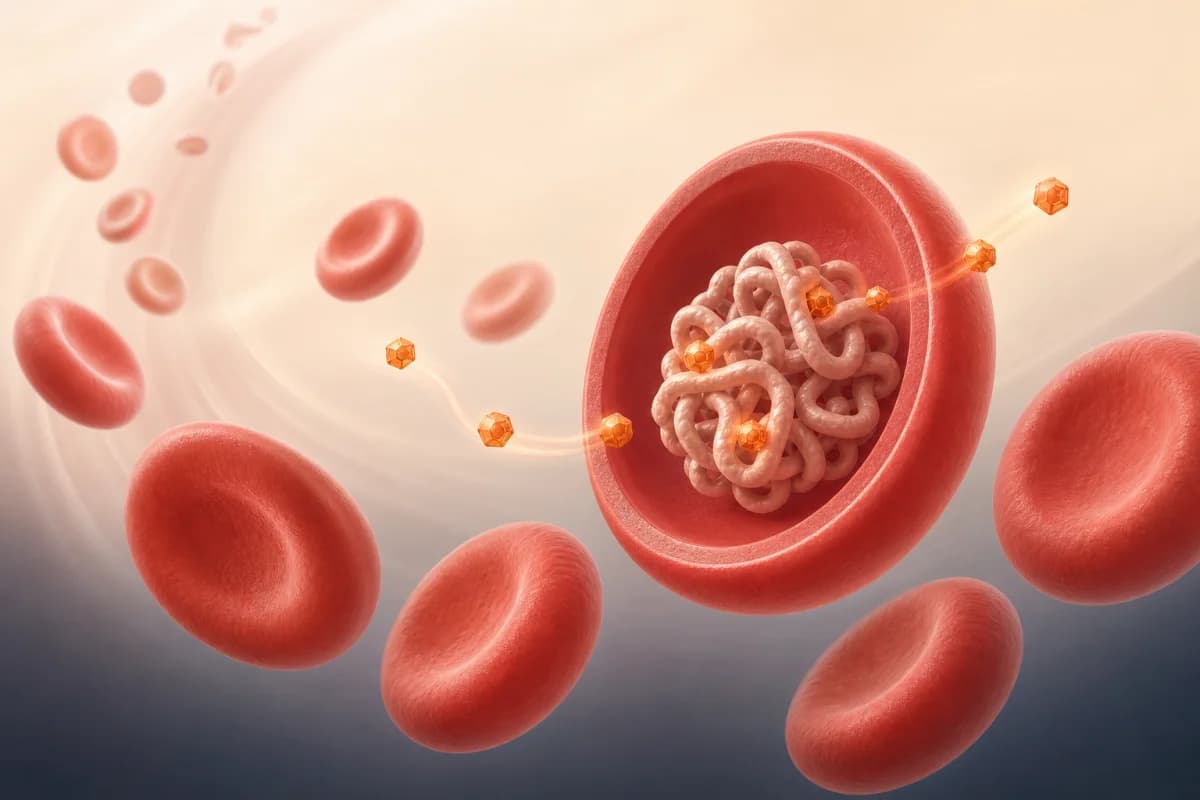
HbA1c measures how much glucose has attached to hemoglobin inside red blood cells. Because those cells circulate for weeks to months, the test estimates recent average glucose exposure rather than one moment.See reference 1,See reference 5
A higher result usually means higher glucose exposure, but the test can mislead when red-cell lifespan or the assay is affected. One number is not the whole diagnosis or treatment plan.
Five useful takeaways
No fasting is needed
HbA1c itself is not meaningfully changed by the meal before the blood draw.
Percent and mmol/mol describe the same result
The two standardized reporting systems can be converted reliably.
A category is not a personal goal
Diagnosis, monitoring and treatment targets answer different questions.
Red-cell lifespan matters
Blood loss, hemolysis, transfusion, anemia and pregnancy can shift interpretation.
Mismatch deserves investigation
Substantial disagreement with repeated glucose data should not be ignored.
What it measures
The result reflects glucose exposure and red-cell time
Glucose attaches naturally to hemoglobin. The more glucose red blood cells encounter, and the longer those cells circulate, the more glycated hemoglobin can accumulate. This is why HbA1c is useful—and why altered red-cell survival can change the answer even when glucose has not changed in the same way.See reference 5,See reference 10
One glucose test
A snapshot at the moment blood is collected.
HbA1c
A weighted estimate of longer-term glucose exposure.
CGM
A time series that can show patterns and variability.
Ranges and units
Start with the purpose: screening, diagnosis or monitoring
The same number can be used in different decisions. The table below shows ADA categories for screening and diagnosis in nonpregnant people who are not already known to have diabetes. It is not a treatment-goal chart.See reference 1
Example HbA1c result
Hemoglobin A1c
ADA prediabetes / increased-risk range
- Standardized equivalent
- 5.8% · 40 mmol/mol
- Estimated average glucose
- 120 mg/dL · 6.7 mmol/L
Estimated average glucose is calculated from HbA1c. It is not a direct meter or CGM reading.
General nonpregnant screening category
This uses 2026 ADA screening and diagnostic categories. A result at or above 6.5% usually requires confirmation when unequivocal hyperglycemia is absent. It is not a diagnosis, pregnancy range or personal treatment goal.
Your number stays in this browser and is not sent to LongevityMate.
| General category | NGSP / DCCT | IFCC | Important boundary |
|---|---|---|---|
| Below prediabetes threshold | <5.7% | <39 mmol/mol | Risk is continuous, not zero. |
| Prediabetes / increased risk | 5.7–6.4% | 39–47 mmol/mol | NICE uses 42–47 mmol/mol for its UK high-risk category. |
| Diabetes criterion | ≥6.5% | ≥48 mmol/mol | Usually confirm without unequivocal hyperglycemia. |
NICE labels 42–47 mmol/mol (6.0–6.4%) as high risk, while the ADA starts its prediabetes category at 39 mmol/mol (5.7%). The difference is one reason a page should never present a single country's wording as universal.See reference 1,See reference 8
A treatment goal is a different decision
Below 7% (53 mmol/mol) is appropriate for many nonpregnant adults with diabetes, but lower or less stringent goals may be safer depending on hypoglycemia, pregnancy, frailty, comorbidities and treatment burden.See reference 2,See reference 4
Practical next steps
My HbA1c is high—what should I do next?
- 1
Confirm the unit and test method
Check whether the report uses percent or mmol/mol and whether it was a certified laboratory test, a clinic point-of-care device or a home kit.
- 2
Separate screening from diagnosis
A category can identify increased risk. Without unequivocal hyperglycemia, a diabetes-range result normally needs confirmation.
- 3
Compare the wider glucose pattern
Review fasting or random glucose, prior HbA1c results and any clinically appropriate meter or CGM data rather than reacting to one number.
- 4
Check whether red-cell biology changes the answer
Recent blood loss or transfusion, anemia, pregnancy, kidney failure, erythropoietin and hemoglobin variants can make HbA1c less reliable.
Seek urgent medical care for confusion, severe weakness, vomiting, deep or difficult breathing, dehydration, or very high or very low direct glucose with symptoms. HbA1c is a longer-term marker and cannot rule out an urgent glucose problem now.
Put the number in context
Have an HbA1c result?
Upload your blood work to review HbA1c beside glucose, CBC, ferritin, kidney markers, medicines and previous results.
Upload my blood resultsLongevityMate provides educational context, not diagnosis or personalized medical advice.
When results disagree
A mismatch is information—not a reason to choose a favorite number
HbA1c, fasting glucose and CGM do not measure the same thing. Current ADA guidance says consistent and substantial discordance should trigger evaluation for interference or another problem with either test.See reference 1,See reference 7
HbA1c higher than expected
- Post-meal rises not captured by fasting glucose
- Significant iron deficiency anemia
- Longer average red-cell survival
- Assay interference from a hemoglobin variant
- Meter or CGM sampling that missed part of the pattern
HbA1c lower than expected
- Recent blood loss, hemolysis or transfusion
- Erythropoietin treatment or dialysis-related anemia
- Pregnancy-related red-cell turnover
- G6PD deficiency or another shortened-cell condition
- Method-specific hemoglobin-variant interference
Ask which assay the laboratory used, whether the CBC and ferritin suggest a red-cell issue, and which direct glucose or alternative glycated-protein test is appropriate. Do not apply an invented correction factor.See reference 5,See reference 10,See reference 13
Testing and repeat timing
A simple blood test with important timing and method details
Sample
EDTA whole blood from a standard venous draw; some approved point-of-care devices use capillary blood.
Fasting
Not required for HbA1c alone. Other tests collected with it may require fasting.
Method
Diagnosis should use an NGSP-certified method traceable to the DCCT reference.
Routine timing
Often every 3 months after change or when goals are unmet; twice yearly can suit stable diabetes.
For general screening, the ADA says testing can begin by age 35 and be repeated at least every 3 years when results remain normal, with earlier or more frequent testing based on risk. People with prediabetes are generally tested yearly.See reference 1
A sudden repeat within days usually adds little unless the first result may be wrong or another diagnostic test is being used for confirmation. After a meaningful treatment or lifestyle change, enough time is needed for the newer red-cell exposure to affect the result.
High and low results
Interpret the direction without diagnosing yourself
A higher HbA1c may reflect
- Prediabetes, type 1 diabetes or type 2 diabetes
- Illness or medicines that raise glucose
- Changes in eating pattern, activity, sleep or weight
- Insufficient or interrupted diabetes treatment
- A false-high influence such as significant iron deficiency
A lower HbA1c may reflect
- Lower average glucose exposure
- Effective diabetes treatment or lifestyle change
- Repeated hypoglycemia in some treated people
- Recent blood loss, hemolysis or transfusion
- Pregnancy or another shortened red-cell lifespan
HbA1c itself usually causes no symptoms. Thirst, frequent urination, unexplained weight change, blurred vision, fatigue or symptoms of low glucose relate to the underlying glucose pattern or another condition—not to glycated hemoglobin as a substance.
Ways HbA1c may improve
Treat the glucose pattern and the person—not the percentage alone
The right response depends on whether the result represents increased risk, established diabetes, pregnancy, medication effects or an unreliable test. A lower number is beneficial only when it is achieved safely and reflects a real improvement in glucose exposure.
| Approach | What the evidence supports | Important boundary |
|---|---|---|
| Structured prevention program | For eligible high-risk adults, a DPP-style program combining nutrition, activity and behavior change lowers progression to type 2 diabetes. | The landmark 58% risk reduction was a group average over about 3 years, not a promised personal HbA1c change. |
| Eating pattern | Individualized patterns emphasizing nutrient quality and sustainable energy balance can improve glucose management. | Mediterranean, plant-forward and lower-carbohydrate patterns can all be reasonable; no one macronutrient split is universal. |
| Physical activity | Regular aerobic and resistance activity improves glucose regulation, fitness and cardiovascular risk. | Treatment that can cause hypoglycemia may require a safety plan around exercise. |
| Weight management | A 5–7% reduction is an evidence-based prevention-program goal for adults with overweight or obesity at high risk. | Weight loss is not appropriate or necessary for everyone with a high result. |
| Clinician-managed medicines | Medication choice can lower glucose and may also address heart, kidney or weight priorities. | Selection is person-specific; never start, stop or change treatment from an HbA1c chart alone. |
In the original Diabetes Prevention Program, intensive lifestyle intervention reduced the incidence of type 2 diabetes by 58% over about 3 years compared with placebo in high-risk participants. The result supports structured programs, not a guarantee from a single food, diet label or supplement.See reference 3,See reference 11
Pregnancy and life stage
General adult charts do not fit every stage of life
Pregnancy increases red-cell turnover, so HbA1c tends to be slightly lower. It can also miss post-meal glucose that matters for fetal growth. Current ADA guidance treats HbA1c as secondary to pregnancy-specific glucose monitoring.See reference 4
Pregnancy
Use pregnancy-specific screening, monitoring and goals rather than the general result explorer.
Children and adolescents
Diagnosis uses accepted criteria, but treatment goals and type 1 diabetes context require specialist individualization.
Older or frail adults
Avoiding hypoglycemia and treatment burden can justify a less stringent goal than the standard adult example.
Common mistakes
Six interpretations that can mislead you
Calling HbA1c an exact 90-day average
It is an indirect weighted measure. Recent weeks contribute more, and the result depends on red-cell lifespan as well as glucose.
Treating 5.7% as a biological cliff
Risk changes continuously. Categories help decisions, but measurement variation and the wider pattern still matter.
Using one chart as a personal treatment goal
Screening categories for people without diabetes are different from individualized goals for someone already receiving diabetes care.
Assuming a reassuring HbA1c rules out glucose spikes
Different glucose patterns can produce a similar average. HbA1c does not show variability, timing or hypoglycemia.
Dismissing every mismatch as anemia
Iron deficiency is one possible influence. Post-meal glucose, timing, assay method and other red-cell conditions can also explain discordance.
Following a universal food or supplement cure
There is no single diet for every person and no supplement replaces structured prevention or individualized diabetes treatment.
Evidence and limitations
What HbA1c can—and cannot—tell you
| Claim | Evidence | Boundary |
|---|---|---|
| HbA1c estimates longer-term glucose exposure. | Strong | It is indirect and does not show timing or variability. |
| 6.5% is a diabetes diagnostic threshold. | Guideline established | Confirmation is normally required without unequivocal hyperglycemia. |
| Below 7% suits many adults with diabetes. | Guideline recommended | It is not appropriate for every person or life stage. |
| Iron deficiency can raise HbA1c. | Supported association | The size varies and there is no safe correction formula. |
| CGM can diagnose diabetes. | Not established | Current ADA guidance says evidence is insufficient for screening or diagnosis. |
| Lower is always better. | Not supported | Hypoglycemia, frailty and treatment burden can outweigh benefit. |
The best interpretation connects three layers
First, verify the assay and red-cell context. Second, compare direct glucose and trends. Third, decide whether the task is screening, confirming a diagnosis or monitoring an individualized treatment goal.