
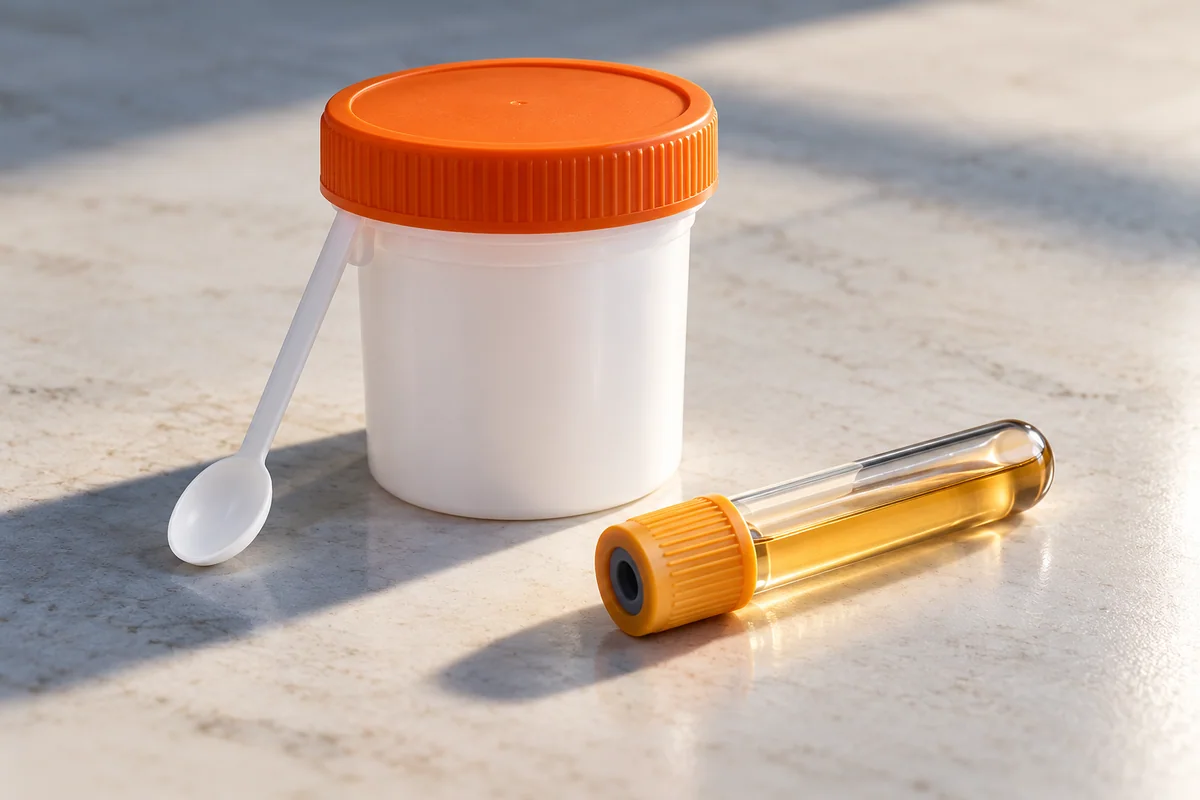
The specimen changes the question
AAT is a protein that resists breakdown by many digestive enzymes, making it useful as a marker of blood proteins reaching the intestinal tract. The stool test investigates gastrointestinal protein loss; it does not measure how much dietary protein you ate.See reference 2
Testing for inherited alpha-1 antitrypsin deficiency uses blood levels and, where needed, protein-type or genetic testing. A stool AAT result is not a substitute for that separate investigation.See reference 4
Read the report type before its number
- Report
- Random stool AAT
- What is measured
- The concentration of AAT in one fecal specimen
- Key limit
- Concentration alone varies with the specimen and the amount of AAT in blood.See reference 2
- Report
- AAT clearance
- What is measured
- A timed fecal collection interpreted with a contemporary serum AAT result
- Key limit
- The blood sample and complete timed collection are part of the measurement.See reference 1
- Report
- Serum AAT for deficiency testing
- What is measured
- AAT in a blood sample
- Key limit
- It answers a different question from gastrointestinal protein loss.See reference 4
Concentration and clearance do not share a normal range
A concentration may be reported in mg/dL or, with a different method, mg/g of dry stool. Clearance is expressed as a volume per day, such as mL/24 h. Clearance represents an estimated volume of plasma cleared of the marker, not the volume of stool collected. These quantities cannot be compared by reading the numbers alone or by treating mg/g and mg/dL as interchangeable.See reference 1,See reference 3
Collection protocols also differ. Mayo describes a 24-hour clearance study; the RCPA entry describes a longer timed collection. Use the instructions and reference interval supplied by the laboratory performing your test. A reference interval from another method is not your personal diagnostic cutoff.See reference 1,See reference 3,See reference 5
What an elevated, borderline or low result can mean
Elevated clearance can support excessive gastrointestinal protein loss. Borderline elevation may remain inconclusive. The result does not distinguish among the different conditions that can cause protein loss, so further assessment depends on the whole clinical picture.See reference 1
A low or unflagged stool concentration is not an all-purpose exclusion test. Low serum AAT can reduce the amount appearing in stool. AAT can also be destroyed by stomach acid, limiting its usefulness for protein loss originating in the stomach.See reference 2
Collection details that matter
Confirm the exact requested test, whether a paired blood sample is needed, the collection interval, container and storage instructions. Random specimens and timed collections should not be substituted for each other. Follow the performing laboratory rather than a generic home collection recipe.See reference 1,See reference 2
Blood loss into the bowel can contribute to an elevated stool AAT result; urine contamination can also interfere in some circumstances. Tell the collection team about a collection problem instead of trying to correct the specimen or interpret the effect yourself.See reference 1,See reference 3
Useful questions for the follow-up conversation
Ask which measurement was reported, whether the collection was complete, which interval and units apply, and what other findings support the suspected source of protein loss. Michigan Medicine explicitly advises using the original patient report because reference ranges can change.See reference 5
Common questions
Does a high stool AAT result diagnose an inherited AAT deficiency?
No. Stool AAT is used for a gastrointestinal protein-loss investigation. Inherited deficiency is assessed through its separate blood and confirmatory testing pathway.See reference 2,See reference 4
Can one random stool sample replace clearance?
It can provide a surrogate measurement when a timed collection or paired serum sample is unavailable, but Mayo prefers clearance for the protein-loss investigation. Your clinician and laboratory choose the appropriate test.See reference 1,See reference 2
Get the weekly longevity brief
The week's best longevity research in plain English. Free, every Tuesday.
See your blood results in context
If you already have blood test results, the paid LongevityMate app can help you view related markers together. It provides educational context, not a diagnosis or a replacement for your clinician.
Explore blood test analysisReferences
- 1. Alpha-1-Antitrypsin Clearance, Feces and Serum (A1AFS)
Mayo Clinic LaboratoriesOfficial guidance
- 2. Alpha-1-Antitrypsin, Random, Feces (A1AF)
Mayo Clinic LaboratoriesOfficial guidance
- 3. Alpha-1-antitrypsin faeces
Royal College of Pathologists of AustralasiaOfficial guidance
- 4. Alpha-1 Antitrypsin Testing
MedlinePlus, U.S. National Library of MedicineOfficial guidance
- 5. Alpha-1 Antitrypsin Clearance
Michigan Medicine MLabsOfficial guidance
Editorial transparency
- Published by
- LongevityMate Editorial
- Review
- Editorial evidence review (AI-assisted)
- Published
- Updated
Medical disclaimer
General education only. AI-assisted editorial evidence review is not a qualified clinical assessment. This guide does not diagnose a condition, interpret a personal result, choose treatment or recommend a supplement dose. Discuss testing, symptoms, medicines and supplements with a qualified health professional.