
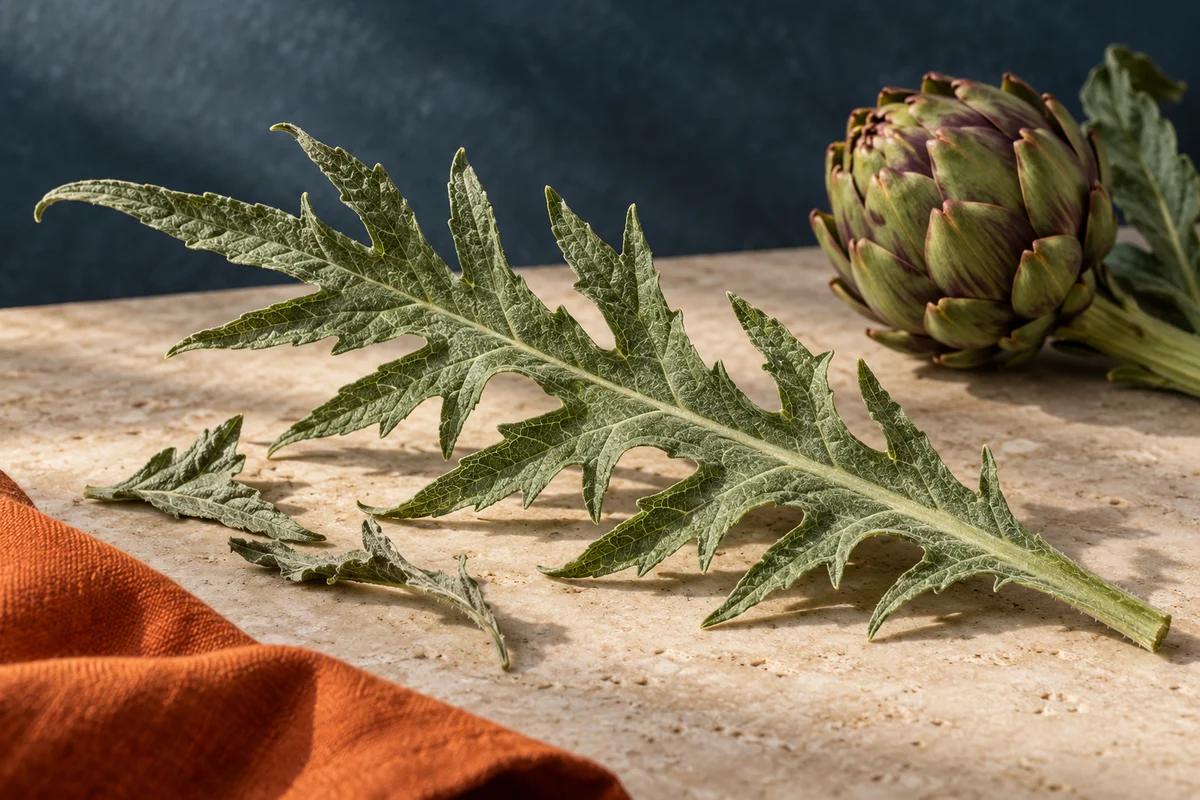
The plant part matters
The EMA monograph concerns Cynara cardunculus, also called Cynara scolymus, leaf preparations. The edible flower bud and heart are different plant parts. Tea, powdered leaves and extracts also differ in preparation; an extract’s milligram amount cannot be treated as a universal equivalent of another form.See reference 1
Three evidence types with different limits
- Evidence
- EMA traditional-use monograph
- Finding
- Digestive symptoms such as fullness, bloating and gas.
- Limit
- Long-standing use is not a confirmed cholesterol or heart-outcome benefit.See reference 1
- Evidence
- 2008 leaf-extract trial
- Finding
- A modest total-cholesterol difference after 12 weeks.
- Limit
- No significant between-group LDL, HDL or triglyceride difference.See reference 2
- Evidence
- 2025 multi-ingredient trial
- Finding
- No evidence of LDL benefit versus placebo over four months.
- Limit
- The blend cannot isolate artichoke’s effect.See reference 3
A positive title can hide a narrower result
The 2008 randomized placebo-controlled trial included 75 adults with mild to moderate high cholesterol. It tested 1,280 mg of a standardized leaf extract daily for 12 weeks. Total cholesterol fell 4.2% in the extract group and rose 1.9% in the placebo group.See reference 2
The between-group total-cholesterol difference was statistically significant, but the LDL, HDL and triglyceride differences were not. Describing this as proof of an LDL-lowering treatment would misstate the study. These study amounts are not a personal dose recommendation.See reference 2
A newer blend result cannot isolate one ingredient
A 2025 randomized trial in 42 adults tested a combination of plant sterols, bergamot, artichoke leaf extract and hydroxytyrosol for four months. It found no evidence of improvement in LDL cholesterol, the primary outcome, compared with placebo.See reference 3
That is a result for the tested blend, not proof that every individual ingredient is ineffective. Equally, a positive result from another blend would not establish artichoke’s separate contribution. These marker trials do not establish fewer heart attacks or longer life.See reference 2,See reference 3
What the review status tells you
The older Cochrane artichoke-for-cholesterol review is withdrawn. Its historical conclusion should not be presented as a current Cochrane endorsement. Withdrawal status by itself does not prove that artichoke is harmful or ineffective.See reference 4
The EMA’s January 2025 assessment addendum reviewed newer literature and did not find grounds to revise its existing monograph. That preserves a traditional digestive-use position; it does not turn newer marker studies into a new approved heart-protection claim.See reference 5
Liver and bile-duct problems are a safety boundary
The EMA monograph lists bile-duct obstruction, cholangitis, liver disease, gallstones and other biliary disorders requiring medical advice as contraindications. It also excludes hypersensitivity to artichoke or Asteraceae-family plants. Do not use a leaf product as a self-treatment for those problems.See reference 1
Reported effects include diarrhea with abdominal cramps, nausea, heartburn and allergic reactions; their frequency is unknown. Pregnancy and breastfeeding safety are not established. The monograph reports no medicine interactions, which is not a guarantee for every combination or multi-ingredient product.See reference 1
Questions that make a product claim clearer
- Which plant part and preparation does the product contain?
- Was the studied outcome a symptom, lipid marker or clinical event?
- Was artichoke tested alone or inside a blend?
- Does the claim retain the trial’s null findings and safety exclusions?
Common questions
Is eating an artichoke equivalent to taking leaf extract?
No. The plant part and preparation differ. A leaf-extract study cannot supply an equivalent food amount.See reference 1
Does the 2008 trial prove LDL reduction?
No. It reported a total-cholesterol difference, with no significant between-group LDL difference.See reference 2
Can leaf extract replace cholesterol treatment?
The studies summarized here do not establish it as a replacement. Discuss your treatment and the complete product label with a clinician; do not change prescribed care from a marker-study claim.See reference 2,See reference 3
Get the weekly longevity brief
The week's best longevity research in plain English. Free, every Tuesday.
References
- 1. European Union herbal monograph on Cynara cardunculus L. (syn. Cynara scolymus L.), folium
European Medicines AgencyOfficial guidance
- 2. Artichoke leaf extract reduces plasma cholesterol in otherwise healthy hypercholesterolemic adults: a randomized, double blind placebo controlled trial
PhytomedicineRandomized trial
- 3. The effects of a novel nutraceutical combination on low-density lipoprotein cholesterol and other markers of cardiometabolic health in adults with hypercholesterolaemia
AtherosclerosisRandomized trial
- 4. Artichoke leaf extract for treating high cholesterol levels: withdrawn review
CochraneEvidence review
- 5. Addendum to assessment report on Cynara cardunculus L. (syn. C. scolymus L.), folium
European Medicines AgencyOfficial guidance
Editorial transparency
- Published by
- LongevityMate Editorial
- Published
- Updated
Medical disclaimer
General education only. This guide does not diagnose a condition, interpret your personal result, choose a treatment or recommend a supplement dose. Discuss testing, symptoms, medicines and supplements with a qualified health professional.