
The short answer
What the blood ratio can and cannot tell you
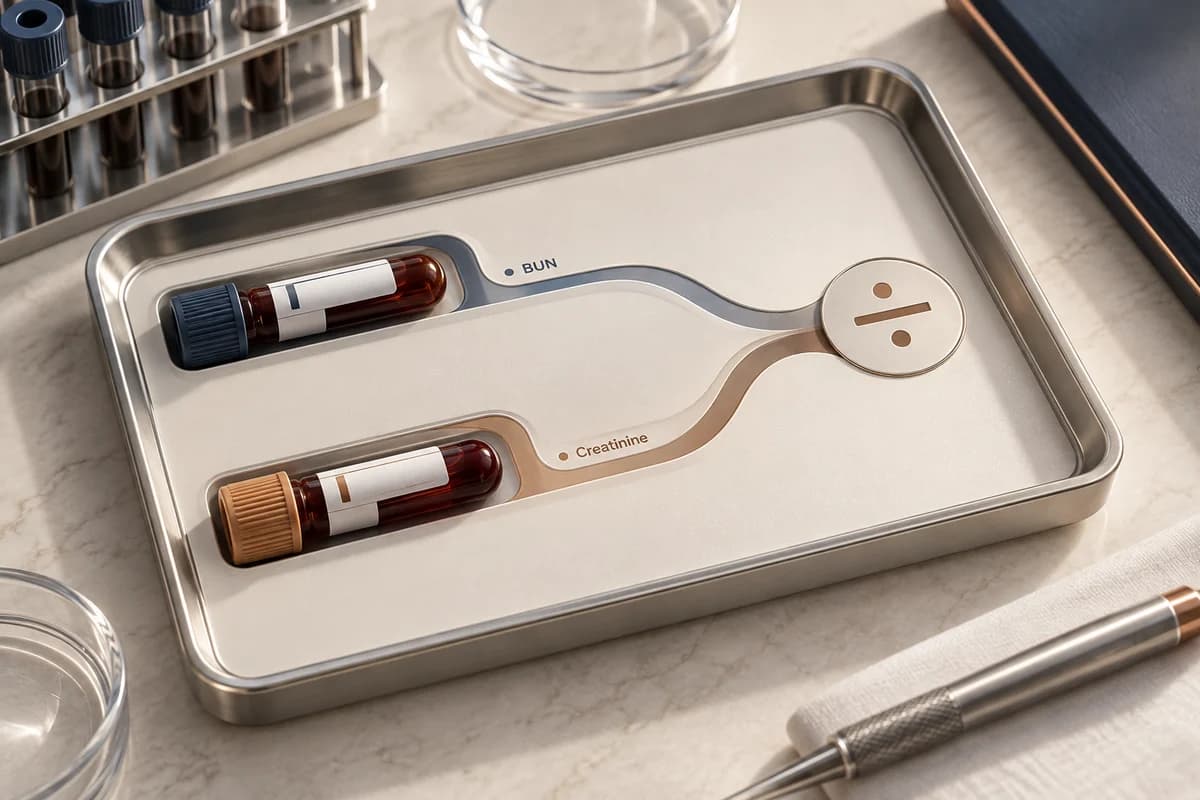
A BUN/creatinine ratio divides blood urea nitrogen (BUN) by blood creatinine when the two results use matching conventional units. It is a clue about the relationship between two tests, not a measurement of kidney filtration or a diagnosis. Read BUN, creatinine and eGFR together.See reference 1,See reference 2,See reference 3
The two numbers come from different processes
BUN measures nitrogen from urea, a waste product made when the body breaks down protein. Blood creatinine reflects a waste product from muscle activity. The kidneys remove both, but diet, hydration, muscle mass, medicines and other factors affect their blood concentrations in different ways.See reference 1,See reference 2
The ratio is often calculated from BUN and creatinine values reported in mg/dL. A report labelled “urea” rather than “BUN,” or one using different units, is not interchangeable with that arithmetic. Use the ratio and interval supplied by the laboratory instead of recomputing across units.See reference 1,See reference 2
Read the whole kidney panel
- On the report or label
- BUN
- What it means
- Check the value, unit and interval. Hydration, protein intake and some medicines can affect it; a high value is not a diagnosis by itself.See reference 1
- On the report or label
- Creatinine
- What it means
- Check the value and trend. Muscle mass and other factors affect creatinine as well as kidney filtration.See reference 2,See reference 3
- On the report or label
- eGFR
- What it means
- This is a separate estimate of filtration based on creatinine and other inputs. It adds more useful kidney context than a ratio alone.See reference 2,See reference 3
- On the report or label
- BUN/creatinine ratio
- What it means
- A relationship between the two blood values. Similar ratios can arise from different changes in the component results.See reference 1,See reference 2,See reference 3
If the ratio is higher than the laboratory interval
A higher ratio can occur when BUN rises more than creatinine, including when dehydration, a high-protein diet or some medicines raise BUN. It can also change because creatinine is relatively low. A clinician considers the actual component values and why the test was ordered before deciding what, if anything, it means.See reference 1,See reference 2,See reference 3
Do not use the ratio to decide that you need extra fluids, a medicine change or a kidney diagnosis. The right next step depends on symptoms, examination, medicines and the rest of the report.See reference 1,See reference 2,See reference 3
If the ratio is lower than the laboratory interval
A lower ratio can result from relatively lower BUN or higher creatinine. Diet, liver function, muscle-related factors and kidney-related changes are among possible contexts. It does not prove any one of them.See reference 1,See reference 2
A creatinine result that has changed deserves its own assessment even if the ratio looks less striking. eGFR, previous results and, when appropriate, urine testing help answer different questions.See reference 2,See reference 3
Blood and urine ratios are different tests
The BUN/creatinine ratio uses two blood measurements. Urine albumin/creatinine and urine protein/creatinine ratios instead compare a urine protein with urine creatinine to assess a different part of kidney health. Do not transfer a urine threshold or result to the blood ratio.See reference 3
If the result is new, markedly changed or accompanies concerning symptoms, contact your care team for advice about timing and follow-up. A web page cannot decide urgency from the ratio alone.See reference 1,See reference 2,See reference 3
What to take into the next conversation
- The exact BUN and creatinine values and units, plus the laboratory’s own ratio.See reference 1,See reference 2
- Your eGFR, earlier trends and any relevant urine results.See reference 2,See reference 3
- Recent illness, fluid changes, diet, medicines and symptoms that may affect interpretation.See reference 1,See reference 2
Common questions
Is a high BUN/creatinine ratio kidney failure?
No. The ratio has several possible explanations. Kidney health needs the component tests, eGFR and clinical context.See reference 1,See reference 2,See reference 3
Is this the same as urine albumin/creatinine?
No. This ratio uses two blood results; the urine test answers a different question.See reference 3
Can I divide a urea result by creatinine myself?
Do not assume that a result labelled urea is numerically the same as BUN or that units match. Use the laboratory-reported ratio and ask if the report is unclear.See reference 1,See reference 2
References
- 1. BUN (Blood Urea Nitrogen)
MedlinePlusOfficial guidance
- 2. Creatinine Test
MedlinePlusOfficial guidance
- 3. Understanding your lab values and other CKD health numbers
National Kidney FoundationOfficial guidance
Editorial transparency
- Published by
- LongevityMate Editorial
- Published
- Updated
Medical disclaimer
General education only. This guide does not diagnose a condition, choose treatment or recommend a supplement dose. Discuss your own result, symptoms, medicines or product use with a qualified health professional.