
Why red-cell breakdown can lower haptoglobin
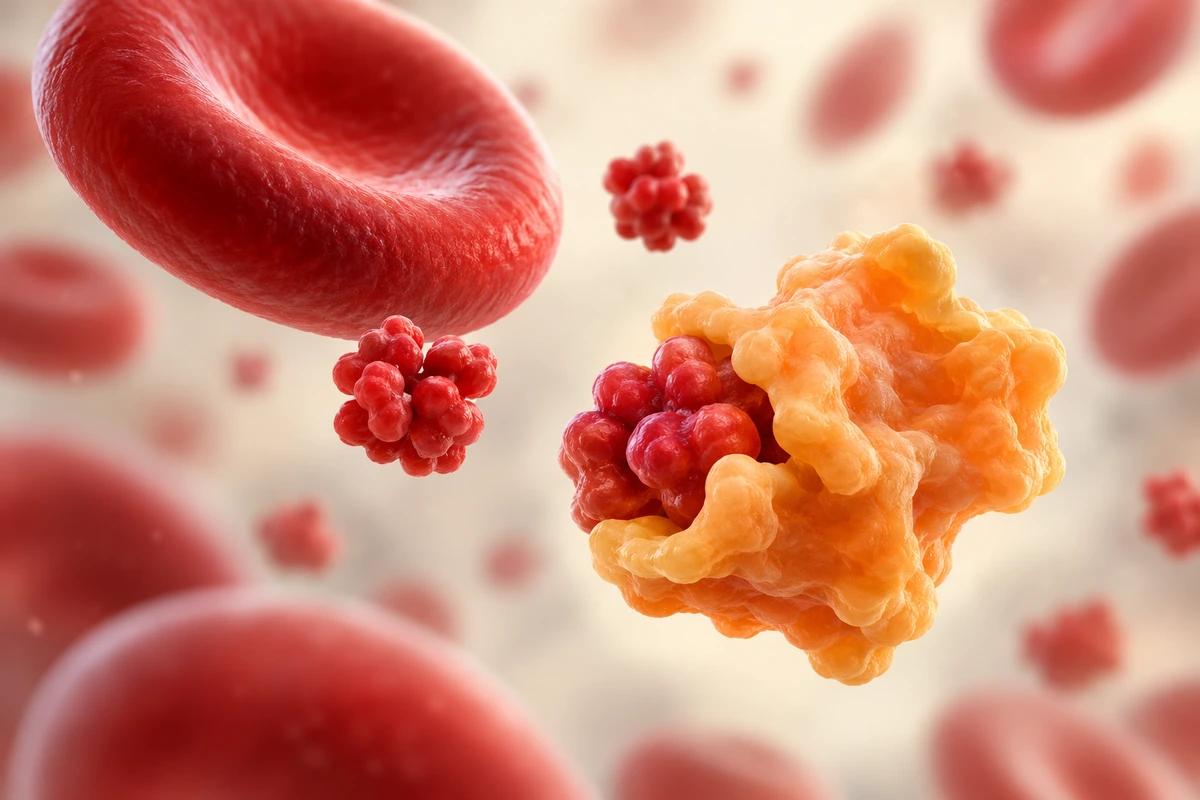
Hemoglobin normally carries oxygen inside red blood cells. Haptoglobin binds hemoglobin released into the surrounding blood, and that complex is removed. The illustration shows this binding concept; its coloured shapes are not an exact molecular model or a measurement.See reference 1
A full blood count and medical history provide the starting context when red-cell destruction is suspected. Haptoglobin answers a different question from the hemoglobin concentration in a blood count.See reference 2
Read the pattern across tests
- Measurement
- Haptoglobin
- Useful context
- Often falls when circulating free hemoglobin is being cleared
- Important limit
- Liver production and inflammation can change the concentrationSee reference 3
- Measurement
- LDH and unconjugated bilirubin
- Useful context
- May rise with red-cell breakdown
- Important limit
- Other conditions can also affect these measurementsSee reference 2
- Measurement
- Reticulocyte count
- Useful context
- Often rises as the marrow replaces red cells
- Important limit
- Iron deficiency or reduced marrow function can blunt the responseSee reference 2
- Measurement
- Blood smear and further tests
- Useful context
- Help investigate the cause after the overall pattern is assessed
- Important limit
- A smear alone does not establish hemolysis or its causeSee reference 2
A normal value can be misleading during inflammation
Haptoglobin is an acute-phase protein: inflammation can increase its production. Labcorp warns that a normal concentration during inflammation or steroid therapy does not exclude hemolysis. A result inside the printed interval therefore cannot serve as a stand-alone reassurance when the other findings suggest red-cell breakdown.See reference 3
For example, normal haptoglobin alongside other concerning findings still needs clinical interpretation. Increased production and increased removal may oppose one another; this guide cannot quantify those effects.See reference 2,See reference 3
Low does not automatically mean hemolytic anemia
Reduced liver production or inherited low or absent haptoglobin can also explain a low result. The reason for testing and other findings matter; this is not a daily red-cell destruction count.See reference 1,See reference 3
Infants can have lower concentrations than adults. Use the age-appropriate laboratory report and clinical explanation, rather than an adult interval.See reference 1
Keep the value, units and laboratory interval together
The reference interval printed on the report belongs to that laboratory and method. A value outside it is a prompt for interpretation, rather than a diagnosis; a value inside it does not rule out every problem. Keep the date, units, interval and related blood results when comparing reports.See reference 4
Tell the testing team about medicines, illness and recent treatment. Follow laboratory instructions; do not stop a medicine to change the number.See reference 3
Keep the useful details
- Keep the original haptoglobin report beside the full blood count and other requested hemolysis tests.See reference 2,See reference 4
- Mention inflammatory illness and liver disease when discussing the result.See reference 1,See reference 3
- Ask what the combined pattern suggests and what remains uncertain, rather than trying to raise or lower haptoglobin yourself.See reference 2
Common questions
Can normal haptoglobin rule out hemolysis?
No. Inflammation and some treatment contexts can mask a decrease. A clinician interprets it with the other blood findings.See reference 3
Does high haptoglobin mean stronger blood or better health?
No. An inflammatory response can raise it. A higher number is not a general health target.See reference 3
Does a low result identify the cause?
No. Hemolysis has several causes, and low production can also lower the result. Further investigation depends on the full clinical picture.See reference 1,See reference 2
Get the weekly longevity brief
The week's best longevity research in plain English. Free, every Tuesday.
See your blood results in context
If you already have blood test results, the paid LongevityMate app can help you view related markers together. It provides educational context, not a diagnosis or a replacement for your clinician.
Explore blood test analysisReferences
- 1. Haptoglobin (HP) test
MedlinePlusOfficial guidance
- 2. Hemolytic anemias
ARUP ConsultOfficial guidance
- 3. Haptoglobin: clinical use and limitations
LabcorpOfficial guidance
- 4. How to understand your lab results
MedlinePlusOfficial guidance
Editorial transparency
- Published by
- LongevityMate Editorial
- Published
- Updated
Medical disclaimer
General education only. This guide does not diagnose a condition, interpret your personal result, choose a treatment or recommend a supplement dose. Discuss testing, symptoms, medicines and supplements with a qualified health professional.