
Insufficient fluid can cause choking or blockage
Health Canada warns that glucomannan taken without enough liquid can swell and block the throat, esophagus or intestine. Its monograph applies this warning to all products, and says not to use it if you have difficulty swallowing. Powder needs thorough mixing and immediate consumption according to the product instructions.See reference 3
The monograph advises immediate medical attention for chest pain, vomiting, or difficulty swallowing or breathing after taking it. This is a product safety warning, not a personal diagnostic checklist. Do not treat capsule or powder form as removing the need for the fluid and swallowing precautions.See reference 3
A direct trial without a weight-loss advantage
- Feature
- Participants
- What the study reported
- 53 adults with overweight or moderate obesity randomized; 47 completedSee reference 2
- Feature
- Comparison
- What the study reported
- 3.99 g/day glucomannan or placebo for eight weeks; usual diet and activity maintainedSee reference 2
- Feature
- Weight result
- What the study reported
- No significant between-group weight-loss differenceSee reference 2
- Feature
- Other outcomes
- What the study reported
- No significant advantage in body composition, hunger/fullness, lipids or glucoseSee reference 2
A negative short trial also has limits
The 2013 trial’s small final sample, eight-week duration and reported adherence limit certainty. It was funded by the Roberts Trust Fund. People with swallowing or important gastrointestinal problems and pregnant or breastfeeding people were excluded. Its tolerability findings cannot establish safety in those groups or during long-term use.See reference 2
The study amount is included to explain the comparison. It is not a recommendation to copy the trial schedule, water amount or daily intake. A different product or eating pattern could also differ from what the study tested.
Weight and cholesterol are separate outcomes
ODS summarizes later weight-loss reviews that did not find a significant benefit over placebo, alongside an older review reporting a small effect. It also describes possible lipid and glucose effects. These findings do not make weight loss consistent or establish prevention of heart attacks, diabetes or longer life.See reference 1
Minor effects can include bloating, gas, altered stools and abdominal discomfort. Older tablet-associated obstruction reports support caution, but the current Health Canada warning should still be read for other forms. Lack of an older reported case in a particular form is not proof that the form is risk-free.See reference 1
An authorized claim has conditions
The EU regulation allows a glucomannan weight-loss claim in the context of an energy-restricted diet, with specified portion, intake and water conditions. It also requires a choking warning for swallowing difficulties or inadequate fluid. The regulation describes conditions for a claim; it is not a guarantee of an individual result or a personal plan.See reference 4
Read the product and medicines together
Health Canada advises discussing use when pregnant or breastfeeding, with diabetes or a sluggish bowel, and reviewing other medicines or health products. Its monograph is a licensing and labelling guide rather than a complete evidence review. Use the exact package instructions and ask the pharmacist about timing with your medicines.See reference 3
NCCIH notes that supplements can interact with medicines and that preparations sold to consumers can differ from those studied. Keep the ingredient list and serving information. This guide does not choose a product, dose, weight target or treatment.See reference 5
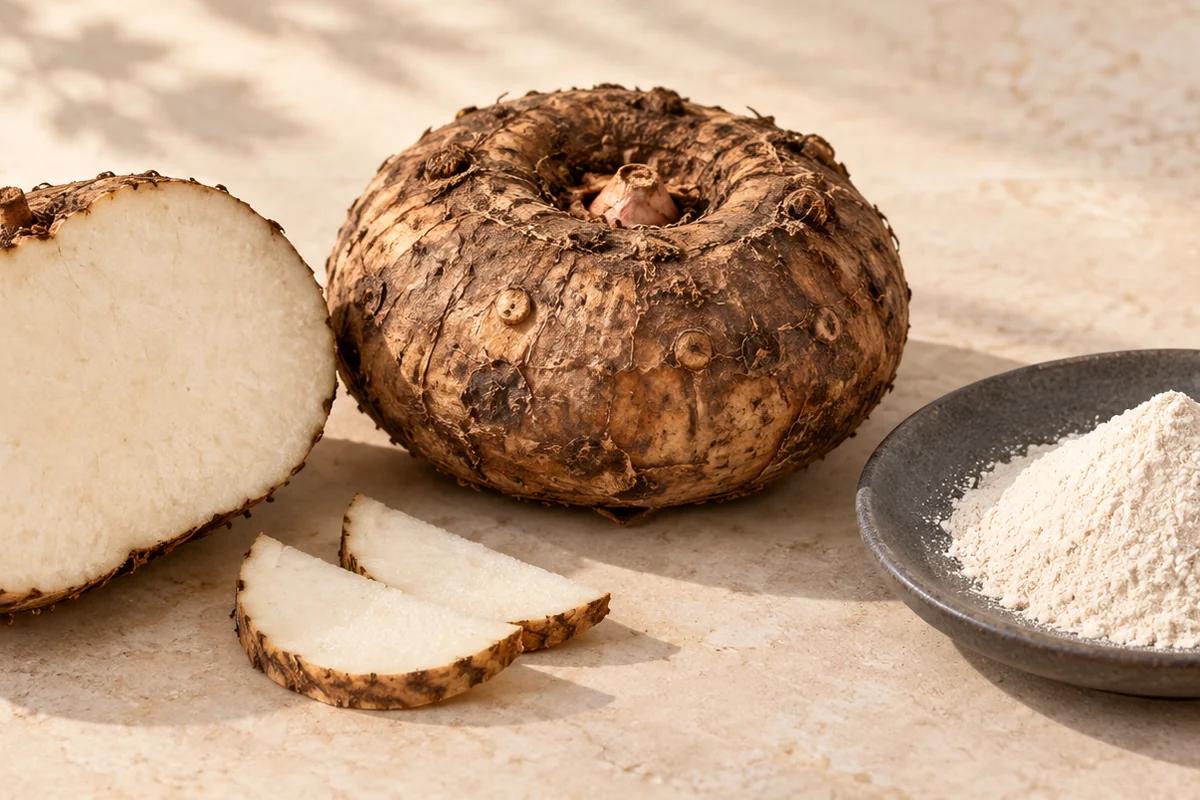
The cover depicts a rounded konjac corm and powder as an ingredient illustration. It is not a verified product, a serving suggestion, an absorption measurement or evidence of a weight-loss effect.
Keep the useful details
- Keep swallowing and fluid precautions prominent.
- Separate a weight-loss claim from a measured trial result.
- Bring the complete product label and medicine list to the pharmacist.See reference 5
Common questions
Is glucomannan proven to produce weight loss for everyone?
No. Findings are inconsistent, and the direct eight-week trial described here found no significant advantage over placebo.See reference 1
Are capsules automatically safe if tablets caused older problems?
No. The current Health Canada warning applies to all products and depends on fluid and swallowing precautions.See reference 3
Do cholesterol findings prove heart-disease prevention?
No. A change in a laboratory marker is different from demonstrating fewer clinical events.See reference 2
Get the weekly longevity brief
The week's best longevity research in plain English. Free, every Tuesday.
References
- 1. Dietary supplements for weight loss: glucomannan
NIH Office of Dietary SupplementsEvidence review
- 2. Safety and efficacy of glucomannan for weight loss
Keithley et al., Journal of Obesity, 2013Randomized trial
- 3. Glucomannan monograph, July 26, 2024
Health CanadaOfficial guidance
- 4. Regulation 432/2012: glucomannan claim conditions
European Commission / EUR-LexOfficial guidance
- 5. Using dietary supplements wisely
NCCIHOfficial guidance
Editorial transparency
- Published by
- LongevityMate Editorial
- Published
- Updated
Medical disclaimer
General education only. This guide does not diagnose a condition, interpret your personal result, choose a treatment or recommend a supplement dose. Discuss testing, symptoms, medicines and supplements with a qualified health professional.