
Similar names do not mean the same test
- Test
- FIT · iFOBT
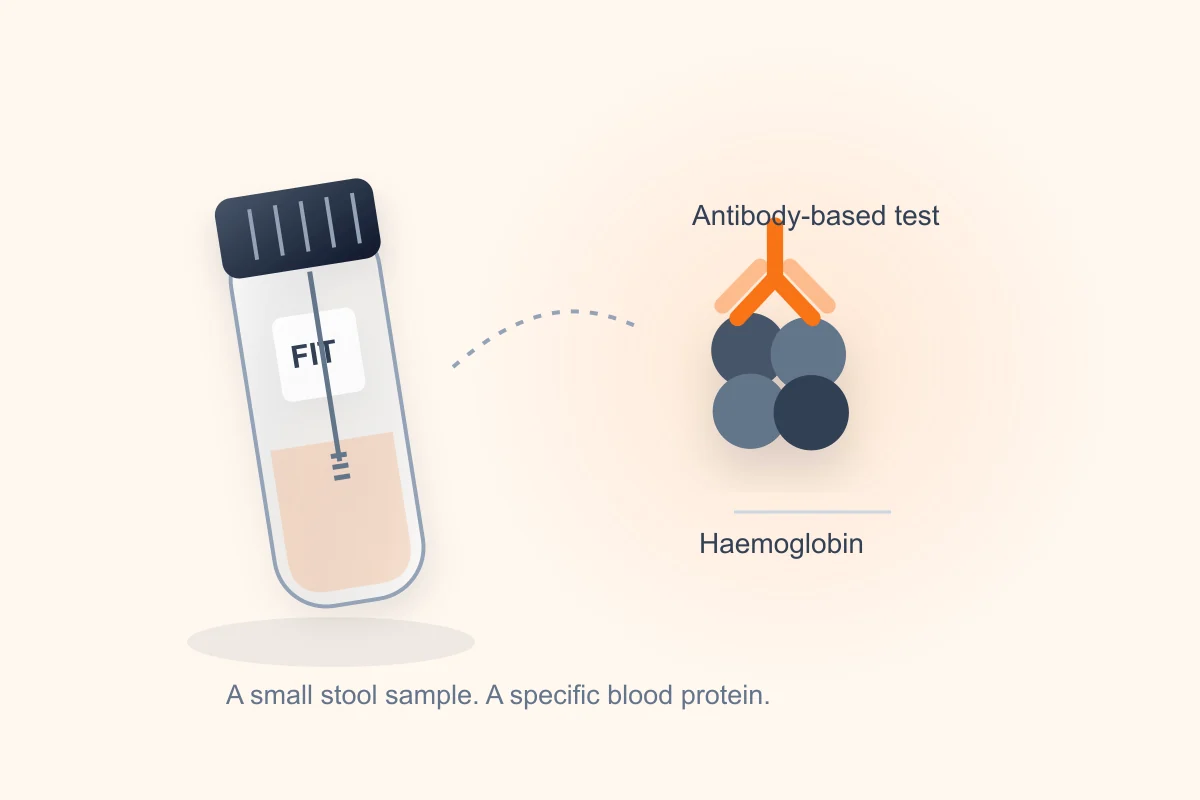
- What it looks for
- Haemoglobin using an antibody-based methodSee reference 1
- Test
- Guaiac FOBT · gFOBT
- What it looks for
- Blood using a chemical reaction; preparation can differSee reference 1
- Test
- Stool DNA with FIT
- What it looks for
- Selected genetic markers as well as blood; a different combined testSee reference 2
- Test
- Calprotectin
- What it looks for
- A separate stool inflammation marker, not a FIT resultSee reference 5
Screening and investigating symptoms are different contexts
Screening investigates people without symptoms. Symptom or anaemia investigations answer a different clinical question; a screening programme’s eligibility rules do not apply universally.See reference 1,See reference 2
The test and screening interval depend on personal history, clinical circumstances and the programme. This guide does not select a personal schedule.See reference 2
A positive FIT needs an explanation, rather than a home diagnosis
BC Cancer explains that an abnormal FIT can occur with cancer, precancerous polyps or other causes of bleeding. The result does not identify which explanation applies. It also cannot show where the bleeding started or how serious the underlying condition is.See reference 4
For a positive screening FIT, colonoscopy is the usual next investigation to find the cause. NCI describes follow-up as part of completing the screening process. A later stool result is a different sample; it does not establish that the original positive finding has been explained.See reference 3
A negative sample is reassuring only within the test’s limits
Stool-based screening can miss some cancers and polyps. A lesion may not release detectable blood into the collected sample. A negative result therefore does not settle an ongoing symptom question or replace assessment of a relevant personal or family history.See reference 2
Keep symptoms and changes in health separate from the screening letter. BC Cancer advises discussing symptoms with a healthcare provider even after a normal result. This is a reason to preserve the clinical context, rather than treating the word negative as a diagnosis.See reference 4
The collection kit is part of the measurement
Use the instructions supplied with the exact kit, including how to collect, label, seal and return the sample. Different products can need different numbers of samples. Do not copy guaiac-test food or medicine restrictions onto a FIT kit, or stop a prescribed medicine using a general online checklist.See reference 1
Details to keep with the result
- Detail
- Exact test name and laboratory wording
- Why it helps
- Distinguishes FIT from a chemical blood test or a combined DNA testSee reference 1,See reference 2
- Detail
- Collection date, symptoms and testing purpose
- Why it helps
- Keeps a screening sample in its actual clinical contextSee reference 2,See reference 4
- Detail
- The follow-up plan after an abnormal screen
- Why it helps
- A stool test alone does not complete assessment of a positive findingSee reference 3
Keep the useful details
- A blood signal is not the same as a cancer diagnosis.See reference 4
- Keep an abnormal screen and its follow-up connected.See reference 3
- Read a negative result alongside symptoms and the purpose of testing.See reference 2,See reference 4
Common questions
Does positive FIT mean bowel cancer?
No. It detects a blood signal. Further assessment is needed to identify the cause, which can be cancer or a noncancerous condition.See reference 4
Can another negative stool sample explain away a positive result?
It does not identify the cause of the first result. Discuss the original positive screening result and its follow-up with the clinical team.See reference 3
Is FIT the same as stool DNA testing?
No. FIT tests for haemoglobin. Combined stool DNA tests assess additional markers and have their own evidence and screening schedules.See reference 2
Get the weekly longevity brief
The week's best longevity research in plain English. Free, every Tuesday.
See your blood results in context
If you already have blood test results, the paid LongevityMate app can help you view related markers together. It provides educational context, not a diagnosis or a replacement for your clinician.
Explore blood test analysisReferences
- 1. Fecal occult blood test (FOBT)
MedlinePlus, U.S. National Library of MedicineOfficial guidance
- 2. Screening tests to detect colorectal cancer and polyps
U.S. National Cancer InstituteOfficial guidance
- 3. Follow-up colonoscopy after positive FIT test
U.S. National Cancer Institute; 2022Official guidance
- 4. Understanding your results
BC Cancer Colon ScreeningOfficial guidance
- 5. Calprotectin stool test
MedlinePlus, U.S. National Library of MedicineOfficial guidance
Editorial transparency
- Published by
- LongevityMate Editorial
- Review
- Editorial evidence review (AI-assisted)
- Published
- Updated
Medical disclaimer
General education only. AI-assisted editorial evidence review is not a qualified clinical assessment. This guide does not diagnose a condition, interpret a personal result, choose treatment or recommend a supplement dose. Discuss testing, symptoms, medicines and supplements with a qualified health professional.