
The short answer
The stool test looks for bacterial antigen
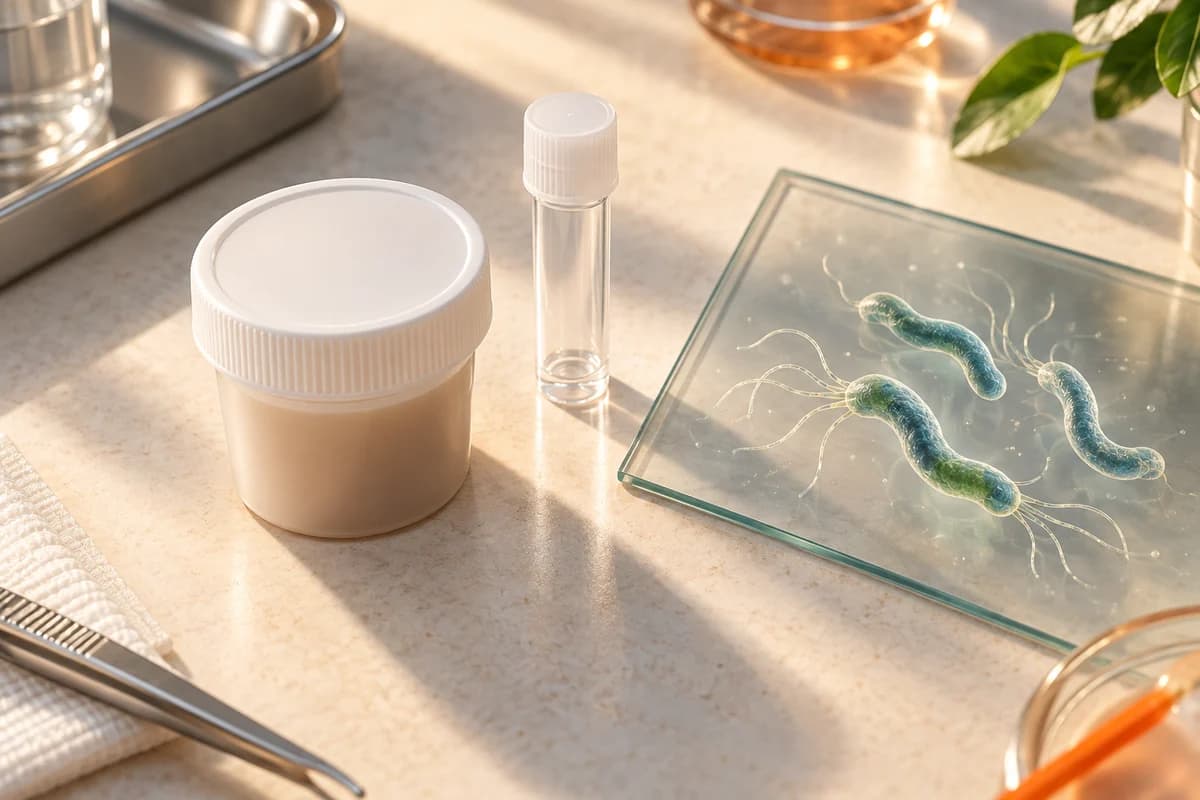
An H. pylori stool antigen test checks a stool sample for proteins from the bacterium Helicobacter pylori. It can be used during an initial investigation or after treatment to check for eradication. A positive or negative result still needs the test timing, medicines, sample quality and symptoms considered together.See reference 1,See reference 2
What reaches the laboratory
The antigen test detects bacterial proteins in stool. A stool PCR test instead looks for H. pylori genetic material. The urea breath test measures a different signal created when H. pylori acts on swallowed urea. These methods are not the same as a blood antibody test. NIDDK also lists stool and urea breath tests among methods used to check for H. pylori during an assessment of digestive symptoms.See reference 1,See reference 3
Follow the collection kit instructions, including how to avoid urine or toilet-water contamination and when to return the sample. The laboratory can only test the specimen it receives; a poor collection can make a report harder to trust.See reference 1
Tests with similar names have different jobs
- Method
- Stool antigen
- What it looks for
- H. pylori proteins in stool
- Main interpretation point
- Can support assessment of current infection and test of cure when timed correctly.See reference 1,See reference 2,See reference 3
- Method
- Urea breath test
- What it looks for
- A labelled carbon-dioxide signal after swallowed urea
- Main interpretation point
- Another noninvasive test used for current infection and test of cure.See reference 1,See reference 2,See reference 3
- Method
- Stool PCR
- What it looks for
- H. pylori genetic material
- Main interpretation point
- A different stool method; use the exact assay name on the report.See reference 1
- Method
- Blood antibody
- What it looks for
- The person’s antibodies against H. pylori
- Main interpretation point
- May reflect a past infection, so it cannot reliably establish whether bacteria remain now.See reference 1
Medicines and timing can change the answer
Medicines used for acid suppression and antibiotics can affect H. pylori testing. MedlinePlus says some medicines may need to be withheld for a period before testing, but this must be planned with the ordering clinician. Do not stop a prescribed medicine simply because this guide mentions a testing window.See reference 1
For confirmation after treatment, the American College of Gastroenterology advises testing at least four weeks after antibiotics and after at least two weeks without proton-pump inhibitors or potassium-competitive acid blockers. That is a clinician-managed guideline context, not a personal instruction; other medicines and your situation may change the plan.See reference 2
Read a positive or negative result in context
A positive antigen result supports H. pylori being present. The clinician considers the result alongside symptoms and the reason for testing before choosing treatment. A negative result makes infection less likely, but a mistimed test or a medicine that reduces detection can change how reassuring it is.See reference 1,See reference 2
Digestive symptoms have other possible causes. A negative H. pylori result is not a diagnosis of the cause of pain, and a positive result does not explain every symptom by itself.See reference 1
Why a test of cure is a separate step
Feeling better does not prove H. pylori was eradicated. Guidelines recommend objective confirmation after treatment using a suitable stool antigen or breath test, or biopsy-based testing when endoscopy is indicated. A blood antibody result can remain positive after past infection and is not the preferred test of cure.See reference 1,See reference 2
Record when treatment ended, any acid-suppressing or antibiotic medicines, the sample date and the exact method used. This context helps the care team decide whether a result is timely enough to act on.See reference 1,See reference 2
What to check before you rely on a result
- Confirm that the report says stool antigen; PCR, breath and blood antibody tests answer different questions.See reference 1
- Use the collection instructions supplied with your kit and note the sample date.See reference 1
- Tell the ordering team about antibiotics and acid-suppressing medicines. Let them decide any medicine pause.See reference 1,See reference 2
- If this was after treatment, ask whether the interval makes it a valid test of cure.See reference 2
Common questions
Can I stop my acid medicine before the test?
Only the clinician managing your care should decide if and how to pause it. Stopping on your own can be unsafe and may complicate the test plan.See reference 1,See reference 2
Does a negative result rule out every cause of stomach pain?
No. It speaks to this test at this time. Other conditions can cause similar symptoms, and medicine or timing may affect detection.See reference 1
Is a blood antibody result enough to prove cure?
No. Antibodies can remain after an earlier infection, so a properly timed stool antigen or breath test is generally used for confirmation.See reference 1,See reference 2
When should I seek urgent help?
Get urgent medical assessment for black or tarry stool, blood in vomit, fainting or sudden severe abdominal pain. These signs need care beyond an online test explainer.See reference 1
References
- 1. Helicobacter pylori (H. pylori) Tests
MedlinePlus, U.S. National Library of MedicineOfficial guidance
- 2. ACG Guideline on Treatment of Helicobacter pylori: New Recommendations
American College of GastroenterologyOfficial guidance
- 3. Diagnosis of Gastritis & Gastropathy
National Institute of Diabetes and Digestive and Kidney Diseases, NIHOfficial guidance
Editorial transparency
- Published by
- LongevityMate Editorial
- Published
- Updated
Medical disclaimer
General education only. This guide does not diagnose a condition, interpret your personal result, choose a treatment or recommend a supplement dose. Discuss testing, symptoms, medicines and supplements with a qualified health professional.