
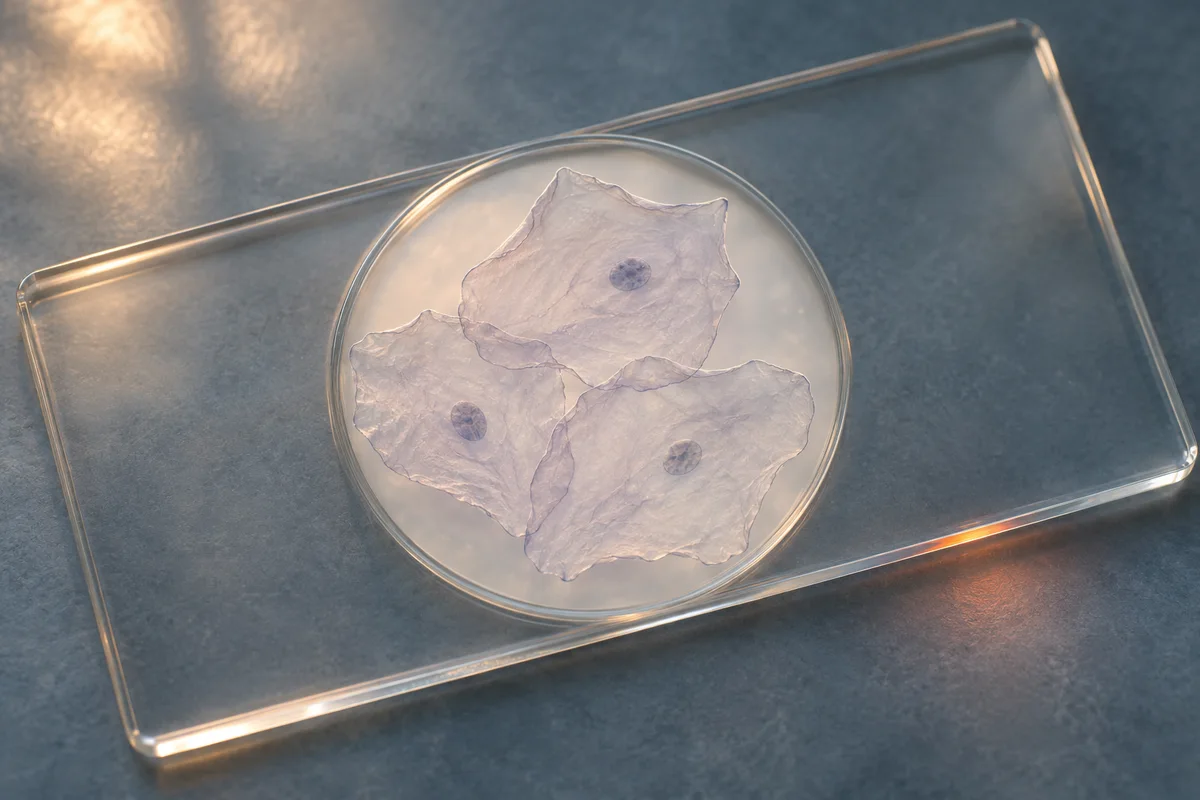
Three cell types and where they come from
- Report term
- Squamous
- Where it comes from
- Outer genital surfaces or parts of the lower urinary tract.
- How to read it
- Many can suggest cells entered during collection. The count alone cannot establish that the sample was contaminated.See reference 1,See reference 2,See reference 3
- Report term
- Transitional (urothelial)
- Where it comes from
- The lining of the bladder and other parts of the urinary tract.
- How to read it
- The lining sheds cells. Larger numbers can occur with irritation or after urinary instrumentation, such as a catheter.See reference 1,See reference 2
- Report term
- Renal tubular
- Where it comes from
- The tiny tubes within the kidney.
- How to read it
- Increased numbers can occur with tubular injury. The lab comment and other findings help explain whether that is relevant.See reference 1,See reference 2
Read the type, count and units together
A report might say “few squamous cells” or give a number. HPF means high-power field, one view under the microscope at high magnification. Other methods can report cells per microliter or use local categories such as few, moderate and many. Use the reporting lab’s own units and comments when comparing results.See reference 2,See reference 4
If your report just says “epithelial cells,” look for a subtype or comment elsewhere on the same report. The broad label alone gives too little information to tell where the cells came from. A count with no subtype should not be read as if all the cells were squamous.See reference 1,See reference 2
Many squamous cells can be a clue about the sample
A clean-catch sample aims to reduce material from outside the urinary tract. Follow the lab’s instructions, including collecting the middle part of the stream when asked and avoiding contact with the inside of the cup. The lab may ask for a fresh sample if the first one is hard to interpret.See reference 1,See reference 2,See reference 4
In a study of more than 19,000 adult records from one medical center, squamous cell counts were poor at distinguishing contaminated from uncontaminated urine cultures. White blood cells, nitrite and the culture answer different questions. A squamous cell count alone cannot confirm or rule out a urinary infection.See reference 2,See reference 3
Common questions
Are epithelial cells the same as white blood cells?
Epithelial cells come from a lining. White blood cells are immune cells and are reported separately. Both can appear in the same sample.See reference 2,See reference 4
What if my report says “many” but gives no number?
“Many” is a category used by the lab. Check which cell type it describes and whether the lab included a sample-quality comment. The category cannot be converted reliably to a count from another lab.See reference 2,See reference 4
Does “many squamous cells” mean I need another test?
It can make a sample harder to interpret. Whether a fresh sample is needed depends on why the test was ordered, any symptoms and the rest of the report. Ask the clinician who ordered the test how those pieces fit together.See reference 1,See reference 2,See reference 3
Get the weekly longevity brief
The week's best longevity research in plain English. Free, every Tuesday.
See your blood results in context
If you already have blood test results, the paid LongevityMate app can help you view related markers together. It provides educational context, not a diagnosis or a replacement for your clinician.
Explore blood test analysisReferences
- 1. Epithelial Cells in Urine
MedlinePlus, U.S. National Library of MedicineOfficial guidance
- 2. Recommendations for reporting urinary sediment
Advances in Laboratory MedicineOfficial guidance
- 3. Squamous epithelial cells and urine culture contamination
Mohr and colleagues, Academic Emergency MedicineObservational study
- 4. The EFLM European Urinalysis Guideline 2023
European Federation of Clinical Chemistry and Laboratory MedicineGuideline
Editorial transparency
- Published by
- LongevityMate Editorial
- Reviewed by
- Editorial evidence review (AI-assisted)
- Published
- Updated
Medical disclaimer
For general education. A qualified health professional can interpret your results and advise on testing, medicines or supplements.