
Read the wording and the unit
- What you see
- None seen
- What it describes
- No hyaline casts were reported in the part of the sample examined.
- How to use it
- This line alone cannot establish whether kidney function is normal.See reference 1,See reference 3,See reference 5
- What you see
- Rare, few or moderate
- What it describes
- The lab grouped what it saw into a description, rather than reporting a precise count.
- How to use it
- Use the lab’s own reporting scale. Do not turn “few” into a universal number.See reference 1,See reference 3
- What you see
- A number per LPF
- What it describes
- Casts seen per low-power field, or one microscope view at low magnification.
- How to use it
- Compare with the reference or comment for this lab and this method.See reference 2,See reference 3,See reference 4
Three measurements that answer different questions
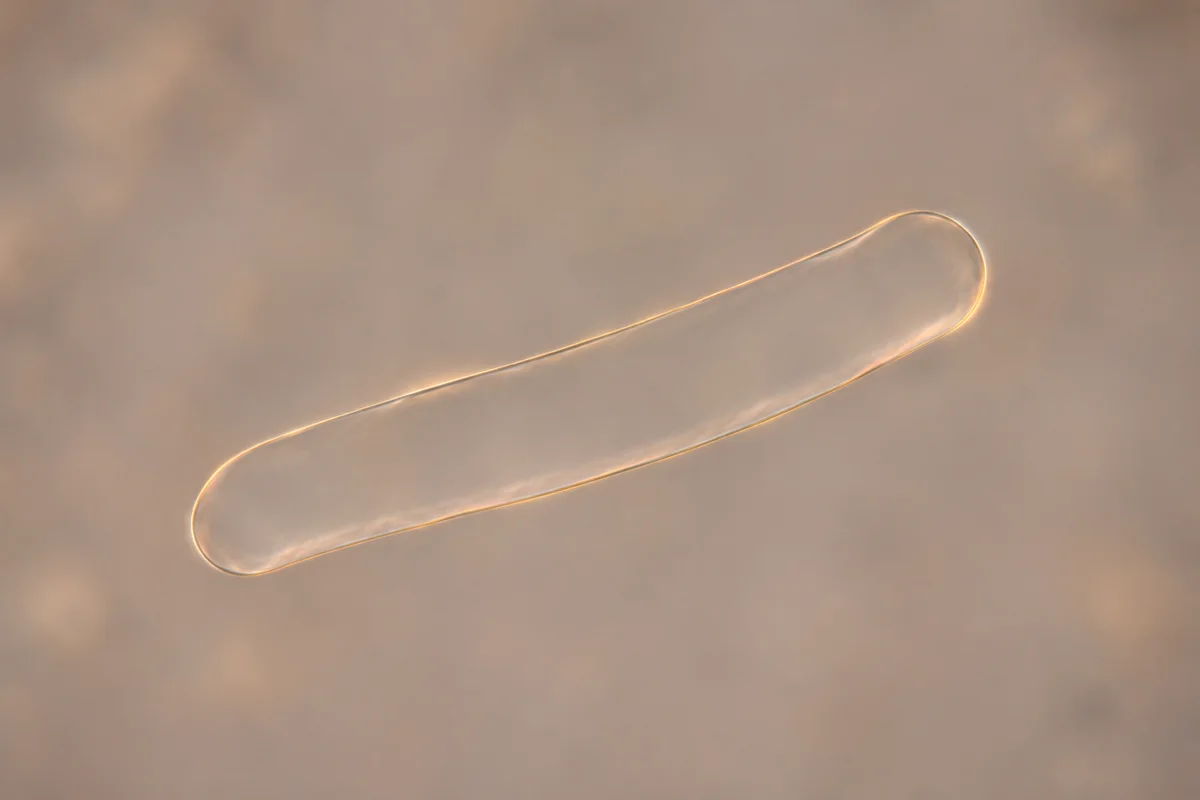
A hyaline cast is mostly clear protein. A red or white blood cell cast contains cells and can carry different information. Check the exact name, especially if the microscopy section lists more than one cast type.See reference 1,See reference 3
A dipstick protein result measures a chemical reaction; it does not count casts. Urine specific gravity describes the concentration of the sample. These are separate lines, so a normal result on one does not erase a finding on another.See reference 1,See reference 4
When the rest of the report matters
Hyaline casts may be more numerous with dehydration, strenuous exercise or diuretic medicines. They can also occur with kidney conditions. The cast count alone cannot tell these possibilities apart. Tell the clinician who ordered the test about recent exercise, illness, medicines and how the sample was collected.See reference 1,See reference 3
If casts are repeatedly flagged or appear alongside blood or protein in urine, ask how the findings fit together. Urine albumin and estimated filtration rate are different kidney measures a clinician can use if needed. For a new sample, follow the lab’s collection and delivery instructions.See reference 1,See reference 4,See reference 5
Common questions
Are hyaline casts the same as crystals?
No. Hyaline casts are protein structures shaped in a kidney tubule. Crystals are examined separately in urine sediment.See reference 1,See reference 3,See reference 4
Does “few hyaline casts” mean kidney disease?
A few can be found in healthy urine. Interpret this line with the rest of the report and the reason for testing.See reference 1,See reference 3,See reference 5
Get the weekly longevity brief
The week's best longevity research in plain English. Free, every Tuesday.
See your blood results in context
If you already have blood test results, the paid LongevityMate app can help you view related markers together. It provides educational context, not a diagnosis or a replacement for your clinician.
Explore blood test analysisReferences
- 1. Urinary casts
MedlinePlus, U.S. National Library of MedicineOfficial guidance
- 2. Urinalysis microscopic panel: hyaline casts
Regenstrief Institute, LOINCOfficial guidance
- 3. Provider Performed Microscopy Procedures: Urine Sediment
U.S. Centers for Disease Control and PreventionOfficial guidance
- 4. Urinalysis
MedlinePlus, U.S. National Library of MedicineOfficial guidance
- 5. Identify and Evaluate Patients with Chronic Kidney Disease
National Institute of Diabetes and Digestive and Kidney DiseasesOfficial guidance
Editorial transparency
- Published by
- LongevityMate Editorial
- Reviewed by
- Editorial evidence review (AI-assisted)
- Published
- Updated
Medical disclaimer
For general education. A qualified health professional can interpret your results and advise on testing, medicines or supplements.