
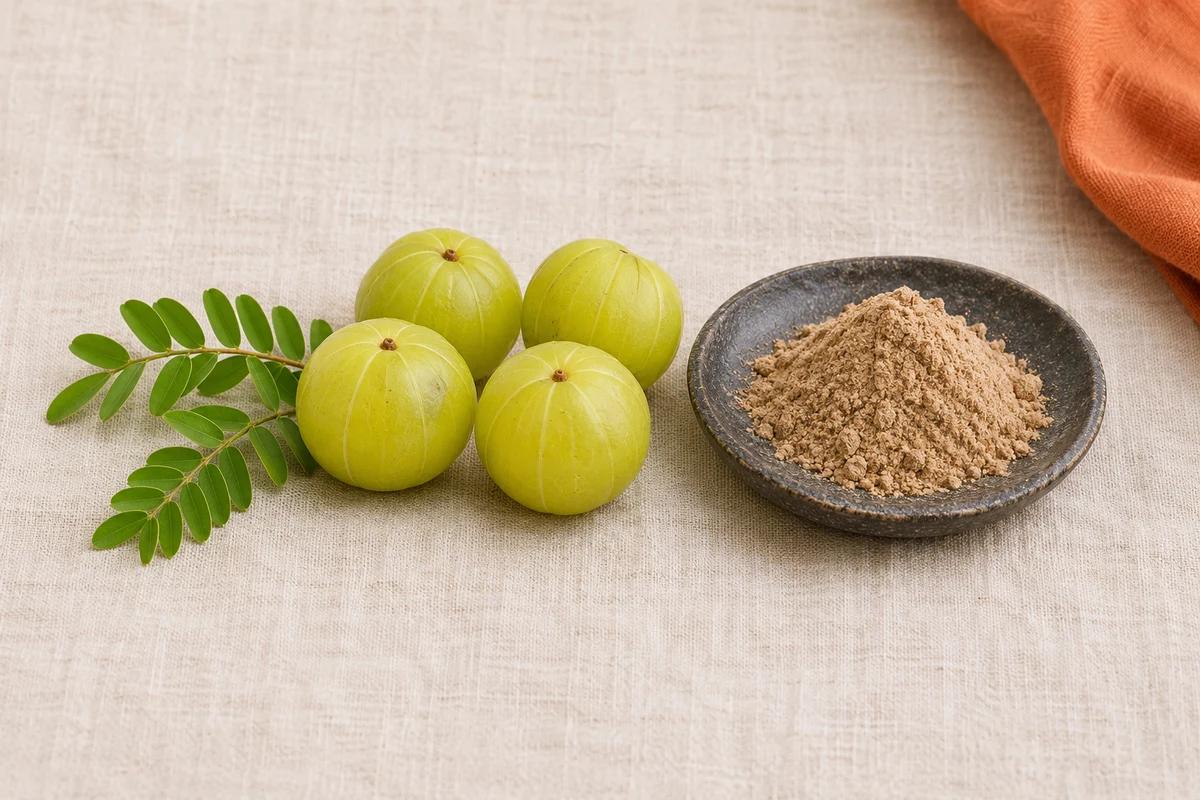
What form does the label describe?
- Form
- Whole fruit or a food made with amla
- What the name tells you
- The starting ingredient is Indian gooseberry.
- What to check
- The ingredient list and serving size explain the food you are eating.See reference 1,See reference 4
- Form
- Fruit powder
- What the name tells you
- The label may describe dried ground fruit.
- What to check
- Check whether the manufacturer means whole-fruit powder or a dried extract.See reference 2,See reference 4
- Form
- Fruit extract
- What the name tells you
- A concentrated preparation with its own composition.
- What to check
- Look for the plant part, extract amount per serving and any stated standardization.See reference 2,See reference 4
What the human studies measured
- Study
- 98 adults with abnormal lipids, 12 weeks
- Finding
- The group given a specific whole-fruit extract had lower LDL cholesterol and triglycerides at the end of the trial than the placebo group.
- Limit
- The extract supplier sponsored the study. It measured blood markers over 12 weeks.See reference 2
- Study
- 15 healthy adults, crossover study
- Finding
- Participants received a different amla preparation and placebo in separate periods. Researchers measured several vascular and blood markers.
- Limit
- A small study measuring several outcomes gives limited certainty about any one benefit.See reference 3
Compare your label with the studied preparation
In the 12-week study, each capsule contained 500 mg of one extract standardized for several constituents. That amount describes the extract in the experiment. A 500 mg fruit powder or another extract can have a different composition. Check the botanical name, whether the capsule contains fruit powder or extract, and whether the label lists an amount for amla separately from a blend.See reference 1,See reference 2,See reference 4
The 12-week trial recorded mild adverse events across both groups. Its size and duration give little information about rare effects, long-term use or combinations with medicines. Bring the exact label to a pharmacist or clinician if you take medication or are considering a concentrated product during pregnancy or breastfeeding.See reference 2,See reference 3,See reference 4
Common questions
Does the research show amla prevents heart attacks?
The trials measured short-term markers such as LDL cholesterol. They provide no direct estimate of whether amla changes rates of heart attacks or strokes.See reference 2,See reference 3
Is the vitamin C amount the same in every amla product?
The amount depends on the product and what its label reports. The weight of fruit or extract does not specify the vitamin C content.See reference 2,See reference 4
Can one extract trial tell me how much powder to take?
The amount used in an extract trial belongs to that preparation and study. The evidence leaves the equivalent amount for other formulations uncertain.See reference 2,See reference 3
Get the weekly longevity brief
The week's best longevity research in plain English. Free, every Tuesday.
References
- 1. Phyllanthus emblica L.
Royal Botanic Gardens, Kew, Plants of the World OnlineOfficial guidance
- 2. Randomized placebo-controlled trial of Emblica officinalis extract in people with dyslipidemia
Upadya and colleagues, BMC Complementary and Alternative MedicineRandomized trial
- 3. Placebo-controlled crossover trial of amla in healthy adults
Kapoor and colleagues, Contemporary Clinical Trials CommunicationsRandomized trial
- 4. Questions and Answers on Dietary Supplements
U.S. Food and Drug AdministrationOfficial guidance
Editorial transparency
- Published by
- LongevityMate Editorial
- Reviewed by
- Editorial evidence review (AI-assisted)
- Published
- Updated
Medical disclaimer
For general education. A qualified health professional can advise on supplement use, medications and individual health needs.