
Keep the studied exposure beside the measured outcome
A 2014 meta-analysis of 124 studies found average LDL reductions of about 6–12% across studied intakes of 0.6–3.3 g/day of plant sterols or stanols. These describe study groups, not a promised response or a personal dose recommendation. Preparation, starting LDL and study conditions affect what a result means.See reference 2
The EAS consensus explicitly noted the absence of randomized trials proving benefit on hard cardiovascular outcomes. ‘Hard outcomes’ means events such as heart attacks rather than a blood-marker change. The newer 2026 review concerns cardiometabolic risk factors; it does not make every product a proven cardiovascular treatment.See reference 4,See reference 1
The named ingredient and product format matter
- What you see
- Vegetable oils, nuts and seeds
- What to check
- Natural plant-food sources contain small quantities of sterols
- What it does not establish
- Ordinary portions are not the same as a studied fortified preparationSee reference 3
- What you see
- Sterol- or stanol-enriched food
- What to check
- Named added ingredient and amount per portion
- What it does not establish
- Every food format has the same clinical evidenceSee reference 3,See reference 6
- What you see
- Plant-sterol supplement
- What to check
- Ingredient amount, full formulation and product warnings
- What it does not establish
- A capsule with the same headline grams guarantees the same effectSee reference 1,See reference 7
- What you see
- Plant-sterol ester amount
- What to check
- How the label expresses free plant sterol equivalents
- What it does not establish
- The weight of the entire product is the sterol amountSee reference 6
Compare the active amount, not the jar or powder weight
The UK’s rules for foods with added phytosterols or phytostanols require the added amount to be expressed as free plant sterols or stanols and specify information per portion. This is a useful label-reading distinction. A gram of a finished food, carrier oil or supplement blend is not automatically a gram of the named active ingredient.See reference 6
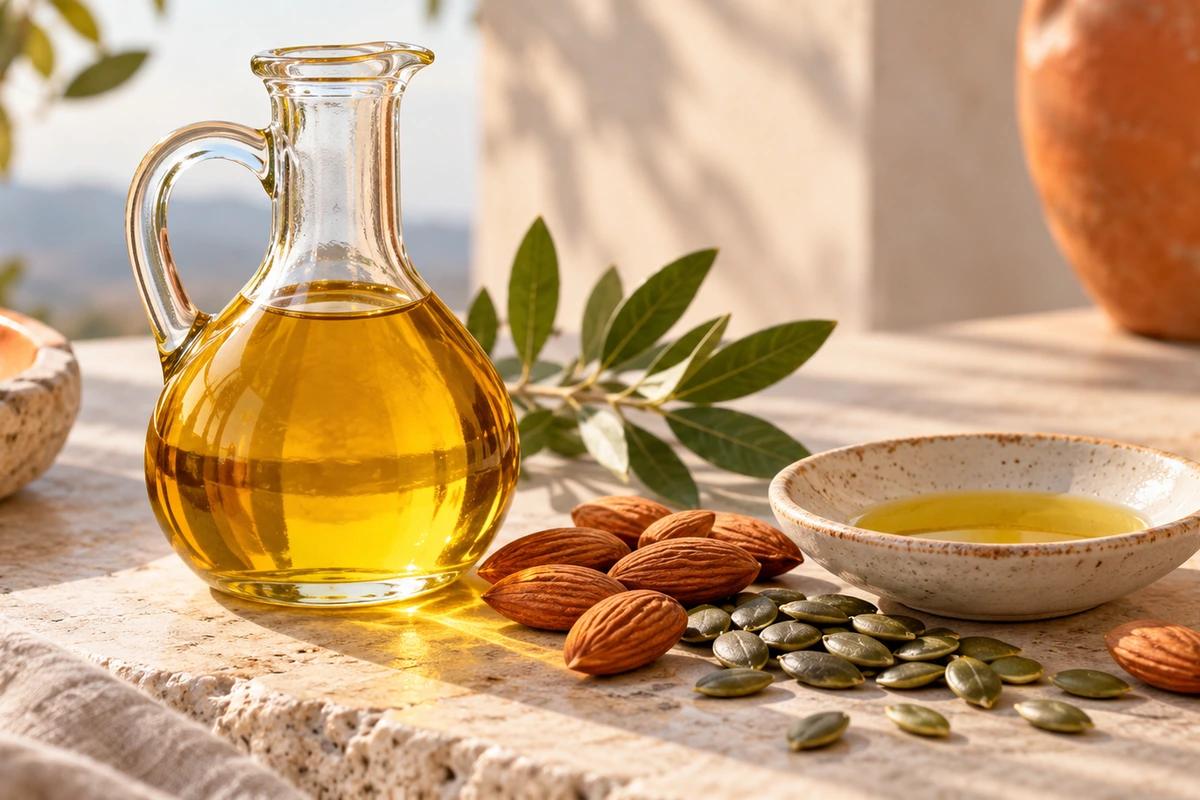
For example, an amount stated per two capsules cannot be compared with an amount per one capsule until the portion basis matches. This is a label comparison, not advice to take either amount. The guide’s oil, almond and seed illustration depicts natural sources; it does not show a measured trial exposure or a fortified product.
Some people need specific caution
Sitosterolemia is an inherited disorder in which plant sterols accumulate in blood and tissues because their elimination is impaired. A generic ‘plant based’ safety assumption is inappropriate for this condition. Anyone with known or suspected sitosterolemia needs advice from the treating specialist about these products.See reference 5
UK labels for foods with added sterols or stanols include cautions about pregnancy, breastfeeding, children under five and use alongside cholesterol-lowering medicines. These are examples of product-specific regulatory warnings, not a universal global label template. Read the actual product and discuss suitability with a clinician or pharmacist.See reference 6
Keep the broader cholesterol plan in view
An LDL change does not establish that a product can replace prescribed treatment, address every lipid marker or provide proven benefits for longevity. Discuss the ingredient and full product with the care team when reviewing a cholesterol plan. Do not change cholesterol medicines based on this guide.
NCCIH notes that supplement safety depends on the product, medicines and medical circumstances, and that ‘natural’ or ‘standardized’ wording does not guarantee safety or quality. The useful evidence question is whether the named preparation was tested for the outcome you care about.See reference 7
Keep the useful details
- Separate an LDL measurement from proven clinical-event prevention.See reference 4
- Compare added sterol or stanol amounts on the same portion basis.See reference 6
- Read warnings and keep medicines and inherited disorders in the discussion.See reference 5,See reference 6
Common questions
Are sterols naturally present in foods?
Yes. Oils, nuts, seeds and other plant foods contain them, generally in smaller amounts than deliberately enriched preparations.See reference 3
Does lower LDL prove fewer heart attacks from the supplement?
No. The cited evidence demonstrates changes in risk markers; the EAS consensus distinguishes this from randomized evidence on clinical events.See reference 4
Does “natural” mean suitable for everyone?
No. Product warnings and individual medical circumstances matter, with sitosterolemia a specific concern for plant sterols.See reference 5,See reference 7
Get the weekly longevity brief
The week's best longevity research in plain English. Free, every Tuesday.
References
- 1. Effect of phytosterols on cardiometabolic risk factors: systematic review of meta-analyses
Zurbau et al., 2026; Clinical NutritionSystematic review
- 2. LDL-cholesterol-lowering effect of plant sterols and stanols across different dose ranges
Ras et al., 2014; British Journal of NutritionMeta-analysis
- 3. Blood cholesterol reduction health claims on phytosterols
European Food Safety AuthorityOfficial guidance
- 4. Plant sterols and plant stanols in management of dyslipidaemia and prevention of cardiovascular disease
European Atherosclerosis Society consensus panel, 2014Guideline
- 5. Sitosterolemia
MedlinePlus GeneticsOfficial guidance
- 6. Food labelling: giving food information to consumers
UK governmentOfficial guidance
- 7. Using dietary supplements wisely
NCCIHOfficial guidance
Editorial transparency
- Published by
- LongevityMate Editorial
- Published
- Updated
Medical disclaimer
General education only. This guide does not diagnose a condition, interpret your personal result, choose a treatment or recommend a supplement dose. Discuss testing, symptoms, medicines and supplements with a qualified health professional.