
The short answer
An extract is a different exposure from a cup of tea
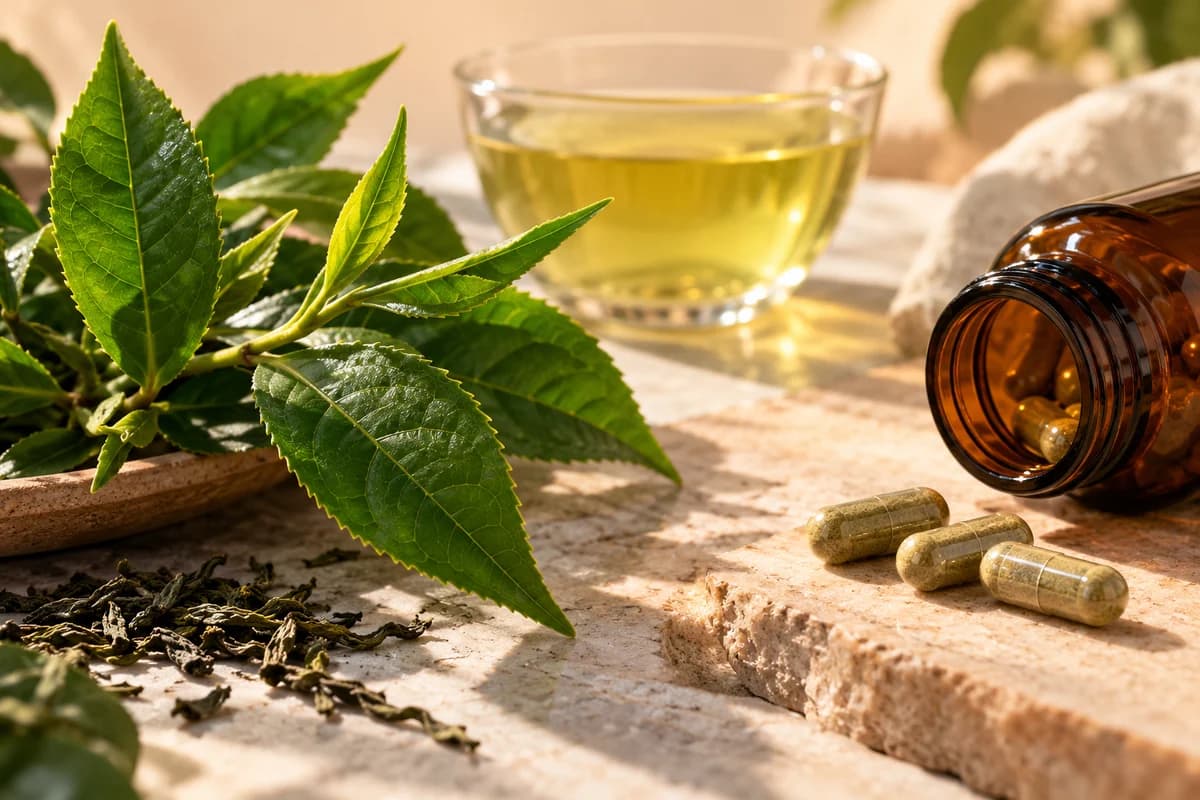
Green tea extract is a concentrated supplement made from Camellia sinensis. EGCG is one catechin it can contain, but a label’s extract weight is not automatically the EGCG amount. Some studies report small changes in blood lipids or weight; these do not establish a treatment or long-term health benefit. Uncommon liver injury has been reported mainly with extract capsules, so product form and medicines matter.See reference 1,See reference 2
What EGCG on a label can and cannot tell you
Green, black and oolong teas come from the same plant but are processed differently. Brewed tea and concentrated extracts are not interchangeable exposures. An extract can contain catechins, caffeine and other constituents in proportions that vary by product.See reference 1
Read whether the label states total extract, total catechins, EGCG and caffeine separately. An “extract 500 mg” line does not mean 500 mg of EGCG. A laboratory analysis would be needed to confirm a product’s actual contents; this guide does not certify labels or suggest a dose.See reference 1,See reference 3
Why form matters
- Form
- Brewed green tea
- What it usually represents
- Leaves steeped as a drink; caffeine exposure varies.
- What cannot be assumed
- Safety or dose findings for concentrated pills cannot simply be transferred to a cup.See reference 1
- Form
- Green tea extract capsule
- What it usually represents
- A concentrated preparation that may list catechins or EGCG.
- What cannot be assumed
- The extract weight alone is not the EGCG amount or a proof of purity.See reference 1,See reference 3
- Form
- Multi-ingredient weight-loss product
- What it usually represents
- Extract combined with other ingredients.
- What cannot be assumed
- A benefit or adverse event cannot automatically be attributed to green tea alone.See reference 1,See reference 2
Human results depend on the outcome
NCCIH reports that randomized studies, mostly of extract supplements, found small reductions in total and LDL cholesterol, with no clear change in HDL cholesterol or triglycerides. A small average laboratory change is not evidence that taking an extract prevents heart attacks or replaces standard care.See reference 1
Catechins and caffeine may have a modest effect on body weight, but product composition and activity vary. Do not treat a short-term average as a reliable personal weight-loss forecast. Evidence for prevention of cancer or other chronic disease is inconsistent or insufficient.See reference 1,See reference 2
The liver safety signal is specific and important
NCCIH reports uncommon liver injury among people using green tea products, primarily extracts in tablets or capsules. The absence of problems with a normal beverage does not make a concentrated supplement risk-free. A rare event can be missed by a small efficacy trial.See reference 1,See reference 3
If a supplement user develops jaundice, dark urine, unusual fatigue, nausea or upper-abdominal discomfort, they should seek medical advice promptly and bring the product details. A clinician should assess symptoms rather than assuming green tea is the cause or continuing a product while waiting for an online answer.See reference 3
Check medicines and life stage before use
Green tea products can affect medicine exposure. NCCIH names nadolol, atorvastatin and raloxifene as examples of observed interactions. This does not mean those are the only relevant medicines. Ask a pharmacist or clinician before starting an extract if you take prescribed treatment.See reference 1
Green tea contains caffeine, and pregnancy or breastfeeding changes the risk discussion. Evidence about a beverage should not be used to declare a high-concentration extract safe during these stages. Ask the care team about the exact product and caffeine amount.See reference 1
A better way to judge a claim
- Identify the form: brewed tea, a single-ingredient extract, or a combination product.See reference 1
- Check whether the label separates extract weight, EGCG or total catechins, and caffeine.See reference 1,See reference 3
- Look for a human outcome that matters, not only an antioxidant test or a lab change.See reference 1,See reference 2
- Review liver symptoms, medicines and pregnancy or breastfeeding with a qualified professional before using a concentrated extract.See reference 1,See reference 3
Common questions
Is a green tea extract pill as safe as brewed tea?
No such equivalence is established. NCCIH reports no adult beverage safety concern but documents uncommon liver injury chiefly with tablet or capsule extracts.See reference 1,See reference 3
Does EGCG cause meaningful weight loss?
The evidence suggests at most modest, variable effects from green tea products. It does not support a dependable personal weight-loss result or an extract dose recommendation.See reference 1,See reference 2
Should I stop a medicine to take green tea extract?
No. Some medicines interact with green tea products. Ask the prescriber or pharmacist about your exact medicine and product before making a change.See reference 1
Does a small LDL change mean the supplement prevents heart disease?
No. A change in a blood marker is not the same as a demonstrated reduction in heart attacks or other clinical events.See reference 1
References
- 1. Green Tea: Usefulness and Safety
National Center for Complementary and Integrative HealthOfficial guidance
- 2. Dietary Supplements for Weight Loss: Health Professional Fact Sheet
National Institutes of Health Office of Dietary SupplementsOfficial guidance
- 3. Green Tea
LiverTox, National Institute of Diabetes and Digestive and Kidney DiseasesEvidence review
Editorial transparency
- Published by
- LongevityMate Editorial
- Published
- Updated
Medical disclaimer
General education only. This guide does not diagnose a condition, interpret your personal result, choose a treatment or recommend a supplement dose. Discuss testing, symptoms, medicines and supplements with a qualified health professional.