
The short answer
Food use and supplement use are different exposures
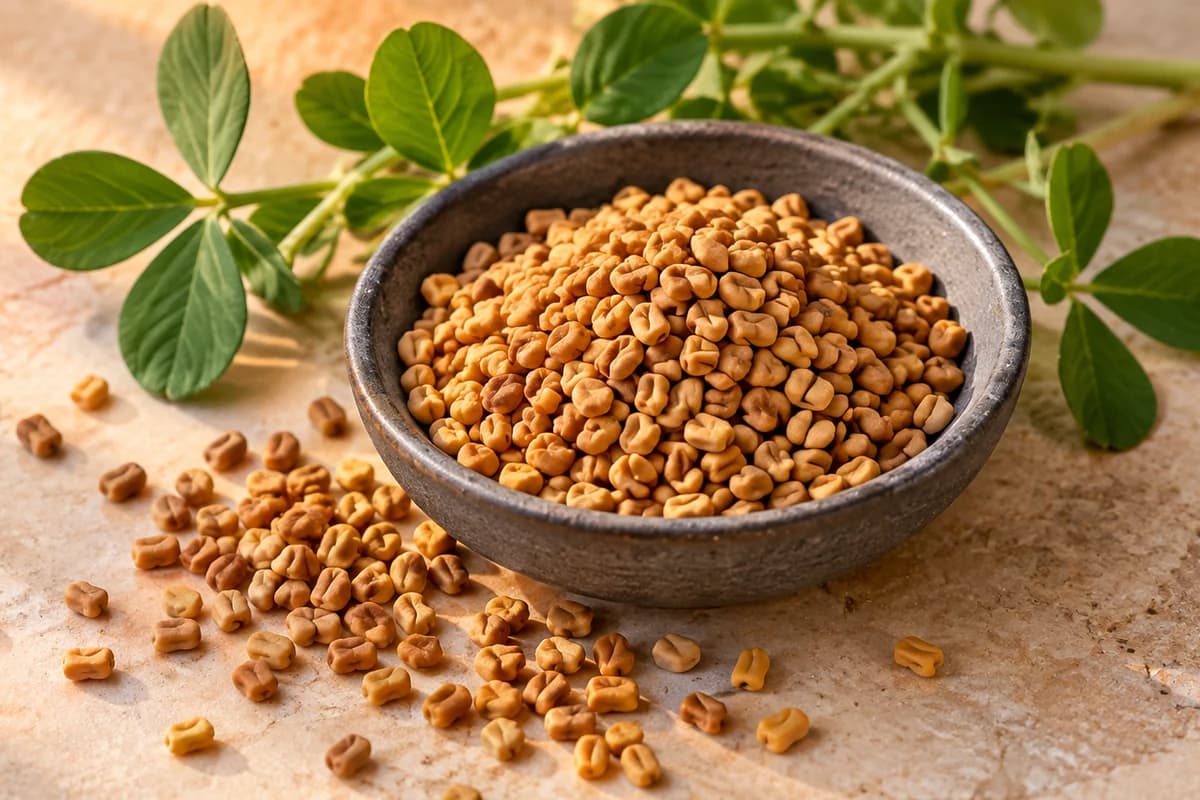
Fenugreek, Trigonella foenum-graecum, is a clover-like herb whose seeds are used as a spice. Supplement claims go beyond ordinary food use. Blood-glucose evidence is limited and milk-supply results are mixed; neither supports replacing established care or choosing a dose here.See reference 1
What does the product actually contain?
Compare a seed ingredient with a seed ingredient, and an extract with the stated extract. Check the serving size, other ingredients and whether the product is a blend. A product name does not tell you everything about the preparation.See reference 3
The 2023 randomized-trial review distinguished raw material from extracts and combination treatment from use alone. Those are meaningful differences in what participants received. A pooled finding cannot automatically describe every retail product with fenugreek on its label.See reference 2
Separate the claimed outcome from its limits
- Use or claim
- Blood glucose in type 2 diabetes
- What remains uncertain
- Studies suggest possible lowering, but NCCIH notes that many are low quality. This is not proof that an arbitrary supplement replaces diabetes treatment.See reference 1
- Use or claim
- A retail extract based on trial findings
- What remains uncertain
- The review includes different preparations and treatment contexts. Match the intervention before assuming a finding applies to the product.See reference 2
- Use or claim
- Milk supply
- What remains uncertain
- Results are mixed. Benefit and safety above food amounts during breastfeeding remain uncertain.See reference 1
- Use or claim
- Menstrual cramps
- What remains uncertain
- There is not enough high-quality evidence to establish usefulness.See reference 1
A familiar food does not validate a capsule
Ordinary food amounts are considered safe for adults and children. Safety evidence for larger supplement exposures in children is insufficient. The distinction is the amount and preparation, not whether the ingredient has a familiar name.See reference 1
For example, a spice named in a recipe and an extract named on a capsule are different product descriptions. Without a matched preparation and a stated amount, there is no reliable conversion between them. This guide does not turn a food serving into a supplement dose.See reference 2,See reference 3
Pregnancy, glucose and allergy concerns
Amounts above those commonly found in food are unsafe during pregnancy. Fenugreek can cause digestive symptoms and serious allergic reactions; large doses can cause harmful drops in blood sugar. Tell a qualified professional about medicines and the exact product before considering use.See reference 1
A quality seal can help assess listed ingredients or contaminants, but cannot show that a product is effective or safe for a particular person. Uncertain milk-supply evidence should prompt a discussion with the relevant health professional, rather than a trial-and-error supplement plan.See reference 1,See reference 3
What to check next
- The preparation, full ingredient list, serving size and whether fenugreek is in a blend.See reference 3
- Which outcome a claim refers to, and whether the cited trial used the same preparation and treatment context.See reference 2
- Pregnancy, breastfeeding, child use, allergy history and medicine-related glucose concerns.See reference 1
Common questions
Can I assume a cooking spice is safe at supplement amounts?
No. Food use and concentrated exposure are different. Pregnancy above food amounts is a specific safety concern.See reference 1
Is fenugreek proven to increase milk supply?
The studies are mixed, and safety above food amounts during breastfeeding is not well established.See reference 1
Can a glucose result tell me which fenugreek dose to take?
No. A lab number does not select a supplement product or dose. Discuss diabetes care with a qualified health professional.See reference 1,See reference 3
References
- 1. Fenugreek: Usefulness and Safety
National Center for Complementary and Integrative HealthOfficial guidance
- 2. The Effect of Fenugreek in Type 2 Diabetes and Prediabetes: A Systematic Review and Meta-Analysis of Randomized Controlled Trials
Kim and colleagues, International Journal of Molecular SciencesSystematic review
- 3. Dietary Supplements: What You Need To Know
NIH Office of Dietary SupplementsOfficial guidance
Editorial transparency
- Published by
- LongevityMate Editorial
- Published
- Updated
Medical disclaimer
General education only. This guide does not diagnose a condition, choose treatment or recommend a supplement dose. Discuss your own result, symptoms, medicines or product use with a qualified health professional.