
A hormone result needs its collection time
The adrenal glands release cortisol in response to ACTH, a signal from the pituitary gland. Cortisol has roles in metabolism, blood pressure and the stress response. Calling it a stress hormone does not make a blood concentration a personal stress score.See reference 2
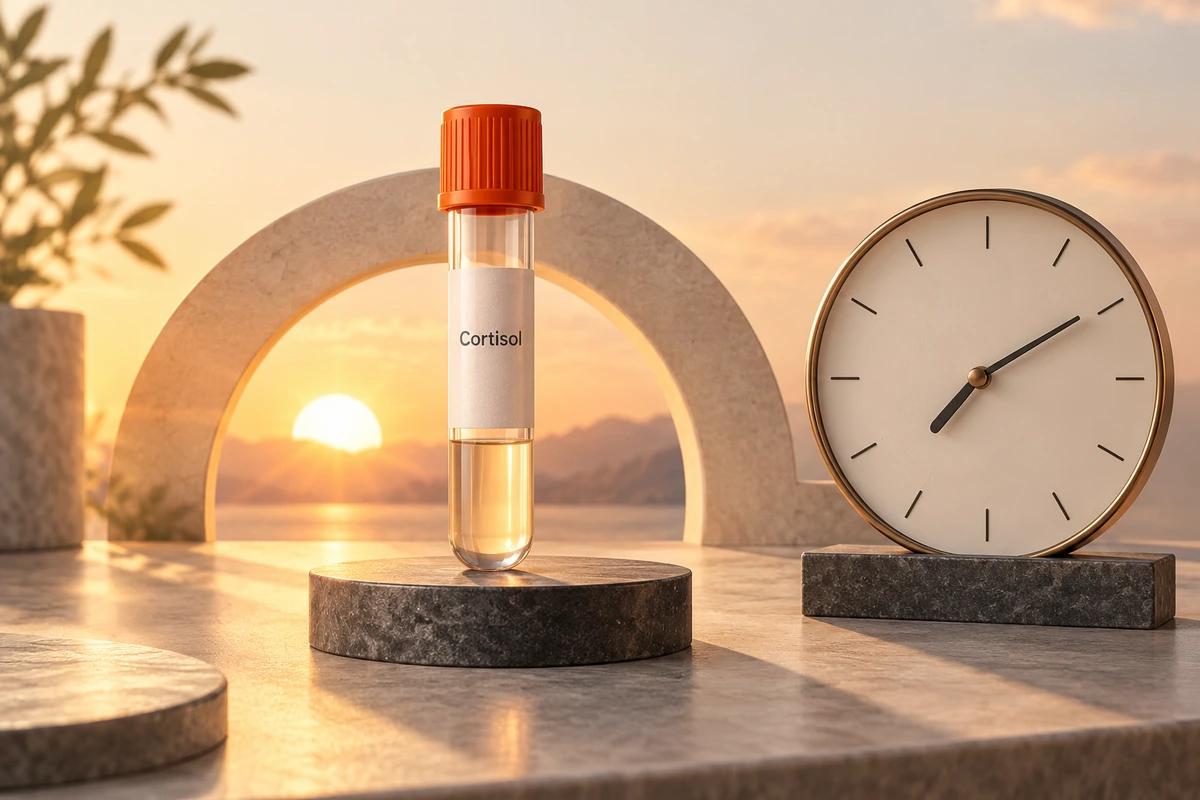
Blood cortisol normally varies during the day. The morning sample and a later sample therefore need their own time context. The sunrise, clock and serum tube in the artwork symbolize morning collection, not a measured cortisol rhythm or recommended appointment time.See reference 1
These tests ask different questions
- Test or sample
- Morning blood cortisol
- What makes it different
- One blood sample, interpreted with its collection timeSee reference 2
- Test or sample
- Urine or saliva cortisol
- What makes it different
- Different specimen and collection instructions; not interchangeable with one blood drawSee reference 1
- Test or sample
- ACTH stimulation test
- What makes it different
- Cortisol is measured before and after a professionally administered hormone challengeSee reference 4
- Test or sample
- Dexamethasone suppression test
- What makes it different
- A specialist protocol used in investigating cortisol excessSee reference 3
Use the interval on the actual report
Laboratory reference intervals depend on the test method and reference population. Keep the unit and laboratory interval next to the value. Comparing a number with an unrelated online chart can give the wrong impression even when both charts say cortisol.See reference 5
The MedlinePlus blood-test entry reports both mcg/dL and nmol/L, and explicitly says the collection time and clinical context matter. This guide supplies no universal normal range or high/low treatment threshold.See reference 2
Preparation and medicine history belong together
Follow the laboratory’s instructions. Stress, exercise, pregnancy and some medicines can affect cortisol testing. Tell the clinician about all medicines, including steroid tablets, inhalers and skin preparations; do not stop a medicine on the basis of this guide.See reference 1
The Endocrine Society’s Cushing guideline puts a thorough glucocorticoid medicine history before biochemical testing. A result taken during a prescribed steroid regimen is not the same question as a result collected under a specialist test protocol.See reference 3
A high or low result is the beginning of an assessment
Blood cortisol can help investigate cortisol excess or deficiency and the function of the pituitary-adrenal system. The report needs the testing reason and clinical history. One result cannot tell you which cause is responsible or whether a treatment should change.See reference 2
For suspected adrenal insufficiency, NIDDK describes review of symptoms and confirmatory testing, commonly an ACTH stimulation test. Even that test has limitations in recently developed secondary adrenal insufficiency. A screening concentration and a complete diagnosis are different steps.See reference 4
A random blood cortisol is not a Cushing screening shortcut
The Endocrine Society’s 2008 guideline, still listed on its current guideline page, recommends against random serum cortisol for initial Cushing testing. It describes selected urine, late-night saliva and suppression tests instead. That is a diagnostic distinction, not an instruction to choose or perform those tests yourself.See reference 3
Keep the useful details
- Save the original report, collection time, unit and interval together.See reference 5
- Keep routine blood sampling separate from a challenge or suppression protocol.See reference 4
- Discuss the result in its clinical context before changing medicines.See reference 3
Common questions
Does a high morning result mean I am chronically stressed?
It does not establish that conclusion. The timing and other influences on cortisol need context; this page provides no stress rating.See reference 2
Can I compare a morning result with an afternoon result?
Keep the collection time attached. Cortisol normally changes through the day, so the two samples do not share a time-independent benchmark.See reference 2
Is blood cortisol the same as a 24-hour urine test?
No. They use different specimens and collection methods to answer different testing questions.See reference 1
Get the weekly longevity brief
The week's best longevity research in plain English. Free, every Tuesday.
See your blood results in context
If you already have blood test results, the paid LongevityMate app can help you view related markers together. It provides educational context, not a diagnosis or a replacement for your clinician.
Explore blood test analysisReferences
- 1. Cortisol test
MedlinePlusOfficial guidance
- 2. Cortisol blood test
MedlinePlus Medical EncyclopediaOfficial guidance
- 3. Diagnosis of Cushing’s syndrome guideline resources
Endocrine Society, 2008 guidelineGuideline
- 4. Diagnosis of adrenal insufficiency and Addison’s disease
NIDDKOfficial guidance
- 5. How to understand your lab results
MedlinePlusOfficial guidance
Editorial transparency
- Published by
- LongevityMate Editorial
- Published
- Updated
Medical disclaimer
General education only. This guide does not diagnose a condition, interpret your personal result, choose a treatment or recommend a supplement dose. Discuss testing, symptoms, medicines and supplements with a qualified health professional.