
Six points that prevent most fasting-insulin mistakes
- Use the reporting laboratory’s own interval and method. A range from another laboratory is not automatically transferable.See reference 3,See reference 4,See reference 5
- Interpret insulin with glucose from the same fasting draw. High insulin with normal glucose, high insulin with low glucose and low insulin with high glucose are different patterns.See reference 1,See reference 6
- Fasting insulin is not one of the accepted ADA tests for diagnosing diabetes; those criteria use HbA1c or plasma glucose, with confirmation when hyperglycaemia is not unequivocal.See reference 2,See reference 7
- HOMA-IR is a research-derived estimate from fasting insulin and glucose—not a diagnosis—and it has no universal clinical cutoff.See reference 8,See reference 9,See reference 10
- Fasting instructions, biotin, medicines, injected insulin and assay cross-reactivity can materially change interpretation.See reference 1,See reference 3,See reference 11,See reference 12
- Urgent symptoms are about low glucose and brain function, not whether the insulin number is inside a printed range. Confusion, seizure or unconsciousness needs immediate help.See reference 6,See reference 13
What fasting insulin measures—and what it does not
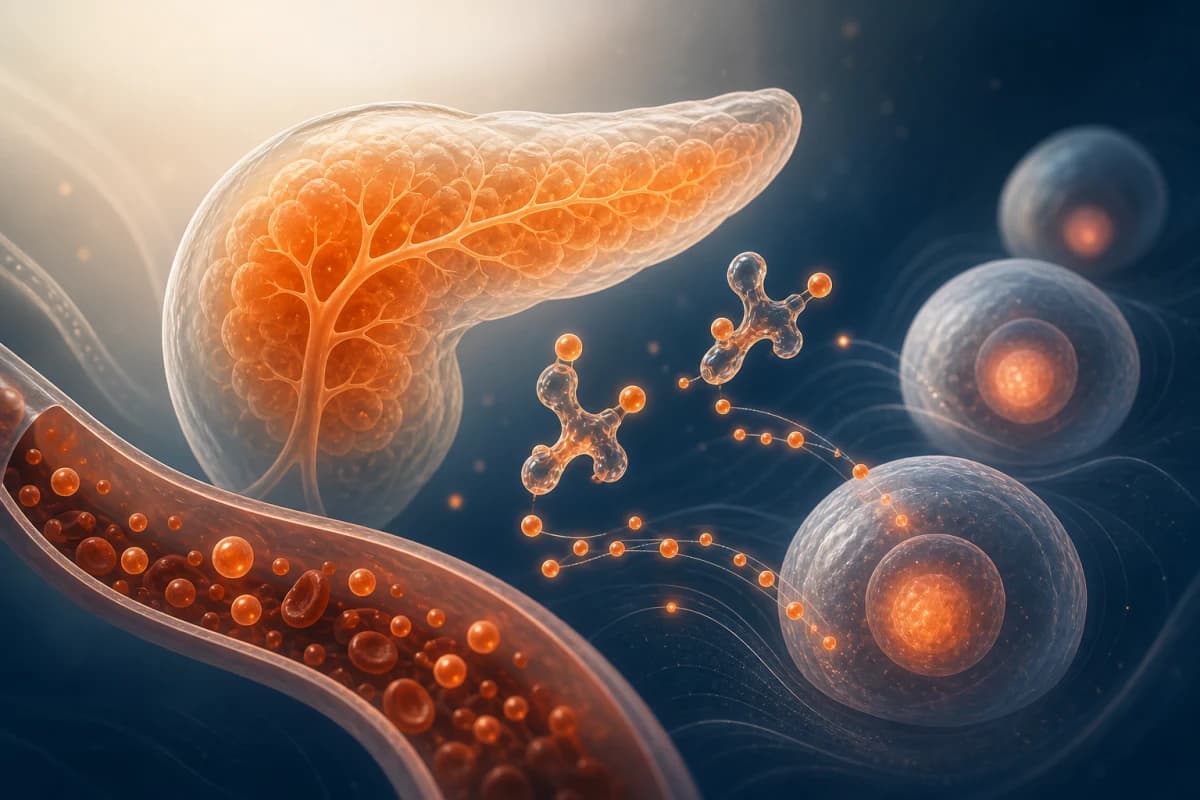
Insulin is made by pancreatic beta cells and helps glucose move from blood into cells. The fasting test measures circulating insulin at one moment after a period without calories. It does not directly measure how every tissue responds to insulin.See reference 1
A higher value may reflect compensatory secretion, recent caloric intake, medicines, illness, injected insulin or assay interference. A lower value may be appropriate suppression during fasting or may accompany reduced endogenous secretion. The glucose result and clinical question determine which explanation is plausible.See reference 1,See reference 6,See reference 12
C-peptide is released with endogenous insulin and remains in circulation longer. It can better estimate pancreatic insulin production in selected settings, especially when injected insulin or hypoglycaemia is part of the question, but kidney function and the testing context still matter.See reference 1,See reference 14
Ranges and units: keep the laboratory context attached
- Report detail
- Laboratory reference interval
- Responsible interpretation
- Use the interval printed beside the result and note the assay. Mayo’s 2.6–24.9 µIU/mL is one method-specific example, not a universal target.
- Common mistake
- Calling an internet cutoff ‘optimal’ for every person and assay.See reference 3,See reference 4,See reference 5
- Report detail
- µIU/mL and mIU/L
- Responsible interpretation
- These concentration units are numerically equivalent, so 10 µIU/mL equals 10 mIU/L.
- Common mistake
- Changing the number when only these equivalent unit labels differ.See reference 15
- Report detail
- pmol/L
- Responsible interpretation
- NIDDK materials use 6 pmol/L per µIU/mL, but conversion and assay conventions are not perfectly harmonised. Preserve the original value and follow the reporting laboratory’s convention.
- Common mistake
- Silently converting and comparing with a range derived using another method.See reference 4,See reference 15
- Report detail
- Repeat trend
- Responsible interpretation
- Using the same laboratory and method improves comparability because commercial assays can disagree materially.
- Common mistake
- Treating a small change between different methods as a biological improvement or decline.See reference 4,See reference 5
Read fasting insulin and simultaneous glucose as a pattern
- Pattern
- Insulin high; glucose normal or mildly high
- What it may suggest
- Compensatory insulin secretion can be consistent with insulin resistance; review HbA1c, lipids, medicines, illness and repeat context.
- What it cannot prove
- It does not diagnose insulin resistance, PCOS, metabolic syndrome or diabetes.See reference 1,See reference 2
- Pattern
- Insulin high or inappropriately detectable; glucose low
- What it may suggest
- Possible insulin-mediated hypoglycaemia when sampled during a documented low; clinician-led testing uses C-peptide, proinsulin, beta-hydroxybutyrate and a medicine screen.
- What it cannot prove
- A routine fasting result does not diagnose insulinoma or identify the cause.See reference 6
- Pattern
- Insulin low; glucose high
- What it may suggest
- May reflect inadequate endogenous insulin secretion; accepted glucose/HbA1c criteria and further classification tests guide diagnosis.
- What it cannot prove
- It does not identify type 1 diabetes or pancreatic disease from one result.See reference 1,See reference 2
- Pattern
- Insulin within the lab interval
- What it may suggest
- The fasting value is not flagged for that method and reference population.
- What it cannot prove
- It does not exclude post-meal dysglycaemia or insulin resistance in every tissue.See reference 3,See reference 4
Why HOMA-IR should not be turned into a diagnosis
The original HOMA model estimates basal insulin resistance from fasting insulin and glucose. It mainly reflects fasting, liver-weighted physiology and is less informative when beta-cell function is failing, insulin is injected, glucose is unstable or the sample was not truly fasting.See reference 8,See reference 9,See reference 10
Published cutoffs vary with population, assay, age and study purpose. Values such as 2.0, 2.5 or 3.0 should not be presented as universal clinical boundaries. HOMA2 is a separate computer model and should not be mixed with the simple equation.See reference 9,See reference 10,See reference 16
Preparation and confounders that can change the result
- Detail
- Usually 8–12 hours without calories
- Why it matters
- Food and caloric drinks stimulate insulin; a longer fast is not automatically better.
- Safe action
- Follow the ordering laboratory’s instructions, usually allowing plain water, and record anything that broke the fast.See reference 1,See reference 3,See reference 17
- Detail
- Insulin, sulfonylureas and other medicines
- Why it matters
- Treatment can change glucose and measured insulin; fasting while using glucose-lowering medicine can be unsafe.
- Safe action
- Follow the prescriber’s testing plan. Never stop or alter medication from this page.See reference 1,See reference 6
- Detail
- Biotin supplements
- Why it matters
- Biotin can interfere with some immunoassays; washout instructions vary by method.
- Safe action
- Tell the laboratory about supplements and follow its assay-specific instruction rather than a universal internet rule.See reference 1,See reference 11
- Detail
- Injected insulin analogue and assay platform
- Why it matters
- Cross-reactivity ranges from little to very high across platforms, so an immunoassay may not reflect the injected analogue reliably.
- Safe action
- Specialist testing may be needed in difficult hypoglycaemia cases; this is not a reason for routine self-ordering.See reference 12
Do not continue fasting through hypoglycaemia symptoms
Confusion, seizure, loss of consciousness, inability to swallow or rapidly worsening symptoms require emergency help. Do not give food or drink to an unconscious person. If you use insulin or another medicine that can cause low glucose, follow your established hypoglycaemia plan. Treat the glucose emergency first; do not delay care to obtain a fasting-insulin result.See reference 6,See reference 13
How fasting insulin may change safely
The useful goal is to address the underlying clinical pattern, not force one insulin number lower. When insulin resistance or prediabetes is confirmed by the appropriate assessment, evidence-based care can include a sustainable eating pattern, regular physical activity, sleep and weight management where relevant, and clinician-managed treatment for specific conditions.See reference 2,See reference 18
Do not judge a diet, supplement or medicine from one fasting-insulin change—especially across different assays. Glucose, HbA1c, symptoms, blood pressure, lipids and the wider health context may matter more to the decision.See reference 2,See reference 4,See reference 5
There is no universal retest interval. Timing depends on why the test was ordered, whether preparation was valid, symptoms, medication changes and which result will alter care.See reference 1,See reference 2
Common fasting-insulin myths, corrected
- Myth
- Everyone should have fasting insulin below one online ‘optimal’ number.
- What the evidence supports
- Assays are not fully harmonised and intervals differ. Use the reporting laboratory’s method and the paired glucose context.See reference 3,See reference 4,See reference 5
- Myth
- High fasting insulin diagnoses diabetes or insulin resistance.
- What the evidence supports
- Diabetes diagnosis uses HbA1c or plasma-glucose criteria. Fasting insulin can add context but is not a standalone diagnostic test.See reference 2,See reference 7
- Myth
- A normal fasting insulin excludes insulin resistance and post-meal problems.
- What the evidence supports
- It is one fasting snapshot; it does not measure every tissue or the full post-meal response.See reference 9,See reference 10
- Myth
- High insulin automatically means insulinoma.
- What the evidence supports
- Endogenous hyperinsulinaemic hypoglycaemia requires documented low glucose, symptoms and a specialist biochemical pattern.See reference 6
A practical next-step checklist
- Confirm fasting duration, collection time, original unit, laboratory interval and whether insulin and glucose came from the same draw.See reference 1,See reference 3,See reference 17
- Review symptoms, acute illness, pregnancy, medicines, injected insulin and supplements such as biotin with the care team.See reference 1,See reference 11,See reference 12
- Use accepted glucose or HbA1c pathways—not fasting insulin alone—when the question is diabetes or prediabetes.See reference 2,See reference 7
- For suspected hypoglycaemia, record symptoms and a measured low glucose; clinician-led sampling during the episode is what makes insulin interpretable.See reference 6
- If trending the result, prefer the same laboratory and method and avoid over-reading small changes.See reference 4,See reference 5
See fasting insulin beside the rest of your blood work
Upload an existing report to view insulin with fasting glucose, HbA1c, triglycerides, HDL-C and prior measurements. LongevityMate organizes the pattern and questions to discuss—it does not diagnose insulin resistance or change medication.
Upload my blood-test resultsQuestions people ask about fasting insulin
What is a normal fasting-insulin level?
Use the interval printed by the reporting laboratory. One current Mayo method uses 2.6–24.9 µIU/mL, but that is not a worldwide optimal range; assay results and reference populations differ.See reference 3,See reference 4,See reference 5
Does high fasting insulin mean insulin resistance?
It can be consistent with compensatory insulin secretion, especially with normal or mildly high glucose, but it does not diagnose insulin resistance by itself. Fasting validity, assay, medicines, illness and wider metabolic results matter.See reference 1,See reference 4
Can fasting insulin be high when glucose and HbA1c are normal?
Yes. The pancreas may secrete more insulin while glucose remains in range, but one result cannot establish the reason. Review the same-draw glucose, assay interval, preparation and the broader pattern.See reference 1
How long should I fast?
A common instruction is 8–12 hours without food or caloric drinks, usually with plain water allowed. Follow the ordering laboratory’s instructions and do not extend the fast or alter medication on your own.See reference 1,See reference 3,See reference 17
Does fasting insulin diagnose diabetes?
No. ADA diagnostic criteria use HbA1c or plasma-glucose tests. Fasting insulin may add context, but it is not a diabetes diagnostic criterion.See reference 2,See reference 7
What is HOMA-IR?
It is a surrogate estimate calculated from fasting insulin and glucose from the same draw. The conventional formula is insulin × glucose mmol/L ÷ 22.5, or insulin × glucose mg/dL ÷ 405. It has no universal diagnostic cutoff.See reference 8,See reference 9,See reference 10
Are µIU/mL and mIU/L the same?
Yes, they are numerically equivalent concentration units. NIDDK materials use 6 pmol/L per µIU/mL, but assay and conversion conventions are not perfectly harmonised, so preserve the original unit and laboratory interval.See reference 4,See reference 15
Why might C-peptide be ordered too?
C-peptide helps estimate insulin made by the pancreas and can be more informative when injected insulin or hypoglycaemia is part of the question. It still requires concurrent glucose and clinical context.See reference 1,See reference 14
Can biotin affect the result?
Biotin can interfere with some immunoassays. Tell the laboratory about supplements and follow its method-specific pause instruction; do not assume one washout period applies to every assay.See reference 1,See reference 11
When is an insulin result urgent?
The urgency comes from symptoms and glucose, not a fasting-insulin cutoff. Confusion, seizure, unconsciousness or inability to swallow requires emergency help and should never be prolonged to complete a fast.See reference 6,See reference 13
Get the weekly longevity brief
The week's best longevity research in plain English. Free, every Tuesday.
References
- 1. Insulin in Blood
MedlinePlus, U.S. National Library of MedicineOfficial guidance
- 2. Diagnosis and Classification of Diabetes: Standards of Care in Diabetes—2026
American Diabetes AssociationGuideline
- 3. Insulin, Serum (INS)
Mayo Clinic LaboratoriesOfficial guidance
- 4. Standardization of Insulin Immunoassays: Report of the American Diabetes Association Workgroup
Clinical ChemistryObservational study
- 5. Toward Standardization of Insulin Immunoassays
Clinical ChemistryObservational study
- 6. Evaluation and Management of Adult Hypoglycemic Disorders
Endocrine SocietyGuideline
- 7. Diabetes Tests and Diagnosis
National Institute of Diabetes and Digestive and Kidney DiseasesOfficial guidance
- 8. Homeostasis Model Assessment: Insulin Resistance and Beta-cell Function
DiabetologiaObservational study
- 9. Use and Abuse of HOMA Modeling
Diabetes CareEvidence review
- 10. Biomarkers of Insulin Sensitivity and Resistance
Endocrine ReviewsEvidence review
- 11. Testing for Biotin Interference in In Vitro Diagnostic Devices
U.S. Food and Drug AdministrationOfficial guidance
- 12. Commercial Insulin Immunoassays Fail to Detect Common Insulin Analogues
Clinical BiochemistryObservational study
- 13. Low Blood Glucose (Hypoglycemia)
National Institute of Diabetes and Digestive and Kidney DiseasesOfficial guidance
- 14. C-peptide
Oxford University HospitalsOfficial guidance
- 15. Diabetes in America: Conversion Factors for Conventional and SI Units
National Institute of Diabetes and Digestive and Kidney DiseasesOfficial guidance
- 16. iHOMA2
University of OxfordOfficial guidance
- 17. Fasting for a Blood Test
MedlinePlus, U.S. National Library of MedicineOfficial guidance
- 18. Prevention or Delay of Diabetes and Associated Comorbidities: Standards of Care in Diabetes—2026
American Diabetes AssociationGuideline
Editorial transparency
- Published by
- LongevityMate Editorial
- Reviewed by
- Lukas Dvorsky, Founder of LongevityMate
- Published
- Updated
Medical disclaimer
Educational information only, not a diagnosis, emergency service or personal treatment target. Use the reporting laboratory’s method and reference interval, concurrent glucose and a qualified clinician for individual decisions.