
Six points that prevent most HDL mistakes
- HDL-C measures cholesterol cargo inside HDL particles. It does not measure HDL particle number, particle size, cholesterol-removal function, artery plaque or a diagnosis.See reference 7,See reference 13
- Below 40 mg/dL (about 1.03 mmol/L) for men and below 50 mg/dL (about 1.29 mmol/L) for women are common U.S. low thresholds. They are broad risk descriptors, not personal treatment targets.See reference 2,See reference 4,See reference 8
- HDL is not a treatment target in current cardiovascular guidance. LDL-C and non-HDL-C remain central, and ApoB can add context for selected people.See reference 1,See reference 2,See reference 3
- A high HDL result does not cancel high LDL-C, non-HDL-C, ApoB, blood pressure, smoking, diabetes or family history.See reference 1,See reference 2,See reference 3
- Very high HDL is not automatically better. Studies report non-linear associations at high concentrations, but the thresholds and results vary, so there is no universal HDL danger line.See reference 4,See reference 11,See reference 12
- Do not start alcohol, niacin or supplements just to raise HDL. Focus on actions with wider proven health value and on clinician-managed treatment of the risk that actually needs reducing.See reference 1,See reference 3,See reference 9,See reference 16,See reference 17
Common adult HDL cholesterol reporting guides
- Result context
- Common low threshold for men
- mg/dL
- Below 40
- mmol/L (converted boundary; rounded to four decimals)
- Below 1.0344
- What it can responsibly mean
- Associated with higher cardiovascular risk; not a diagnosis or a treatment targetSee reference 2,See reference 4,See reference 8
- Result context
- Common low threshold for women
- mg/dL
- Below 50
- mmol/L (converted boundary; rounded to four decimals)
- Below 1.2930
- What it can responsibly mean
- Associated with higher cardiovascular risk; not a diagnosis or a treatment targetSee reference 2,See reference 4,See reference 8
- Result context
- Historically described as favourable
- mg/dL
- 60 or above
- mmol/L (converted boundary; rounded to four decimals)
- 1.5516 or above
- What it can responsibly mean
- Associated with lower risk in many populations, but does not cancel other risks or become a goal to chaseSee reference 2,See reference 4,See reference 8,See reference 10
- Result context
- Very high result needing context
- mg/dL
- Above 80
- mmol/L (converted boundary; rounded to four decimals)
- Above 2.0688
- What it can responsibly mean
- MedlinePlus calls this elevated; it is not a universal danger threshold, and observational evidence is mixedSee reference 4,See reference 8,See reference 11,See reference 12
The table is not one universal HDL target
These are common adult reporting guides, not treatment goals. Current NHS guidance, for example, uses above 1.0 mmol/L for men and above 1.2 mmol/L for women as broad healthy levels, while U.S. sources commonly use low cutoffs of 40 and 50 mg/dL. Laboratories and regions may flag results differently.See reference 4,See reference 5,See reference 8
The category on your own report should be interpreted with the laboratory method, age, sex-related reference framework, pregnancy or hormone context, illness and medicines. The table is not designed for children, and one number cannot set a personal cardiovascular plan.See reference 1,See reference 4,See reference 5
The mmol/L boundaries above are four-decimal conversions of the mg/dL values. Near a boundary, classify from the laboratory's original result and unit rather than allowing a rounded conversion to move the result into another row.See reference 8
What HDL-C measures—and what the ‘good cholesterol’ label misses
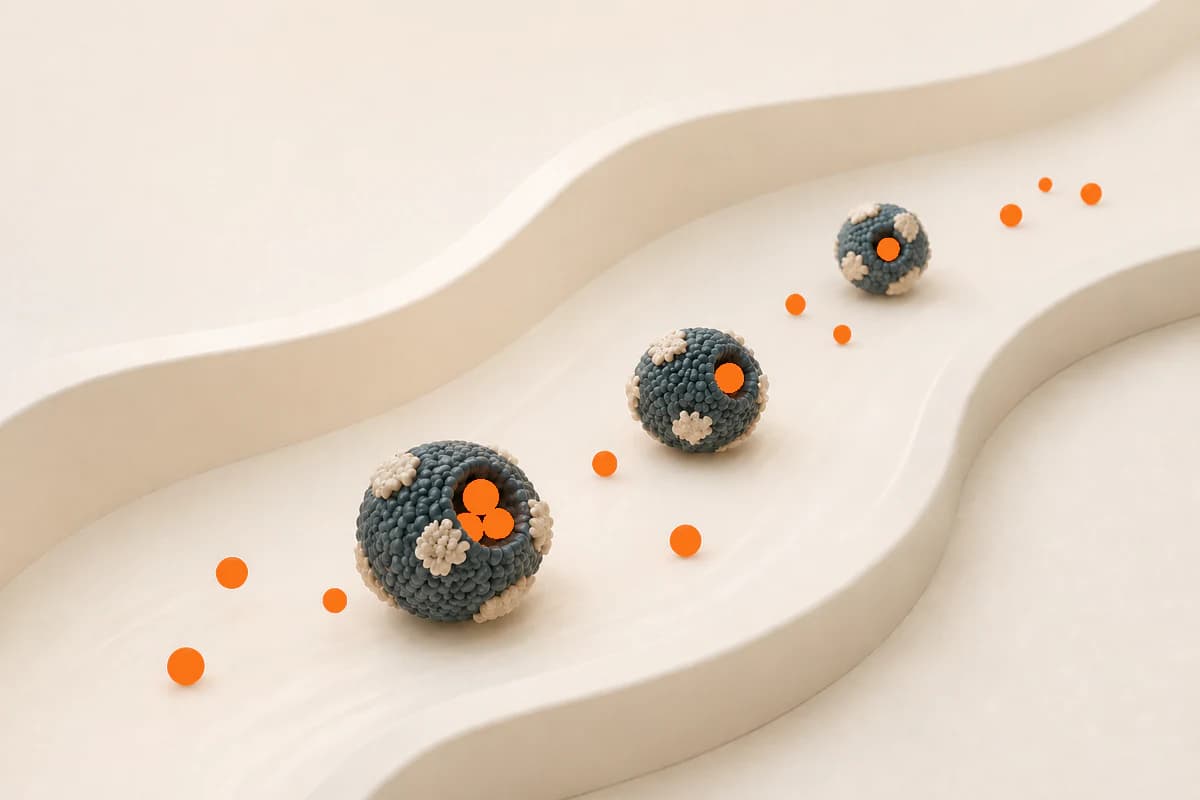
HDL particles take part in moving cholesterol from tissues toward the liver, among other biological roles. A routine HDL-C test reports how much cholesterol is carried in those particles at the time of the blood draw. It does not count HDL particles or test how well they function.See reference 2,See reference 7,See reference 13
That distinction explains an apparent contradiction: people with higher HDL-C often have lower risk in observational studies, yet genetic evidence and trials of medicines that raise HDL-C have not shown that simply pushing the number upward reliably prevents events. HDL-C is useful risk context, not proof of protection or a causal treatment target.See reference 9,See reference 10,See reference 13
What to check before interpreting an HDL result
- Context
- Fasting or nonfasting
- Why it matters
- HDL-C changes little after ordinary meals at the population level, so routine lipid screening can often be nonfasting. Fasting may still be requested because of triglycerides or the decision being made.
- Practical check
- Follow the order and record the hours since food rather than assuming every lipid panel requires fasting.See reference 1,See reference 6
- Context
- The rest of the lipid panel
- Why it matters
- HDL cannot show the cholesterol or particle burden in atherogenic lipoproteins.
- Practical check
- Read LDL-C, non-HDL-C and triglycerides beside it; ApoB can add context in selected people.See reference 1,See reference 2,See reference 3
- Context
- Current health and life stage
- Why it matters
- Pregnancy, infection, diabetes, metabolic patterns, thyroid conditions and some other illnesses can affect HDL or its interpretation.
- Practical check
- Interpret an unexpected change with symptoms, health history and related tests.See reference 4,See reference 18
- Context
- Medicines, hormones and supplements
- Why it matters
- Some medicines and hormone exposures can change HDL and the wider lipid profile.
- Practical check
- List prescribed, injected and non-prescription products; do not stop or change them on your own.See reference 4,See reference 18
- Context
- Trend and laboratory context
- Why it matters
- A single value can differ from a previous result because biology, health context and measurement conditions change.
- Practical check
- Compare the same unit and similar conditions, and use the laboratory's own flag near a boundary.See reference 4,See reference 7,See reference 8
How to convert HDL cholesterol units safely
For HDL cholesterol, divide mg/dL by 38.67 to obtain mmol/L. The practical forward factor is 0.02586. To convert mmol/L to mg/dL, multiply by 38.67. This is the cholesterol conversion factor; triglycerides use a different factor.See reference 8
The tools round only the displayed answer. For example, 40 mg/dL is 1.0344 mmol/L, 50 mg/dL is 1.2930 mmol/L, 60 mg/dL is 1.5516 mmol/L and 80 mg/dL is 2.0688 mmol/L. Near a threshold, use the report's original value and unit.See reference 4,See reference 8
What can a low HDL cholesterol result mean?
Low HDL-C often appears as part of a broader metabolic pattern: higher triglycerides, insulin resistance or diabetes, lower physical activity, smoking, excess weight or an eating pattern high in refined carbohydrate or trans fat. Genetics, illness and medicines can also contribute. The result cannot identify the cause by itself.See reference 4,See reference 18
The useful question is usually not “How do I force HDL above a line?” but “What does the whole risk pattern show?” LDL-C, non-HDL-C, ApoB when appropriate, triglycerides, blood pressure, glucose-related markers, tobacco exposure, family history and previous cardiovascular disease can change the priority.See reference 1,See reference 2,See reference 3
Can HDL cholesterol be too high?
Very high HDL-C is not guaranteed protection. MedlinePlus labels values above 80 mg/dL (about 2.07 mmol/L after conversion) elevated. Large observational studies and a 2024 meta-analysis report non-linear associations at very high concentrations, but the concentration linked with higher risk differs by sex and cohort, and some studies do not show the same pattern.See reference 4,See reference 8,See reference 11,See reference 12
The evidence does not establish one universal dangerous HDL level or prove that HDL-C itself causes harm. Persistent unexpectedly high results can reflect genetics, excess alcohol, hyperthyroidism or other context. Review the full lipid pattern and possible cause instead of trying to lower HDL on your own.See reference 4,See reference 11,See reference 12
Do not use very high HDL as a shield against other risk
A high HDL result cannot cancel high LDL-C, non-HDL-C or ApoB, and it does not make smoking, high blood pressure, diabetes or a strong family history harmless. HDL by itself is not an emergency marker, but a persistent unexpected extreme deserves routine clinical interpretation.See reference 1,See reference 2,See reference 3
What can responsibly improve the pattern?
- Approach
- Regular physical activity
- What the evidence supports
- Activity improves cardiovascular health and can raise HDL modestly. AHA evidence summaries estimate an average HDL increase of about 1–2 mg/dL; individual response varies.
- Important limit
- The broad health benefit matters more than reaching an HDL target, and an average is not a personal promise.See reference 14,See reference 15
- Approach
- Heart-healthy dietary pattern
- What the evidence supports
- A pattern rich in vegetables, fruit, whole grains, legumes, nuts, healthy protein sources and unsaturated fats supports overall cardiovascular health.
- Important limit
- No single “HDL food” cancels excess saturated fat, high LDL-C or the wider risk pattern.See reference 2,See reference 17
- Approach
- Stop tobacco exposure
- What the evidence supports
- Smoking is associated with lower HDL, and quitting is one of the most important cardiovascular actions regardless of the size of the HDL change.
- Important limit
- The reason to quit is the large whole-health benefit, not a laboratory-point target.See reference 2,See reference 18
- Approach
- Address the broader cause
- What the evidence supports
- Managing diabetes or another metabolic driver, reviewing a contributing medicine and treating an identified thyroid or medical condition can change the lipid pattern.
- Important limit
- The right action depends on the cause; do not stop prescribed treatment without the prescriber.See reference 1,See reference 4,See reference 18
- Approach
- Do not start alcohol for HDL
- What the evidence supports
- Alcohol may raise HDL, but evidence does not prove a cardiovascular benefit and alcohol can cause other harm.
- Important limit
- AHA recommends that non-drinkers do not start; people who drink should consider their individual risks and limits.See reference 16,See reference 17
Why medicine is not prescribed just to raise HDL
Niacin, fibrates and CETP inhibitors can raise HDL-C. In a meta-analysis of 39 randomized trials involving 117,411 participants, these HDL-targeted drug classes did not reduce all-cause mortality, coronary mortality, myocardial infarction or stroke among statin-treated participants. The result does not mean every use of these medicines is wrong; it means an HDL rise is not proof of benefit.See reference 9
Current care focuses on the risk and condition that have outcome evidence—often lowering LDL-C or non-HDL-C, treating severe triglyceride elevation, managing diabetes or blood pressure, stopping tobacco and using medicines for their proven indication. Do not start niacin or a supplement, or stop a prescribed medicine, based on an HDL table.See reference 1,See reference 2,See reference 3,See reference 9
When should HDL cholesterol be repeated?
Repeat timing usually follows the reason for the lipid panel rather than HDL alone: routine risk reassessment, a change in cardiovascular treatment, investigation of an unexpected pattern or follow-up of a secondary cause. Current AHA public guidance says many adults can be screened every five years from age 19, but individual risk and treatment can require a different schedule.See reference 1,See reference 2
When comparing results, use the same unit and note fasting status, recent illness, pregnancy or hormone context, alcohol pattern and medicine changes. A small HDL movement is rarely the main decision; the full lipid profile and overall risk trend matter more.See reference 1,See reference 4,See reference 6,See reference 8
Common HDL myths and mistakes
- “HDL is good, so higher is always better.” Very high HDL is not guaranteed protection, and observational findings at extreme levels are heterogeneous.See reference 4,See reference 11,See reference 12
- “My high HDL cancels my high LDL.” It does not. Atherogenic cholesterol and particle burden still require their own interpretation.See reference 1,See reference 2,See reference 3
- “Low HDL is a disease that must be medicated upward.” Low HDL can mark a broader risk pattern, but HDL-C itself is not a current treatment target.See reference 1,See reference 2,See reference 9
- “Red wine is a heart treatment because it raises HDL.” AHA does not recommend starting alcohol for cardiovascular benefit.See reference 16,See reference 17
- “A cholesterol ratio tells me everything.” Ratios can hide an important LDL-C, non-HDL-C or ApoB result and cannot replace validated risk assessment.See reference 1,See reference 3
- “HDL-C tells me how well my HDL works.” A routine test measures cholesterol concentration, not cholesterol-efflux capacity or every HDL function.See reference 7,See reference 13
Frequently asked questions
What is a normal HDL cholesterol level?
There is no universal personal HDL target. Common U.S. low thresholds are below 40 mg/dL for men and below 50 mg/dL for women; NHS guidance uses above 1.0 mmol/L for men and above 1.2 mmol/L for women as broad healthy guides. Use your laboratory's flag and the rest of the risk picture.See reference 2,See reference 4,See reference 5
Is an HDL of 60 mg/dL good?
60 mg/dL equals 1.5516 mmol/L and has historically been associated with lower cardiovascular risk. It is not a guarantee, a treatment target or permission to ignore high LDL-C, non-HDL-C, ApoB or other risk factors.See reference 2,See reference 3,See reference 4,See reference 8
Can HDL cholesterol be too high?
Very high HDL is not automatically protective. MedlinePlus labels above 80 mg/dL elevated, while observational studies report different non-linear patterns at very high levels. There is no universal danger cutoff; a persistent unexpected result should be interpreted with the full lipid panel, alcohol, thyroid and genetic context.See reference 4,See reference 11,See reference 12
Is low HDL dangerous?
Low HDL is associated with higher cardiovascular risk, but it is not an emergency result or a diagnosis by itself. Its meaning depends on LDL-C, non-HDL-C, ApoB when relevant, triglycerides, diabetes, blood pressure, smoking, family history and previous cardiovascular disease.See reference 1,See reference 2,See reference 4
Do I need to fast for an HDL test?
Often no. HDL-C changes little after ordinary meals, and routine lipid screening can usually be nonfasting. Fasting may still be requested because of high triglycerides, suspected genetic dyslipidaemia or a treatment decision. Follow the order and laboratory instructions.See reference 1,See reference 6
How do I convert HDL from mg/dL to mmol/L?
Divide HDL-C in mg/dL by 38.67, or multiply by 0.02586. To convert mmol/L to mg/dL, multiply by 38.67. Near a threshold, classify from the laboratory's original unit before rounding.See reference 8
What is the fastest safe way to raise HDL?
There is no need to chase HDL quickly. Activity, stopping tobacco, a heart-healthy dietary pattern, healthy weight and treatment of a secondary cause can improve the wider risk pattern, but HDL response is often modest. The goal is better cardiovascular health, not a rapid laboratory-point increase.See reference 2,See reference 14,See reference 15,See reference 17
Should I drink red wine to raise HDL?
No. Alcohol may raise HDL, but evidence has not proved a cause-and-effect heart benefit, and alcohol can increase other health risks. The American Heart Association recommends that people who do not drink should not start for health benefits.See reference 16,See reference 17
Should I take niacin for low HDL?
Do not self-start niacin for an HDL number. HDL-raising therapies did not reduce major cardiovascular outcomes on top of statins in a large randomized-trial meta-analysis. Niacin has risks and may still have selected clinician-managed uses for reasons other than simply raising HDL.See reference 1,See reference 9
Is the triglyceride-to-HDL ratio a test for insulin resistance?
No. The ratio is studied as an indirect marker, but performance and thresholds vary across populations. It cannot replace glucose testing, HbA1c, a clinical assessment or validated cardiovascular-risk estimation.See reference 1,See reference 2,See reference 19
See HDL beside the results that give it meaning
LongevityMate can organise an uploaded HDL result with its unit, laboratory range, LDL-C, non-HDL cholesterol, triglycerides, ApoB when available, glucose-related markers and the history you choose to provide. It helps you prepare better questions without turning one cholesterol result into a diagnosis.
Understand my blood resultsGet the weekly longevity brief
The week's best longevity research in plain English. Free, every Tuesday.
References
- 1. 2026 ACC/AHA Multisociety Guideline on the Management of Dyslipidemia
American College of Cardiology and American Heart AssociationGuideline
- 2. What Your Cholesterol Levels Mean
American Heart AssociationOfficial guidance
- 3. My Cholesterol Guide
American Heart AssociationOfficial guidance
- 4. HDL Test
MedlinePlus, U.S. National Library of MedicineOfficial guidance
- 5. High Cholesterol: Cholesterol Levels
National Health ServiceOfficial guidance
- 6. Fasting Is Not Routinely Required for Determination of a Lipid Profile
European Atherosclerosis Society and European Federation of Clinical Chemistry and Laboratory MedicineEvidence review
- 7. CVD Reference Laboratory
U.S. Centers for Disease Control and PreventionOfficial guidance
- 8. Lipid Conversion Factors
Agency for Healthcare Research and Quality via NCBI BookshelfOfficial guidance
- 9. Effect on Cardiovascular Risk of HDL-Targeted Drug Treatments: Meta-Analysis of 117,411 Patients
The BMJMeta-analysis
- 10. Plasma HDL Cholesterol and Risk of Myocardial Infarction: A Mendelian Randomisation Study
The LancetObservational study
- 11. Association Between Very High HDL-C Levels and Mortality: A Systematic Review and Meta-Analysis
Journal of Clinical LipidologyMeta-analysis
- 12. Extreme High HDL Cholesterol Is Paradoxically Associated With High Mortality in Men and Women
European Heart JournalObservational study
- 13. HDL Cholesterol Efflux Capacity and Incident Cardiovascular Events
The New England Journal of MedicineObservational study
- 14. Physical Activity as a Critical Component of First-Line Treatment for Elevated Blood Pressure or Cholesterol
American Heart AssociationEvidence review
- 15. The Effect of Exercise Training on Blood Lipids: A Systematic Review and Meta-Analysis
Sports MedicineMeta-analysis
- 16. Is Drinking Alcohol Part of a Healthy Lifestyle?
American Heart AssociationOfficial guidance
- 17. 2026 Dietary Guidance to Improve Cardiovascular Health
American Heart AssociationEvidence review
- 18. HDL: The Good Cholesterol
MedlinePlus, U.S. National Library of MedicineOfficial guidance
- 19. The Triglyceride/HDL Ratio as a Surrogate Biomarker for Insulin Resistance
BiomedicinesSystematic review
Editorial transparency
- Published by
- LongevityMate Editorial Team
- Published
- Updated
Medical disclaimer
This guide provides general education. It does not diagnose a condition, set a personal HDL target or replace advice from a qualified health professional who knows your full lipid panel, medicines, pregnancy or hormone context, sampling conditions, symptoms and health history.