
Overnight metabolism and training gains are different outcomes
- Study
- 2012: 16 healthy young men after evening exercise
- What was measured
- 40 g casein before sleep improved overnight protein balance; the muscle-synthesis finding was borderline statistically significant
- Main limit
- One night of measurements cannot establish lasting muscle or strength gainsSee reference 2
- Study
- 2017: 48 healthy older men
- What was measured
- 40 g casein increased overnight myofibrillar synthesis versus placebo using one tracer; a second tracer comparison was not statistically significant
- Main limit
- Different measurement approaches and an acute endpoint leave uncertaintySee reference 3
- Study
- 2015: 44 young men, 12 weeks of resistance training
- What was measured
- Pre-sleep protein plus carbohydrate produced greater gains in some muscle and strength measures than a noncaloric placebo
- Main limit
- The comparison does not isolate bedtime timing from adding protein and energySee reference 4
A synthesis rate is not a promise of visible muscle growth
Muscle protein synthesis describes the production of muscle proteins during a measurement period. Researchers can estimate it using labelled amino acids. In the 2012 study, the mixed-muscle result reached borderline significance, even though whole-body protein balance improved. These are related but different outcomes.See reference 2
The older-men trial compared 40 g casein, 20 g casein, 20 g plus leucine, and placebo. The clearest overnight synthesis finding was for 40 g versus placebo, with some disagreement between tracer estimates. It does not establish the best dose for women, all older adults or people with illness, nor prove long-term independence or strength gains.See reference 3
A bedtime study does not prove bedtime is uniquely best
The 12-week trial added a supplement containing 27.5 g protein and 15 g carbohydrate before sleep, while the comparison group received a noncaloric placebo. It reported larger gains during supervised resistance training. Because the groups also differed in protein and energy intake, the study cannot show that the same protein taken at another time would work less well.See reference 4
The listed amounts describe study conditions, rather than a personal prescription. NIH places protein within the wider picture of diet, training and recovery. Consider whether a product fills an actual dietary need instead of assuming its timing label proves an advantage.See reference 1
Read protein grams separately from powder weight
Check casein or caseinates, other protein sources, and protein grams per serving. Powder weight includes the other ingredients; a mixed product is not automatically equivalent to a trial preparation.See reference 1,See reference 5
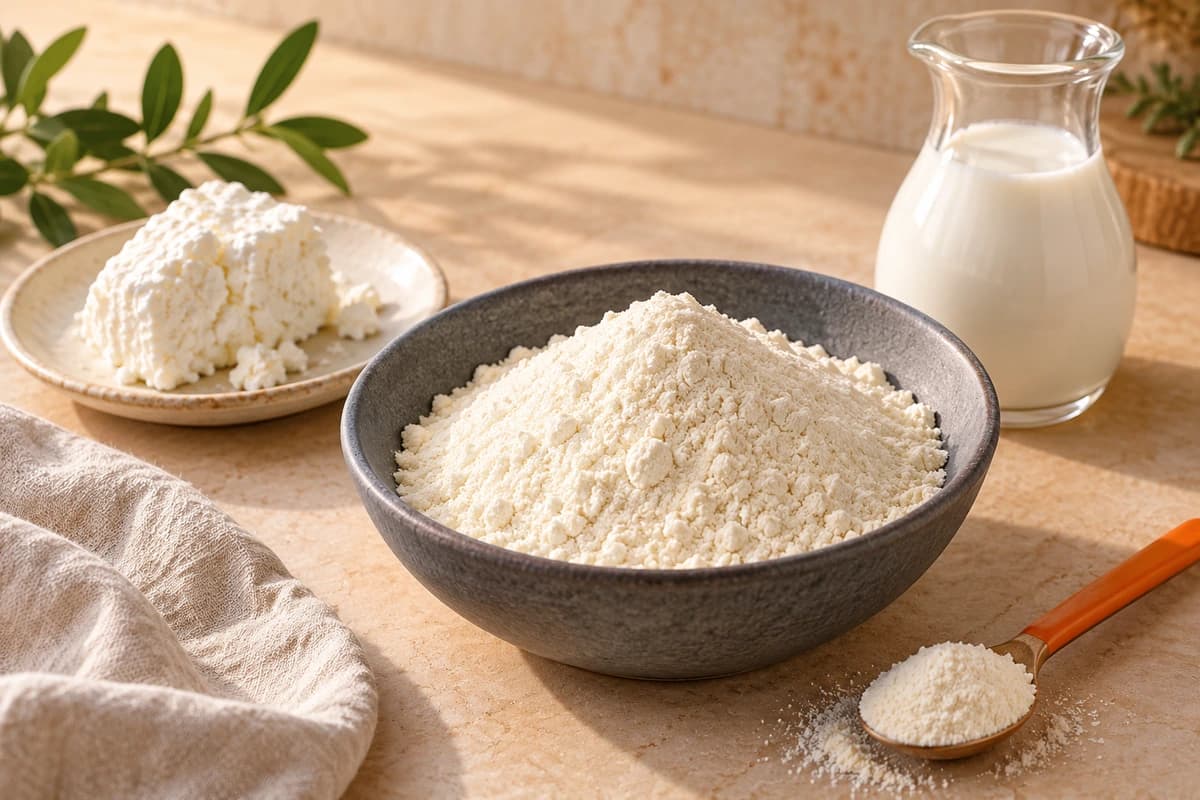
For a meaningful comparison, keep the serving size, protein amount, other ingredients and the tested preparation together. The artwork shows milk, curds and powder to make the milk origin visible; it does not endorse a brand, serving size or performance claim.See reference 1,See reference 7
Lactose-free does not mean free of milk protein
FDA identifies casein and sodium caseinate as milk-derived proteins that matter to people with milk allergy. Check the full label and allergen declaration; words such as nondairy should not replace that check. Casein protein is unsuitable as a milk-free alternative for someone avoiding the allergenic milk proteins.See reference 5
Lactose intolerance concerns digestion of the milk sugar lactose. Milk allergy is an immune reaction to milk proteins, a different problem that can be serious. Removing lactose does not by itself remove casein. A lactose-free claim therefore cannot establish that a casein product is safe for milk allergy.See reference 5,See reference 6
Keep individual dietary needs and uncertainty visible
NIH notes limited evidence about adverse effects of high protein intake, despite no established upper limit. More is not always better. Discuss any prescribed protein restriction before changing intake.See reference 1,See reference 7
Supplement labels and small exercise trials do not establish benefits for every population or long-term health outcome. Review the reason for considering the product, your existing diet, allergies and other supplements with an appropriate health professional.See reference 7
Keep the useful details
- Separate an overnight synthesis measurement from a longer training outcome.See reference 2,See reference 4
- Ask whether a study compared equal total protein and energy before crediting the timing.See reference 4
- Check milk proteins as well as lactose when reading the label.See reference 5,See reference 6
Common questions
Is casein always better than whey?
No. They differ in digestion, but that alone does not rank every product or outcome. Match the evidence and composition to the question.See reference 1
Does the research prove I need protein immediately before sleep?
No. The studies have specific participants and comparisons. They do not establish a universal requirement or best schedule.See reference 2,See reference 3,See reference 4
Can someone with milk allergy use lactose-free casein?
A lactose-free label does not remove the milk-protein concern. Casein itself is a milk protein; follow the allergy care plan and check with the care team.See reference 5,See reference 6
Get the weekly longevity brief
The week's best longevity research in plain English. Free, every Tuesday.
References
- 1. Dietary supplements for exercise and athletic performance: protein
NIH Office of Dietary SupplementsOfficial guidance
- 2. Protein ingestion before sleep improves postexercise overnight recovery
Res et al., 2012Randomized trial
- 3. Protein ingestion before sleep and overnight synthesis in healthy older men
Kouw et al., 2017Randomized trial
- 4. Pre-sleep protein during prolonged resistance training in young men
Snijders et al., 2015Randomized trial
- 5. Have food allergies? Read the label
U.S. Food and Drug AdministrationOfficial guidance
- 6. Lactose intolerance: symptoms and causes
NIDDKOfficial guidance
- 7. Using dietary supplements wisely
NCCIHOfficial guidance
Editorial transparency
- Published by
- LongevityMate Editorial
- Published
- Updated
Medical disclaimer
General education only. This guide does not diagnose a condition, interpret your personal result, choose a treatment or recommend a supplement dose. Discuss testing, symptoms, medicines and supplements with a qualified health professional.