
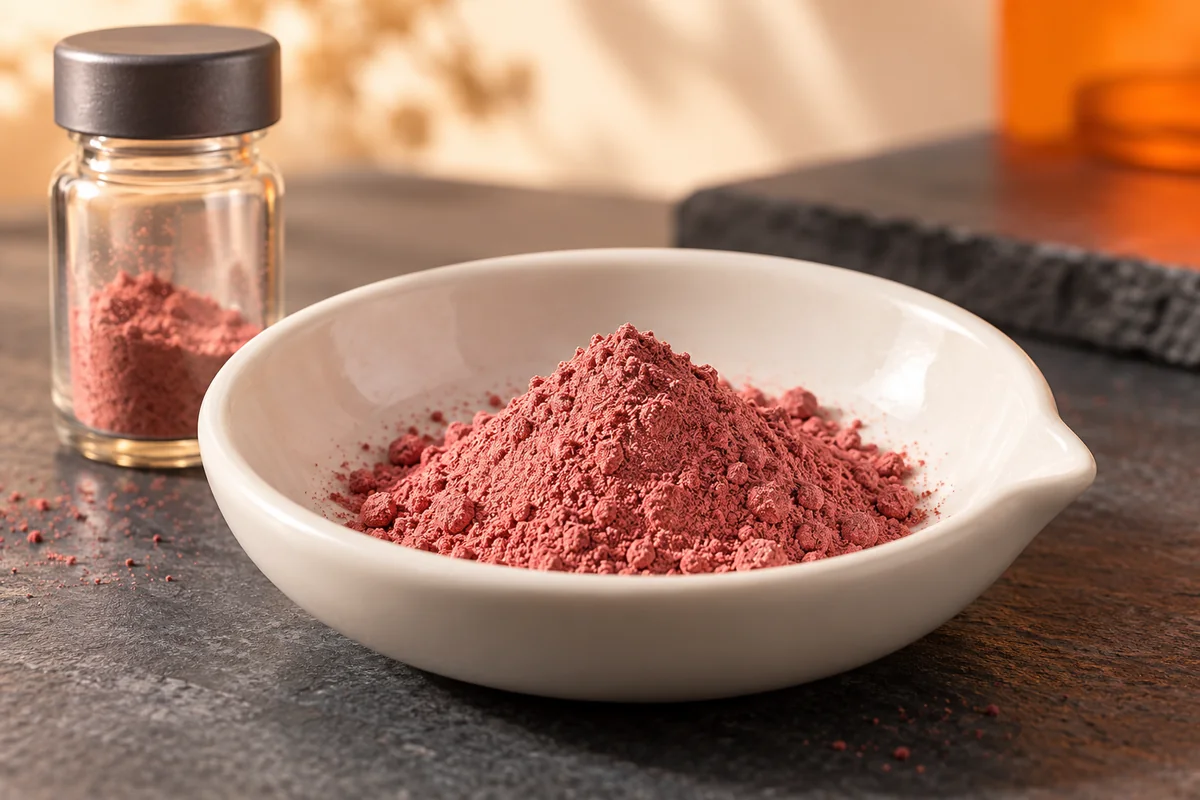
Start with the form and the label amount
Trivalent chromium in supplements is different from toxic hexavalent chromium associated with industrial exposure. On a U.S. Supplement Facts label, the amount refers to elemental chromium, not the weight of the whole picolinate compound. Keep micrograms (mcg or µg) distinct from milligrams.See reference 1
What the evidence actually supports
- Question
- Weight loss
- Evidence and exposure
- 2013 Cochrane review: nine trials, 622 adults, 8–24 weeks; studied amounts included 200–1,000 µg/day
- Finding and limit
- The pooled effect was about 1 kg beyond placebo, with low-quality evidence and no clear dose gradient; clinical relevance was doubtfulSee reference 2
- Question
- Long-term safety and health outcomes
- Evidence and exposure
- The same Cochrane review
- Finding and limit
- Only three studies reported adverse events; the short trials could not settle long-term safety or major health outcomesSee reference 2
- Question
- Diabetes and glucose control
- Evidence and exposure
- NIH ODS assessment of multiple human trials and reviews
- Finding and limit
- Findings differ across studies; small average changes do not establish a routine treatment role or a benefit in healthy peopleSee reference 1
- Question
- Is chromium essential?
- Evidence and exposure
- EFSA’s 2014 reference-value assessment
- Finding and limit
- Evidence did not establish a human requirement or justify an Adequate Intake; this differs from the older U.S. frameworkSee reference 3
A statistically detectable change may still be a small benefit
The Cochrane evidence was current only to December 2012 and cannot be presented as a new 2026 discovery. Its low confidence, short follow-up and sparse harm reporting matter as much as the average weight difference. It does not support promising a kilogram of weight loss to a reader.See reference 2
EFSA found no demonstrated benefit from chromium intake in healthy people in its assessment. A proposed biological mechanism, a nutrient intake reference and evidence for a treatment are different kinds of claim.See reference 3
Study amounts are not a recommended dose
The amounts in the trial table describe the studies. They do not identify a useful dose for weight loss, prove that more works better or justify replacing diabetes treatment. A missing numerical upper intake limit is not evidence that unlimited supplementation is safe.See reference 1,See reference 2
Medicines and health conditions change the safety question
NIH ODS flags possible additive glucose-lowering effects with insulin and other diabetes medicines, reduced levothyroxine absorption when taken together, and particular caution with kidney or liver disease. Ask a pharmacist or treating clinician to review the exact product; this guide does not choose a timing interval or adjust treatment.See reference 1
The absence of a proven deficiency test in ordinary practice also matters. A marketed hair or blood chromium result does not by itself establish a need for chromium pills. EFSA could not define a dietary requirement from the available evidence.See reference 3
Check claims against the actual product
Keep the chromium form, elemental amount, other ingredients and proposed purpose together when reviewing a label. A weight-loss blend or a different chromium compound is not the exact intervention in a picolinate trial. A small, uncertain study effect cannot validate every product using the same mineral name.See reference 1,See reference 2
Common questions
Is chromium picolinate a proven weight-loss supplement?
No reliable personal benefit is established. The Cochrane review found a small average difference with low-quality evidence and insufficient safety information.See reference 2
Does no upper intake limit mean high amounts are safe?
No. Limited safety data are a reason for caution, not proof of an unlimited safe amount.See reference 1
Does a chromium intake recommendation prove I need a supplement?
No. Authorities have assessed essentiality differently, and EFSA did not find a basis for setting a requirement. A population intake framework is not a personal prescription.See reference 3
Can it replace diabetes or thyroid medicine?
No such use is established here. Chromium can interact with those treatments, so the exact product belongs in a medicine review.See reference 1
Get the weekly longevity brief
The week's best longevity research in plain English. Free, every Tuesday.
References
- 1. Chromium: health professional fact sheet
NIH Office of Dietary SupplementsOfficial guidance
- 2. Chromium picolinate supplementation for overweight or obese adults
Tian and colleagues; CochraneSystematic review
- 3. Scientific opinion on dietary reference values for chromium
EFSA NDA PanelOfficial guidance
Editorial transparency
- Published by
- LongevityMate Editorial
- Review
- Editorial evidence review (AI-assisted)
- Published
- Updated
Medical disclaimer
General education only. AI-assisted editorial evidence review is not a qualified clinical assessment. This guide does not diagnose a condition, interpret a personal result, choose treatment or recommend a supplement dose. Discuss testing, symptoms, medicines and supplements with a qualified health professional.