
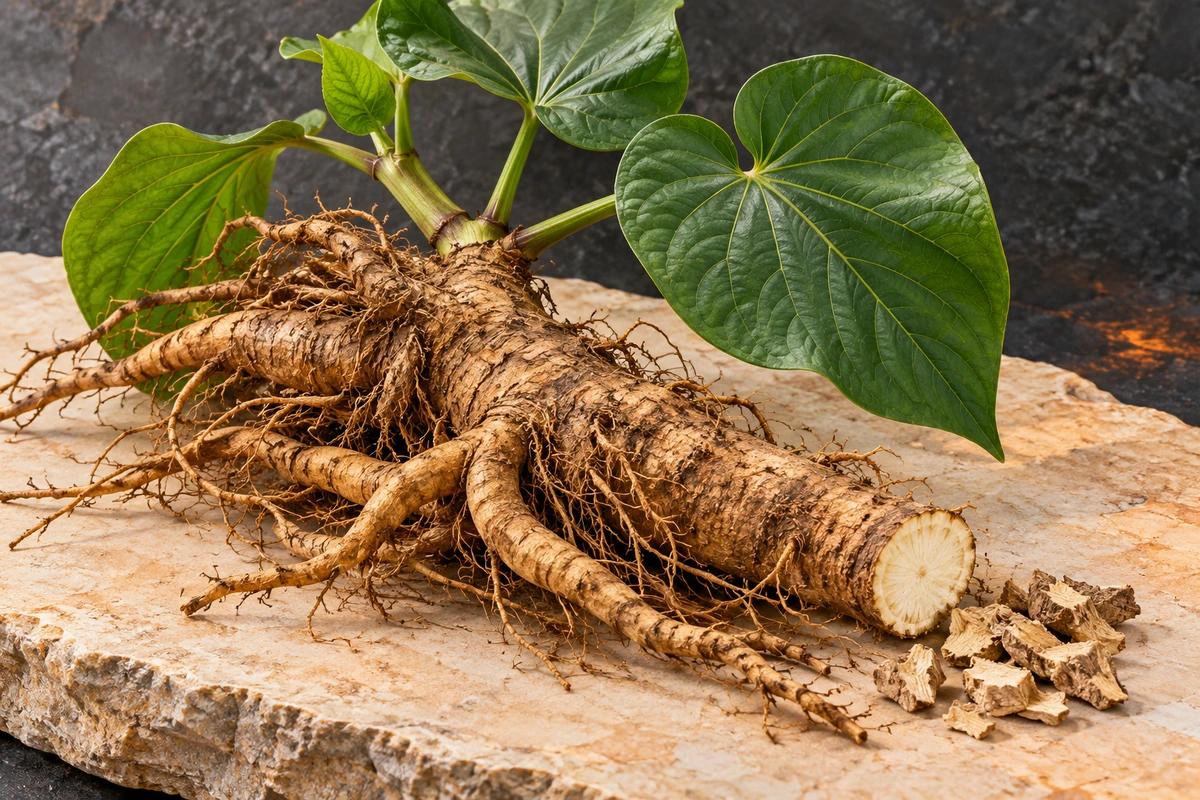
One plant, several preparations
Kava is Piper methysticum, a South Pacific plant. Water-prepared drinks, whole root and extracts standardized for kavalactones are different preparations and amounts.See reference 1,See reference 3
The original ingredient illustration depicts roots and broad leaves. It is not a verified specimen, purity test or proof that a preparation is safe.
Why the evidence summaries differ
- Evidence
- Historical Cochrane review, 2003
- What it assessed
- 12 trials, 700 participants; 7 trials entered the pooled anxiety-score analysis
- Finding and limit
- Small favorable signal with limited robustness; it predates the larger 2020 trialSee reference 2
- Evidence
- 2020 longer randomized trial
- What it assessed
- 171 non-medicated participants with diagnosed generalized anxiety disorder; 16 weeks
- Finding and limit
- No significant anxiety benefit versus placebo for the tested aqueous root extractSee reference 3
- Evidence
- Current NCCIH summary, 2025
- What it assessed
- Anxiety evidence and reported safety problems
- Finding and limit
- Possible benefit for some anxiety symptoms does not establish benefit for generalized anxiety disorder or other conditionsSee reference 1
An aqueous extract was not automatically effective or free of concerns
The 2020 trial tested a water-based dried-root extract providing 120 mg kavalactones twice daily. This research amount is not personal dosing advice.See reference 3
Abnormal liver tests, memory difficulties and tremor were more frequent with kava, although no participant met the study’s herb-induced liver-injury criteria. This result cannot establish safety for all water preparations.See reference 3
A positive old review cannot settle today’s product choice
The Cochrane review was based on relatively small trials and said the effect lacked robustness. Short studies with few participants are poorly suited to ruling out rare or long-term harms. Treat its positive signal as historical evidence with limits, rather than current assurance that kava is safer than established anxiety care.See reference 2
Keep rare serious liver injury in the main discussion
NCCIH reports rare serious and fatal liver injuries, including cases involving water-prepared drinks. Proposed contributors include cultivar, plant parts, contamination, alcohol, prolonged use and susceptibility; the cause is unsettled.See reference 1
Reports of liver injury and trial liver-test abnormalities are different evidence. Neither supplies a personal risk estimate or clearance for liver disease.See reference 1,See reference 3
Sedative combinations need particular caution
NCCIH cautions against alcohol or other sedating combinations, including benzodiazepines, and describes pregnancy or breastfeeding risks. Digestive symptoms and dizziness are also reported. Discuss medicines and supplements with the treating professional.See reference 1
Product identification does not establish suitability
Keep the species, plant part, extraction method, kavalactone amount and other ingredients available for a professional review. A quality check helps assess what is being sold. It does not demonstrate that the bottle is effective for diagnosed anxiety or has the safety profile of a different study preparation.See reference 4
Keep the useful details
- Separate older symptom studies from the longer diagnosed-anxiety trial.See reference 2,See reference 3
- Water extraction is not a universal effectiveness or safety guarantee.See reference 1,See reference 3
- Keep liver-safety and medicine questions visible before a product decision.See reference 1,See reference 4
Common questions
Did the longer generalized-anxiety trial show a benefit?
No statistically significant benefit versus placebo was found for the tested aqueous extract over 16 weeks.See reference 3
Does an older favorable review mean kava is proven for everyone?
No. Its small, older trials and limited robustness do not settle the newer diagnosed-population question.See reference 2
Does water preparation remove all liver concerns?
No. Water-prepared drinks have been implicated in liver-injury reports, and abnormal liver tests occurred in the trial.See reference 1,See reference 3
Get the weekly longevity brief
The week's best longevity research in plain English. Free, every Tuesday.
References
- 1. Kava: usefulness and safety
NCCIH; updated April 2025Official guidance
- 2. Kava extract versus placebo for treating anxiety
Pittler and Ernst, Cochrane; historical 2003 reviewSystematic review
- 3. Kava for generalised anxiety disorder: a 16-week randomized placebo-controlled study
Sarris et al., Australian & New Zealand Journal of Psychiatry, 2020Randomized trial
- 4. Using dietary supplements wisely
NCCIHOfficial guidance
Editorial transparency
- Published by
- LongevityMate Editorial
- Published
- Updated
Medical disclaimer
General education only. This guide does not diagnose a condition, interpret your personal result, choose a treatment or recommend a supplement dose. Discuss testing, symptoms, medicines and supplements with a qualified health professional.