
Compare the preparation and the comparison group
- Evidence
- EMA traditional-use assessment
- What it supports
- A history of use for mild stress and sleep
- Important limit
- Traditional-use status does not demonstrate a reliable clinical effectSee reference 1
- Evidence
- 2021 anxiety/depression review
- What it supports
- Possible improvement in symptom scores versus placebo
- Important limit
- Few trials with substantial differences between methods; these outcomes are not proof of insomnia treatmentSee reference 3
- Evidence
- 2023 placebo-controlled extract trial
- What it supports
- 100 adults followed for three weeks reported better sleep scores with a specified phospholipid extract
- Important limit
- Sleep scores differed between groups before treatment; short-term, self-reported results need cautious interpretationSee reference 6
- Evidence
- 2024 placebo-controlled cross-over trial
- What it supports
- A specified extract reduced insomnia symptom scores compared with placebo
- Important limit
- One preparation was tested; authors disclosed commercial ties. The result does not prove long-term safety or apply to every productSee reference 7
- Evidence
- 2024 six-week sleep trial
- What it supports
- Tested lemon balm with L-theanine, valerian and saffron in 64 randomized adults
- Important limit
- The mixture did not improve objective or subjective sleep more than placebo; no effect can be assigned to lemon balm aloneSee reference 4
- Evidence
- 2026 open-label dose-comparison study
- What it supports
- 32 adults reported improved sleep scores over three weeks
- Important limit
- Without a placebo group or blinding, expectation and change over time cannot be separated from a product effectSee reference 8
A positive trial is a signal, not a guarantee
The controlled trials provide a reason to study particular extracts further. The 2023 trial had differences in starting sleep scores; the 2024 trial reported lower insomnia scores but included authors with commercial roles. These results do not establish that lemon balm can replace a prescribed treatment.See reference 6,See reference 7
The 2026 study found improvement during use, but it was open-label and had no placebo comparison. Its short-term safety observations cannot establish safety for every person or long-term use. Better sleep scores over time alone do not show why they changed.See reference 8
Tea, extracts and blends are different products
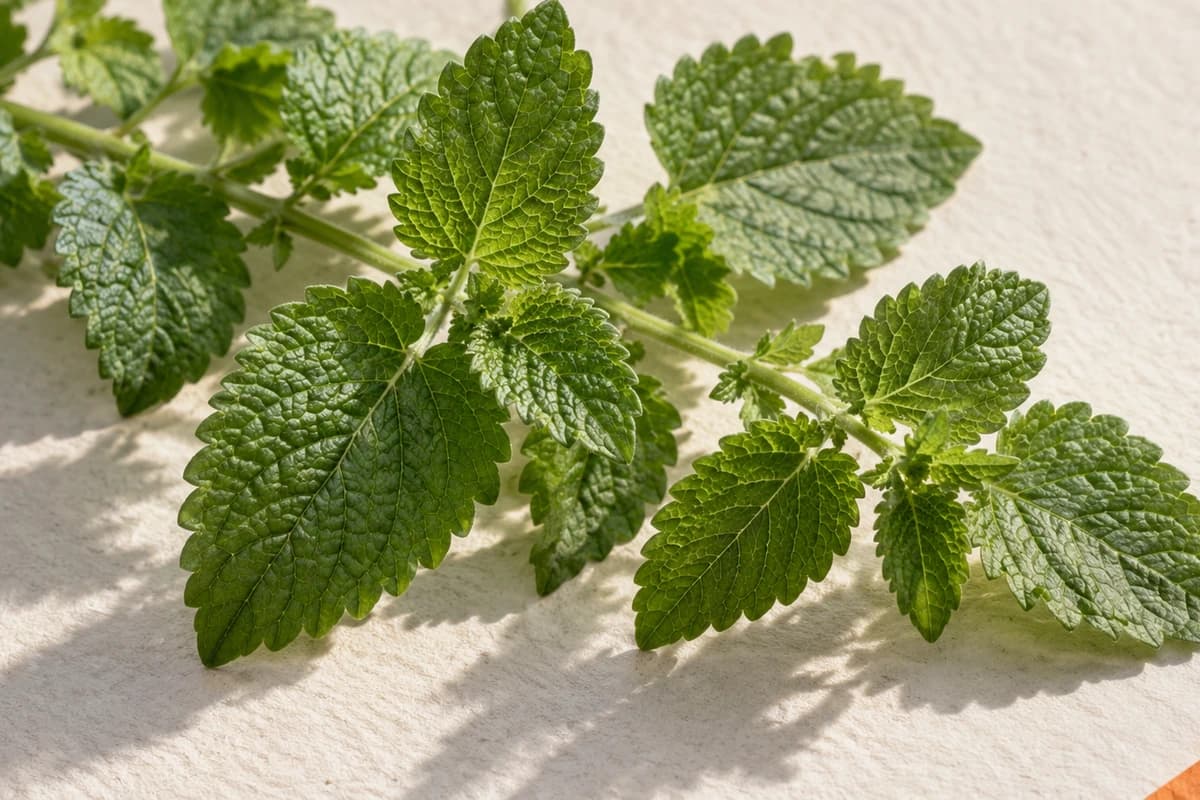
Check the botanical name and plant part: Melissa officinalis leaf. A tea, liquid extract and dried extract are not interchangeable by capsule weight or serving size. Extraction details and other ingredients matter. A study of one preparation does not establish an effect for every lemon balm product.See reference 1
A mixed-ingredient trial cannot tell you which ingredient caused a change. In the 2024 trial, sleep scores improved in both groups, without a significant advantage for the active blend. An improvement from baseline alone is not sufficient evidence that a product works.See reference 4
Long use does not fill every safety gap
The EMA monograph says safety in pregnancy and breastfeeding has not been established and does not recommend use in those circumstances. Adequate evidence is also lacking for children under 12. It warns that ability to drive or use machinery may be impaired.See reference 2
Interaction data in the monograph are unavailable. That means uncertain interaction risk, not confirmed compatibility with medicines. Tell a pharmacist about all ingredients, especially when a product is intended for sleep. Avoid products containing an ingredient to which you are allergic.See reference 2,See reference 5
Laboratory and animal findings involving thyroid signaling have uncertain clinical relevance. They do not establish a thyroid treatment or prove a specific interaction in people. If you have thyroid disease or take thyroid medicine, include this in the professional discussion.See reference 2
Keep the useful details
- Check Melissa officinalis leaf and the full product label, rather than judging by the word lemon.See reference 1,See reference 2
- Check whether the study used that exact preparation and whether it outperformed a blinded placebo comparison.See reference 4
- Discuss persistent or worsening sleep problems with a qualified professional instead of relying on a supplement claim.See reference 1,See reference 5
Common questions
Do positive trials prove lemon balm treats insomnia?
They are encouraging for the specified extracts, but study limitations and product differences remain. The trials do not establish every preparation as an insomnia treatment or a replacement for prescribed care.See reference 7
Can a positive result for a blend prove lemon balm works?
No. Other ingredients and the comparison group matter. The 2024 blend trial did not show superiority to placebo.See reference 4
Is lemon balm the same as lemon fruit?
No. This guide concerns Melissa officinalis leaf, a botanical ingredient. The name does not make it a citrus product or mean that a lemon-flavoured supplement contains the studied leaf preparation.See reference 1,See reference 2
Get the weekly longevity brief
The week's best longevity research in plain English. Free, every Tuesday.
References
- 1. Melissae folium: public overview
European Medicines AgencyOfficial guidance
- 2. Final community herbal monograph: Melissa officinalis leaf, 14 May 2013
European Medicines AgencyOfficial guidance
- 3. Lemon balm and depression or anxiety: systematic review and meta-analysis
Ghazizadeh et al., Phytotherapy ResearchMeta-analysis
- 4. Nutraceutical combination and impaired sleep: placebo-controlled trial
Gutiérrez-Romero et al., Scientific ReportsRandomized trial
- 5. Using dietary supplements wisely
NCCIHOfficial guidance
- 6. Phospholipid-based Melissa extract, sleep and distress: 2023 controlled trial
Bano et al., Frontiers in PharmacologyRandomized trial
- 7. Melissa phytosome and sleep quality: 2024 controlled cross-over study
Di Pierro et al., NutrientsRandomized trial
- 8. Melissa phospholipids and sleep: 2026 open-label dose-comparison study
Rondanelli et al., Food & Nutrition ResearchNonrandomized trial
Editorial transparency
- Published by
- LongevityMate Editorial
- Published
- Updated
Medical disclaimer
General education only. This guide does not diagnose a condition, interpret your personal result, choose a treatment or recommend a supplement dose. Discuss testing, symptoms, medicines and supplements with a qualified health professional.