
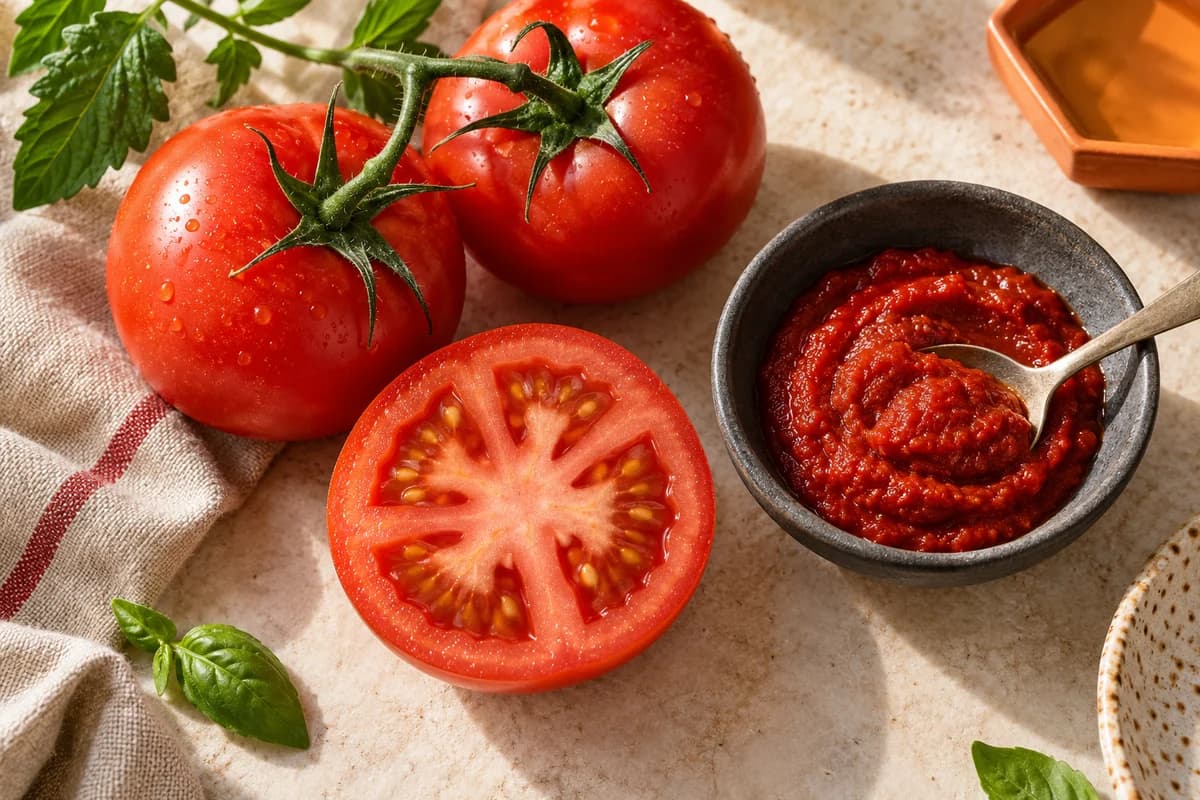
What lycopene is
Tomatoes, tomato products and several other fruits contain lycopene. Processing and the food matrix affect absorption; tomato puree or paste can supply lycopene in a form the body uses more readily than raw tomatoes. This is about availability, not a promise of disease prevention.See reference 1
A tomato-rich diet, a tomato extract and a capsule are different interventions. Foods provide many components, while products vary in formulation and additional ingredients. Results from one cannot automatically be assigned to another.See reference 1,See reference 2
Keep the evidence layers separate
- Finding
- Dietary association
- What it can show
- A pattern in groups eating different foods.
- What it cannot establish
- That taking a capsule causes the observed outcome.See reference 2,See reference 3
- Finding
- Higher blood lycopene
- What it can show
- The intervention increased exposure or absorption.
- What it cannot establish
- A clinical benefit on its own.See reference 4
- Finding
- PSA or tissue-marker change
- What it can show
- An intermediate biological finding.
- What it cannot establish
- Fewer cancers, slower disease or longer survival by itself.See reference 1,See reference 2
- Finding
- A specific product trial
- What it can show
- Results for its formulation, population and follow-up.
- What it cannot establish
- Benefit from every lycopene product or a universal dose.See reference 2,See reference 5
What two human trials add
A six-month randomized study in men with high-grade prostatic intraepithelial neoplasia, a prostate tissue finding, compared lycopene-rich tomato extract with placebo. Blood lycopene increased, but the study found no discernible effect on the examined proliferation and cell-cycle markers in benign prostate tissue. More exposure did not become a demonstrated tissue benefit.See reference 4
Another trial assigned 79 men awaiting treatment to tomato products, tomato products with other nutrients, or a control diet for three weeks. The main analysis found no between-group difference in PSA change. Exploratory subgroup findings did not make this a cancer-prevention trial or establish a treatment.See reference 5
Prostate-cancer prevention remains unproved
The National Cancer Institute describes inconsistent human findings and states that lycopene supplements have not been proved to lower prostate-cancer risk. Laboratory antioxidant activity is a different evidence level from preventing illness in people.See reference 2,See reference 3
This guide therefore provides no cancer-prevention, treatment or longevity dose. A study amount describes an experiment; it is not a recommendation for readers to copy. Continue any established clinical monitoring or treatment plan through the qualified team caring for you.See reference 2,See reference 3
Product safety still needs its own assessment
Lycopene has been tolerated in many trials, but gastrointestinal effects such as nausea, diarrhea, bloating or stomach irritation have been reported. Limited trial experience does not certify every product, combination or long-term use.See reference 1,See reference 2
Identify the exact formulation, serving amount and other ingredients. If you are receiving treatment, take the label to your clinician or pharmacist before adding it. Safety of a combination cannot be inferred from lycopene alone.See reference 1,See reference 2
Read a supplement claim more carefully
- Was the intervention food, tomato extract, a capsule or a multi-ingredient mixture?See reference 2,See reference 5
- Was the outcome absorption, PSA, tissue markers or an actual health outcome?See reference 2,See reference 4,See reference 5
- Does the conclusion match the trial’s population and duration?See reference 4,See reference 5
Common questions
Does better absorption mean the supplement works better?
It can mean more lycopene entered circulation. The six-month tissue study shows why that alone does not prove a clinical benefit.See reference 4
Can I use a trial dose as a prevention dose?
No prevention dose is established by these studies. They tested particular interventions and outcomes, while NCI describes prevention evidence as insufficient.See reference 2,See reference 3
Is lycopene the same as beta-carotene?
They are different carotenoids. The lycopene evidence applies to lycopene-containing interventions, not automatically to another carotenoid or a blend.See reference 1,See reference 2
Get the weekly longevity brief
The week's best longevity research in plain English. Free, every Tuesday.
References
- 1. Prostate Cancer, Nutrition, and Dietary Supplements: Patient Version
National Cancer InstituteEvidence review
- 2. Prostate Cancer, Nutrition, and Dietary Supplements: Health Professional Version
National Cancer InstituteEvidence review
- 3. Prostate Cancer Prevention: Patient Version
National Cancer InstituteEvidence review
- 4. A Phase II Randomized Trial of Lycopene-Rich Tomato Extract Among Men With High-Grade Prostatic Intraepithelial Neoplasia
Nutrition and CancerRandomized trial
- 5. Tomato-based randomized controlled trial in prostate cancer patients: Effect on PSA
Clinical NutritionRandomized trial
Editorial transparency
- Published by
- LongevityMate Editorial
- Published
- Updated
Medical disclaimer
General education only. This guide does not diagnose a condition, interpret your personal result, choose a treatment or recommend a supplement dose. Discuss testing, symptoms, medicines and supplements with a qualified health professional.