
The short answer
What a urine pH result says
Urine pH describes the acidity of the sample that was tested. It is one part of a urinalysis, not a reading of blood pH. A single urine pH cannot diagnose a kidney stone, urinary infection or an acid-base disorder.See reference 1,See reference 2
Read the sample, not a fixed body trait
Urinalysis combines appearance, chemical tests and sometimes microscopic findings. pH is only one of those measurements. A result belongs to the collection time and test method; it should be considered with symptoms, other urine results and the reason the test was ordered.See reference 1,See reference 2
A kidney-stone evaluation may include urine pH, but stone history, stone composition and additional urine measurements matter. A pH number by itself cannot tell you whether you have a stone or which treatment to use.See reference 2
Diet patterns and some prescribed medicines can affect urine acidity. The importance of a change depends on why urine pH is being measured. In stone care, pH is considered alongside stone type and other tests, so this page does not recommend changing food or medicine to reach a number.See reference 2
Three report details that matter
- On the report or label
- Urine pH
- What it can and cannot tell you
- The acidity reading of this specimen. Compare it with this laboratory’s method and interval, not a universal online target.See reference 1,See reference 3
- On the report or label
- Dipstick or pH meter
- What it can and cannot tell you
- These methods can disagree. In a renal-clinic comparison, some paired dipstick and meter readings differed enough to matter for clinical use.See reference 3
- On the report or label
- Other urine findings
- What it can and cannot tell you
- Blood, protein, cells, crystals and infection markers answer questions pH cannot answer alone.See reference 1,See reference 2
Why a strip may not match a meter
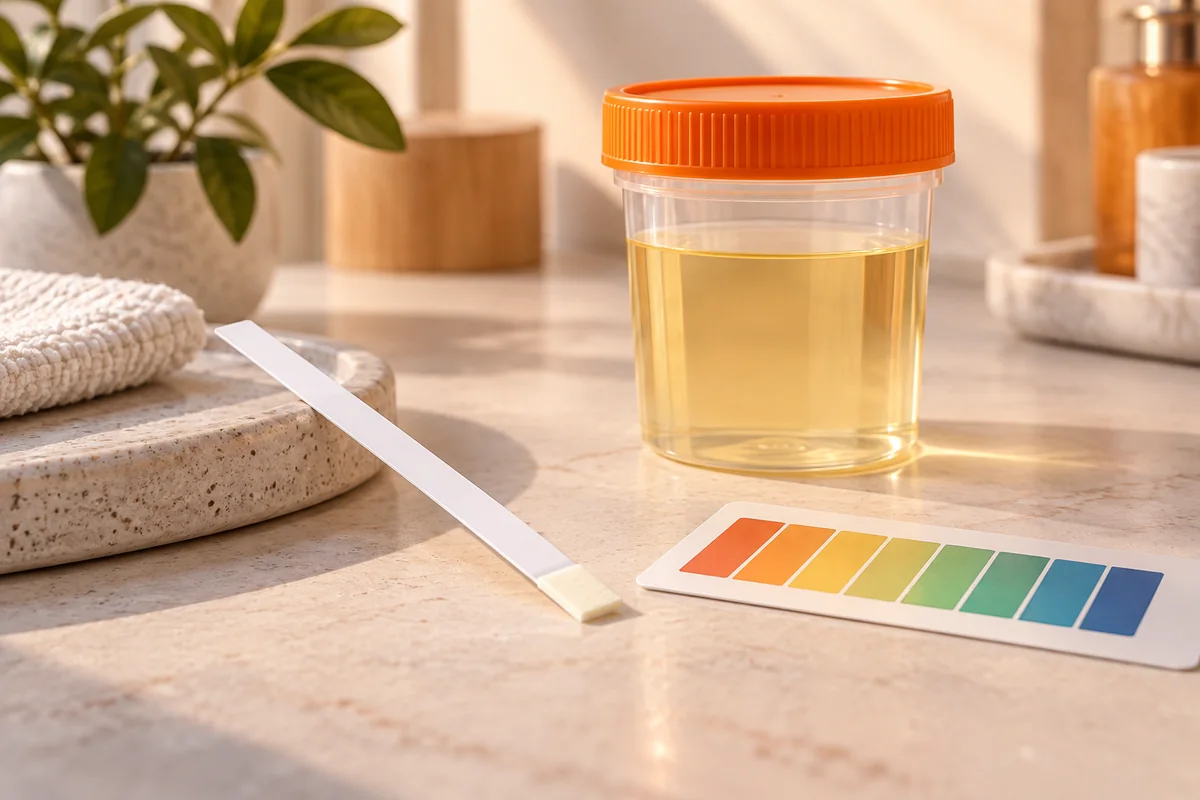
A dipstick estimates pH through a colour change. An electrode meter is a different method. The observed disagreement in a specialist-clinic study is a reason to confirm the method when a precise pH matters; it is not a claim that every home or laboratory strip is wrong.See reference 3
Do not compare one reading taken at a different time or with a different method as if only your biology changed. If a clinician needs to monitor urine acidity, they can specify how and when to collect and measure it.See reference 2,See reference 3
What to do with an unexpected value
Keep the full report and tell your clinician why the urine was tested, whether you have symptoms and what medicines or supplements you use. Do not start an alkalinising product, restrict foods or change a prescribed medicine on the basis of this page or one strip result.See reference 1,See reference 2
The safest next step depends on the clinical question. A stone assessment, infection evaluation and routine urinalysis use different combinations of findings; this guide cannot determine urgency or treatment for an individual.See reference 1,See reference 2
What to take into the next conversation
- The pH result together with the collection date and the rest of the urinalysis.See reference 1
- Whether it came from a dipstick or a laboratory meter.See reference 3
- The reason for testing and any stone history, symptoms or medicines.See reference 2
Common questions
Does alkaline urine mean I have an infection?
No. pH alone cannot establish infection. Symptoms and other tests are needed for that assessment.See reference 1,See reference 2
Is urine pH the same as blood pH?
No. Urine pH describes the tested urine sample, not the acidity of blood.See reference 1,See reference 2
Should I try to change my urine pH?
Not from a single result or an online target. Urine-pH manipulation can be part of specific clinical care, which needs the reason for testing and appropriate monitoring.See reference 2,See reference 3
References
- 1. Urinalysis
MedlinePlus, U.S. National Library of MedicineOfficial guidance
- 2. UPDATE: Canadian Urological Association guideline: Evaluation and medical management of kidney stones
Canadian Urological Association JournalGuideline
- 3. Accuracy of urine pH testing in a regional metabolic renal clinic
UrolithiasisObservational study
Editorial transparency
- Published by
- LongevityMate Editorial
- Published
- Updated
Medical disclaimer
General education only. This guide does not diagnose a condition, choose treatment or recommend a supplement dose. Discuss your own result, symptoms, medicines or product use with a qualified health professional.