
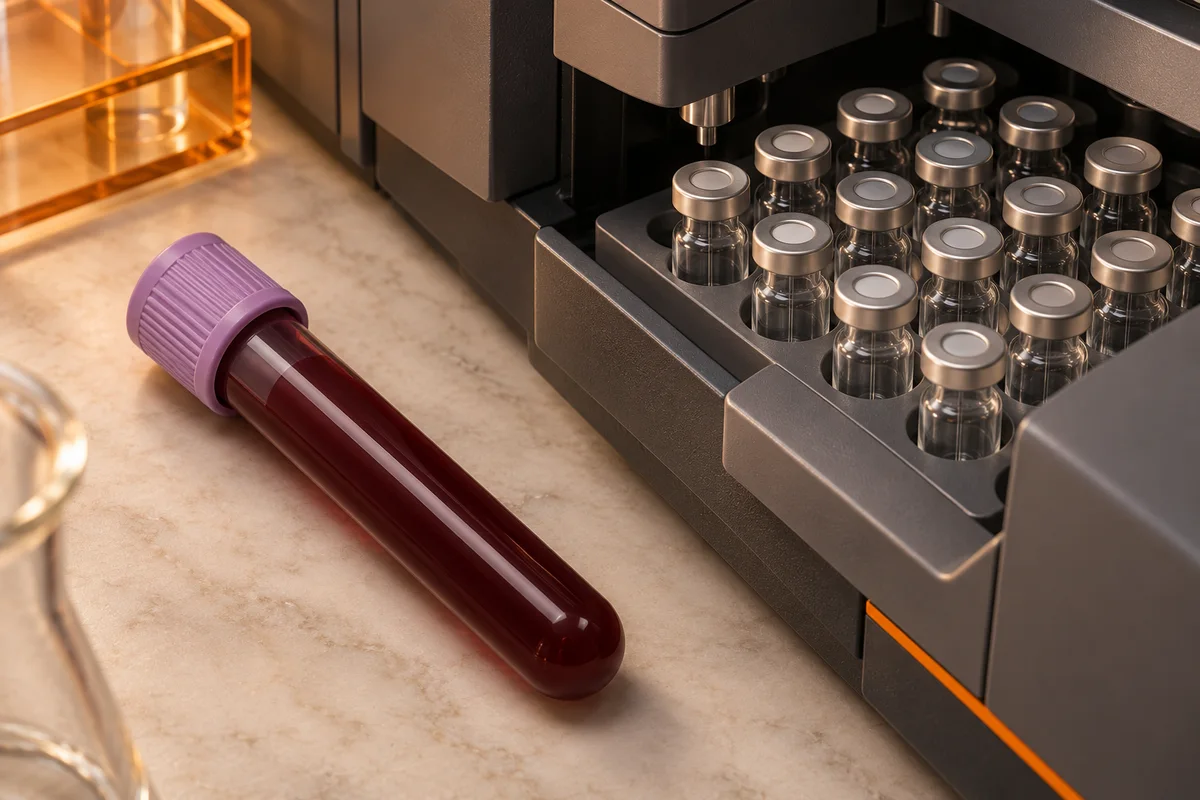
Three measurements you may see
- Label or method
- Whole-blood TDP or ThDP
- What is measured
- Concentration of thiamine diphosphate in a whole-blood sample.
- How it is reported
- Often in nmol/L. Use the performing lab’s interval for whole blood.See reference 1,See reference 2
- Label or method
- Plasma or serum thiamine
- What is measured
- Thiamine in the liquid fraction after cells have been separated.
- How it is reported
- Sensitive to recent intake. Read it with the lab’s specimen-specific context.See reference 1,See reference 2,See reference 3
- Label or method
- Erythrocyte transketolase activity
- What is measured
- How a red-cell enzyme responds to added thiamine diphosphate in a functional assay.
- How it is reported
- The reported activity or activity ratio is different from a concentration.See reference 2,See reference 3,See reference 4
Check the specimen and the chemical form
The words “vitamin B1” alone can appear on several kinds of report. The specimen might be whole blood, isolated red cells, serum or plasma. The report can use “thiamine pyrophosphate” for the same compound as thiamine diphosphate. Keep the wording as recorded instead of treating all B1 numbers as the same measurement.See reference 1,See reference 2
For example, Mayo Clinic Laboratories uses liquid chromatography with tandem mass spectrometry to measure TDP in whole blood. Other laboratory methods can also measure thiamine compounds. A whole-blood concentration and a red-cell concentration can share the same written unit while describing different sample fractions.See reference 1,See reference 2,See reference 3
Why preparation can matter
Follow the instructions of the laboratory doing the test. Mayo notes that nonfasting samples and recent vitamin supplementation may raise its TDP result. Its laboratory also protects the specimen from light. These are method-specific details to keep with the report. Ask the ordering clinician or laboratory about instructions that conflict with current treatment.See reference 1
If a result appears different from an earlier one, first confirm that the tests used the same sample fraction and measured the same compound. The draw date, timing of recent vitamins and any lab handling note can help explain why a direct comparison may be limited.See reference 1,See reference 2,See reference 3
What the interval can tell you
A flag below the interval means the value is below the reference interval for that report. Different studies and labs have used different cutoffs for biochemical thiamine status. A clinical assessment can use the lab result alongside symptoms and other information about nutrition or illness. A single result cannot decide the cause of symptoms or establish a treatment dose.See reference 1,See reference 2,See reference 3
It is reasonable to bring the original report to the clinician with its specimen, unit, interval and test date intact. If the report lists only “B1”, ask which test was used before comparing it with values from another laboratory or an online chart.See reference 1,See reference 2
Common questions
Are thiamine diphosphate and thiamine pyrophosphate the same?
Those names can refer to the same active compound. The blood fraction used for the measurement still matters.See reference 1,See reference 4
Can a plasma B1 result substitute for whole-blood TDP?
Plasma thiamine is influenced by recent intake. Whole-blood TDP measures a different form and sample fraction, so the two results need their own interpretation.See reference 1,See reference 2,See reference 3
Is there one universal low cutoff?
Studies have used different deficiency cutoffs. Use the interval printed on the performing lab’s report and review any concerns with the clinician who ordered it.See reference 1,See reference 2,See reference 3
Get the weekly longevity brief
The week's best longevity research in plain English. Free, every Tuesday.
See your blood results in context
If you already have blood test results, the paid LongevityMate app can help you view related markers together. It provides educational context, not a diagnosis or a replacement for your clinician.
Explore blood test analysisReferences
- 1. Thiamine (Vitamin B1), Whole Blood
Mayo Clinic LaboratoriesOfficial guidance
- 2. Thiamine deficiency disorders: diagnosis, prevalence, and a roadmap for global control programs
Annals of the New York Academy of SciencesEvidence review
- 3. Erythrocyte transketolase activity coefficient assay protocol for the assessment of thiamine status
Annals of the New York Academy of SciencesEvidence review
- 4. Thiamin: Fact Sheet for Health Professionals
NIH Office of Dietary SupplementsOfficial guidance
Editorial transparency
- Published by
- LongevityMate Editorial
- Reviewed by
- Editorial evidence review (AI-assisted)
- Published
- Updated
Medical disclaimer
This guide provides general education. A qualified health professional can interpret the full report and advise on any clinical decisions.