
The short answer
What soy protein isolate can offer
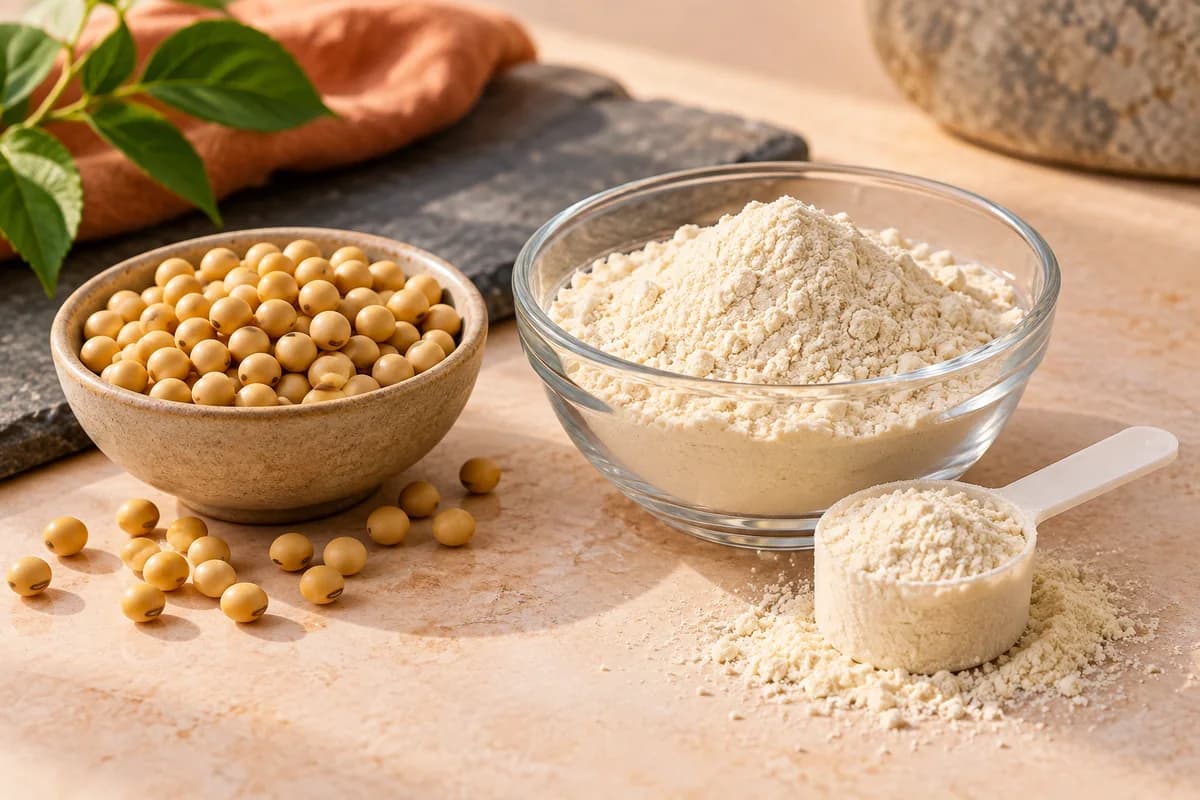
Soy protein isolate is a concentrated protein ingredient from soybeans. It can help supply dietary protein, but it is not interchangeable with whole soy foods or isolated isoflavone extracts. Some evidence suggests a small cholesterol effect when soy replaces other proteins; a powder has not been shown to prevent heart attacks.See reference 1,See reference 3,See reference 4
Soy foods, isolate and isoflavones answer different questions
Whole soy foods such as tofu, tempeh and edamame contain a food matrix beyond protein. Isolate is processed to concentrate protein for powders and formulated foods. An isoflavone extract is a different ingredient, and its evidence cannot be silently assigned to an isolate powder.See reference 1
The useful product comparison is protein grams per serving, total serving size and all added ingredients. A scoop weight is not automatically all protein, and a cholesterol claim on a package is not a measure of the person’s likely response.See reference 1,See reference 3
Three common soy label descriptions
- On the report or label
- Soy protein isolate
- What it can and cannot tell you
- A protein-rich ingredient; read protein grams per serving and the full ingredient and allergen statements.See reference 1,See reference 2
- On the report or label
- Whole soy foods
- What it can and cannot tell you
- Foods with fibre and other constituents. Findings for a whole-food eating pattern do not establish the same effect for an isolate powder.See reference 1
- On the report or label
- Soy isoflavone extract
- What it can and cannot tell you
- A concentrated plant-compound product, not the same as protein. Do not infer its amount from a soy-protein label.See reference 1
A small average cholesterol effect is not a heart-outcome promise
NCCIH describes a small cholesterol-lowering effect when soy protein replaces other proteins, while results differ among products and populations. One short randomized comparison of soy-protein preparations and milk protein measured lipid changes, not heart attacks or long-term clinical outcomes.See reference 1,See reference 4
FDA has proposed revoking its authorized soy-protein coronary-heart-disease claim after judging the evidence inconsistent. That proposal and the underlying cholesterol studies should not be turned into a claim that one isolate powder prevents cardiovascular disease.See reference 3
Soy allergy and other safety details are practical, not fine print
Soybeans are a major U.S. food allergen. A product with soy-derived protein is not suitable for someone with soy allergy merely because it is labelled vegan or dairy-free. Read the ingredient and allergen declaration, including in blended powders.See reference 2
Soy products can cause digestive symptoms in some people. Evidence for concentrated products in pregnancy and for long-term use is more limited than for ordinary food intake. If a product is intended to replace a medical treatment or you have a relevant condition, discuss the exact product with a qualified professional.See reference 1
A better question than “is soy good or bad?”
Ask what food or protein source you would replace, whether the product fits your dietary needs, and what outcome you expect. The label and your overall food pattern are more informative than a broad ingredient slogan.See reference 1,See reference 3
This guide does not prescribe a protein target, treat high cholesterol or clear an allergen concern. It helps you identify the ingredient and the limits of claims before making a personal choice.See reference 1,See reference 2,See reference 3
What to take into the next conversation
- Protein grams per serving, powder serving size and other ingredients.See reference 1
- The soy allergen declaration and any personal allergy history.See reference 2
- Whether a claim concerns blood cholesterol, symptoms or proven clinical outcomes.See reference 1,See reference 3,See reference 4
Common questions
Is isolate the same as whole soy food?
No. They share a source, but processing and the rest of the food differ. Evidence for one form should not automatically be assigned to another.See reference 1
Can soy protein replace cholesterol medicine?
This page cannot make that decision. Average cholesterol effects are small and variable, and an isolate powder has not proved heart-disease prevention.See reference 1,See reference 3,See reference 4
Is a soy isolate powder safe for a person with soy allergy?
No such assurance can be made. Soy is a major food allergen; check the label and follow personal allergy advice.See reference 2
References
- 1. Soy: Usefulness and Safety
NIH National Center for Complementary and Integrative HealthEvidence review
- 2. Food Allergies
U.S. Food and Drug AdministrationOfficial guidance
- 3. Questions and Answers on Health Claims in Food Labeling
U.S. Food and Drug AdministrationOfficial guidance
- 4. Soy protein preparations and cholesterol in hypercholesterolemic adults
European Journal of NutritionRandomized trial
Editorial transparency
- Published by
- LongevityMate Editorial
- Published
- Updated
Medical disclaimer
General education only. This guide does not diagnose a condition, choose treatment or recommend a supplement dose. Discuss your own result, symptoms, medicines or product use with a qualified health professional.