
The short answer
ACTH is a signal, not a standalone diagnosis
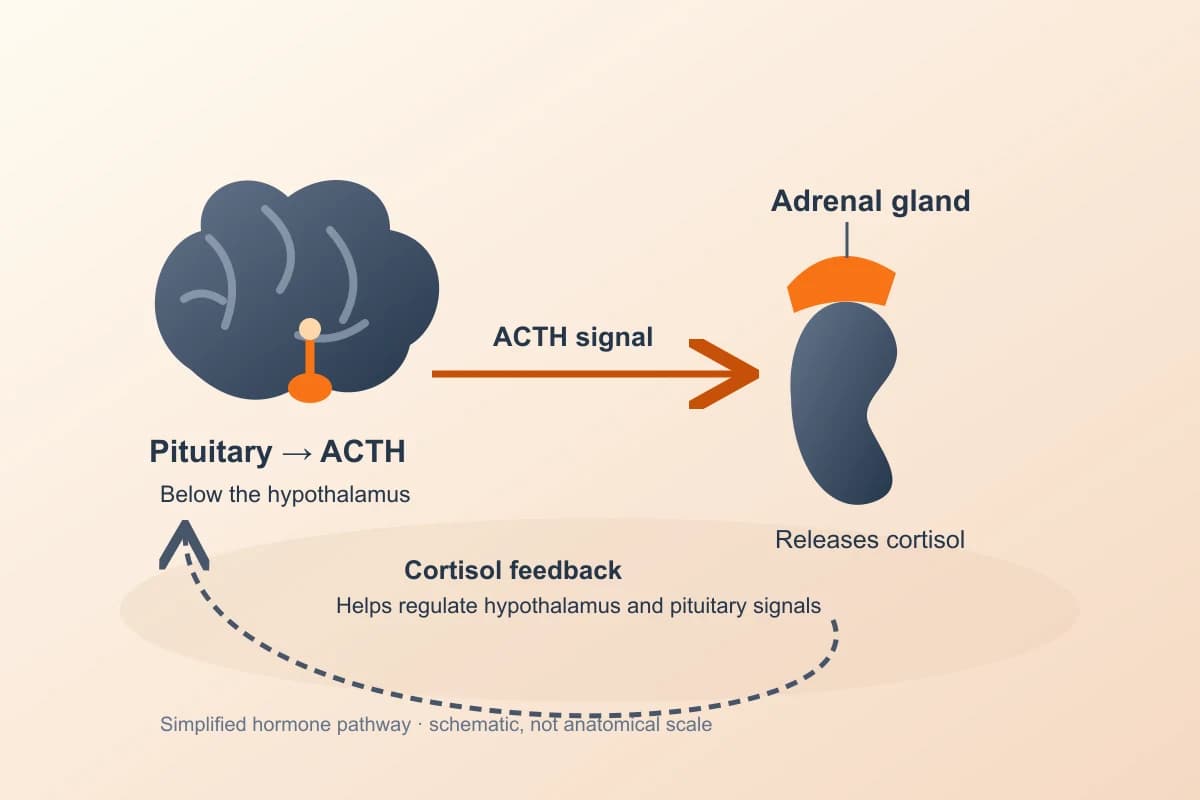
ACTH, short for adrenocorticotropic hormone, is made by the pituitary gland. It signals the adrenal glands to release cortisol. Clinicians usually read an ACTH blood level alongside cortisol; one ACTH number cannot establish the cause of a hormone problem.See reference 1
What the measured hormone tells you
The test measures ACTH already present in your blood. It does not measure how much cortisol the adrenal glands can make after a challenge. The distinction matters when two appointment letters both mention “ACTH”.See reference 1,See reference 2
ACTH and cortisol normally participate in a feedback system involving the hypothalamus, pituitary and adrenal glands. Lower cortisol can increase ACTH signalling; higher cortisol can reduce it. Disease and medicines can alter that relationship.See reference 1
ACTH blood level and stimulation are different tests
- Test name
- ACTH blood test
- Measurement and limit
- Measures circulating ACTH, usually considered with cortisol and the reason for testing.See reference 1
- Test name
- ACTH stimulation test
- Measurement and limit
- An injection of synthetic ACTH is followed by cortisol measurements. This checks the adrenal response rather than simply reporting the starting ACTH level.See reference 2
- Test name
- A normal stimulation response
- Measurement and limit
- May need further interpretation in a recent pituitary problem; no single response resolves every cause of low cortisol.See reference 2
Why the collection details belong with the result
ACTH samples are often collected early in the morning. Follow the provider’s instructions about timing, fasting and medicines; do not stop a medicine to improve a test result yourself.See reference 1
Read the number with its unit and the reference interval printed by that laboratory. A range found online may come from another method or population. “High” or “low” is a report flag, not a complete explanation.See reference 3
A useful report-reading sequence
Start with the test name: was ACTH itself measured, or was cortisol measured during stimulation? Next locate the sample time, the paired cortisol result if ordered, and each laboratory interval. Keep these details together rather than copying one number into a separate note.See reference 1,See reference 2,See reference 3
Then ask the ordering professional what question the investigation was intended to answer and whether any further testing is needed. The history, examination and other results remain part of that decision.See reference 2,See reference 3
What to check next
- The exact test name and whether the reported quantity is ACTH or cortisol.See reference 1,See reference 2
- Collection time, units, laboratory interval and any cortisol result from the investigation.See reference 1,See reference 3
- A complete medicine list and the provider’s preparation instructions, with no self-directed stopping.See reference 1
Common questions
Does a high ACTH level mean a pituitary tumour?
No. ACTH must be interpreted with cortisol and other evidence. A high result has more than one possible explanation.See reference 1
Can ACTH replace a cortisol test?
They measure different hormones. The paired relationship can help explain a result, so one cannot simply substitute for the other.See reference 1
Is an ACTH stimulation test just another name for ACTH blood testing?
No. Stimulation evaluates cortisol before and after synthetic ACTH; the ordinary ACTH blood test measures the circulating signal.See reference 1,See reference 2
References
- 1. Adrenocorticotropic Hormone (ACTH)
MedlinePlus, U.S. National Library of MedicineOfficial guidance
- 2. Diagnosis of Adrenal Insufficiency and Addison’s Disease
National Institute of Diabetes and Digestive and Kidney DiseasesOfficial guidance
- 3. How to Understand Your Lab Results
MedlinePlus, U.S. National Library of MedicineOfficial guidance
Editorial transparency
- Published by
- LongevityMate Editorial
- Published
- Updated
Medical disclaimer
General education only. This guide does not diagnose a condition, choose treatment or recommend a supplement dose. Discuss your own result, symptoms, medicines or product use with a qualified health professional.