
Six points that prevent most AST mistakes
- AST is a cell-injury signal with several tissue sources. It is less liver-specific than ALT and is not a diagnosis or a liver-function percentage.See reference 1,See reference 2,See reference 4,See reference 7
- There is no single adult AST range for every laboratory. Use the interval and upper limit printed on the same report before comparing with an online example.See reference 2,See reference 3,See reference 4,See reference 5
- A higher AST does not reliably tell you the amount of permanent damage. Significant liver disease can also exist with aminotransferases inside range.See reference 6,See reference 7,See reference 8
- Hard exercise, muscle injury and a haemolysed sample can raise AST. CK, symptoms, ALT, bilirubin, ALP and GGT help separate patterns, but no single pattern proves the source.See reference 2,See reference 3,See reference 11
- The AST/ALT ratio can support pattern recognition only. A ratio above 1, 1.5 or 2 does not by itself prove alcohol use, cirrhosis or any other diagnosis.See reference 3,See reference 6,See reference 10
- Do not self-stop prescribed medicine or use a liver detox. If an acetaminophen/paracetamol overdose or poisoning may have occurred, contact local emergency services or a poison information service immediately; do not wait for symptoms or an AST result. Jaundice, confusion, unusual bleeding, severe illness or rhabdomyolysis symptoms also need prompt assessment rather than an online calculator.See reference 1,See reference 2,See reference 6,See reference 9,See reference 13,See reference 16
What AST measures—and why it is not just a liver test
Aspartate aminotransferase helps transfer amino groups during normal metabolism. The laboratory measures its catalytic activity in serum or plasma. The result is reported as activity per litre, not the amount of enzyme by weight and not a percentage of organ function.See reference 4,See reference 5,See reference 14,See reference 15
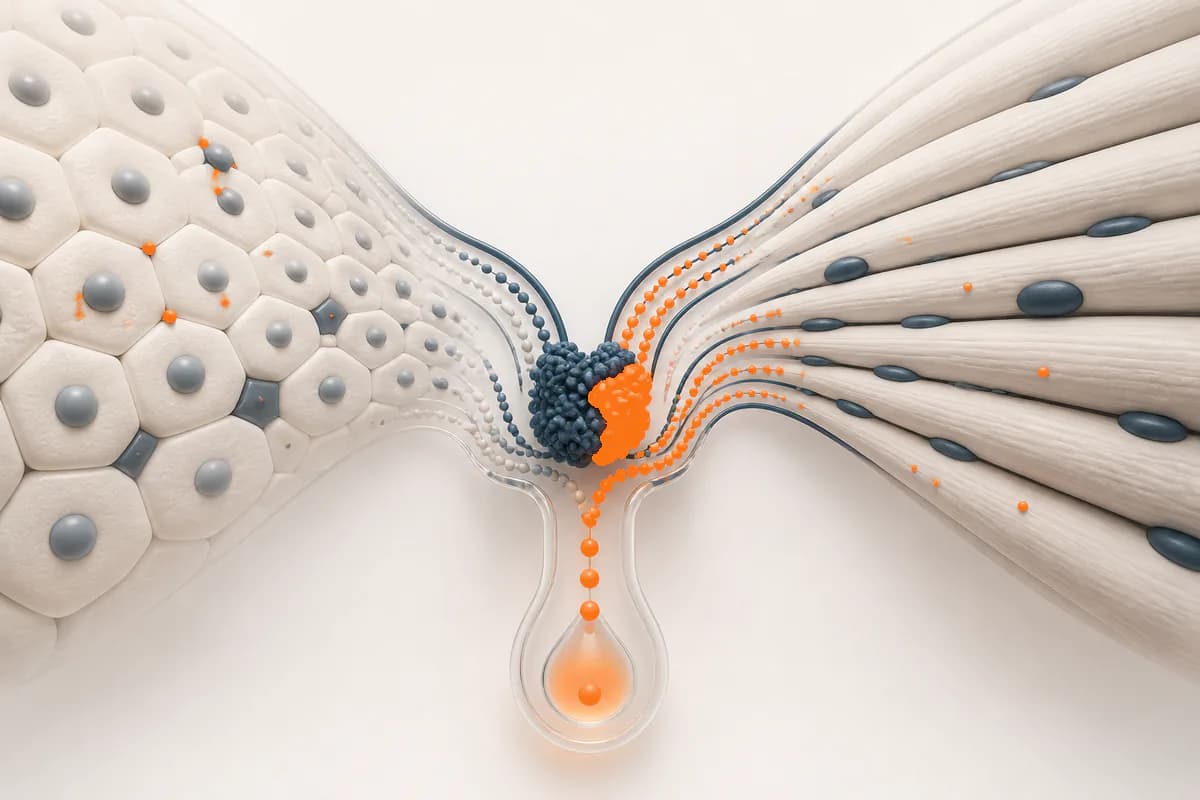
AST is concentrated in liver, skeletal muscle and heart and is also present in kidney and red blood cells. Cell injury, strenuous muscular work or release from red cells during a haemolysed collection can therefore increase the measured activity. ALT is more concentrated in liver and is usually more liver-specific.See reference 3,See reference 4,See reference 6,See reference 11
This is why AST belongs in a pattern. ALT helps with liver-cell context; CK with muscle context; ALP, GGT and bilirubin with biliary and excretion patterns; and albumin, INR and platelets add different information about synthesis, severity or chronic disease. One AST value cannot replace that wider assessment.See reference 6,See reference 7,See reference 8
Adult AST ranges and magnitude bands: what each one is for
- Source or framework
- Your own laboratory report
- Reported boundary
- Use its stated range and upper limit
- Responsible use
- Primary comparison because assay, reference population and reporting policy differ. A flag is context, not a diagnosis.See reference 2,See reference 3,See reference 4,See reference 5
- Source or framework
- RCPA harmonised adult example
- Reported boundary
- Male 5–35 U/L; female 5–30 U/L
- Responsible use
- Australian example for a specified method, not a worldwide optimal range or personal target.See reference 3
- Source or framework
- Mayo Clinic Laboratories, age 14+
- Reported boundary
- Male 8–48 U/L; female 8–43 U/L
- Responsible use
- A current US laboratory example. It shows why the same number may be flagged differently elsewhere.See reference 2,See reference 4
- Source or framework
- Oxford University Hospitals, age 18+
- Reported boundary
- Male and female 15–34 IU/L
- Responsible use
- A current UK method-specific example, reviewed April 2026; it does not replace the reader's report.See reference 5
- Source or framework
- ACG elevation magnitude
- Reported boundary
- Above ULN to <2× borderline; 2–<5× mild; 5–15× moderate; >15× severe
- Responsible use
- Describes distance above the laboratory upper limit and helps scope evaluation. It does not grade permanent damage, urgency or cause.See reference 6
Why the laboratory upper limit comes first
A reference interval describes results in a selected reference population using a particular method. Age and sex framework can matter, and some methods include the vitamin B6 cofactor pyridoxal phosphate while others do not. That is why credible laboratories can report different intervals.See reference 3,See reference 4,See reference 5
A value just inside range does not prove the liver and muscles are healthy, and a value just outside range does not prove disease. BSG and BMJ guidance place abnormal liver blood tests inside a clinical pathway rather than treating one flag as a diagnosis.See reference 7,See reference 8
On this page, borderline, mild, moderate and severe describe multiples of the upper limit. They are technical evaluation bands, not emotional labels, emergency grades or estimates of irreversible damage. Symptoms and companion results can make a numerically smaller result more urgent than a larger isolated value.See reference 6,See reference 8
The calculation gives context—not an interpretation of the cause
The multiple is AST divided by the laboratory upper limit, using the same unit for both. For example, 68 U/L with a ULN of 34 U/L is exactly 2.00× and begins the ACG mild band; 51 U/L with that ULN is 1.50× and is borderline. A different laboratory ULN can change the label.See reference 5,See reference 6
For catalytic activity, divide U/L by 60 to obtain µkat/L and multiply µkat/L by 60 to obtain U/L. Thus 34 U/L is about 0.567 µkat/L, 48 U/L is 0.800 µkat/L and 0.75 µkat/L is 45 U/L. Keep the method and range attached to the result after conversion.See reference 14,See reference 15
No number entered here can identify the source. A 2× result after an unfamiliar weightlifting session and a 2× result with jaundice, abnormal bilirubin and prolonged INR are not equivalent clinical situations.See reference 6,See reference 8,See reference 11
Preparation and collection details that can change AST
- Detail
- Fasting and combined panels
- Why it matters
- AST alone usually needs no special preparation, but another ordered test may require fasting.
- Responsible action
- Follow the written instruction from the ordering service or collection centre instead of a generic rule.See reference 1,See reference 2,See reference 5
- Detail
- Heavy exercise, weightlifting or muscle injury
- Why it matters
- Muscle can release AST; the effect may persist for days after unfamiliar strenuous work.
- Responsible action
- Record type, intensity, soreness and timing. Follow any clinician-requested exercise pause; do not assume exercise explains the result.See reference 1,See reference 2,See reference 11
- Detail
- Alcohol timing and pattern
- Why it matters
- Alcohol exposure can change liver chemistries, while a ratio cannot reconstruct intake.
- Responsible action
- Follow the test instruction and report amount and timing accurately. One Mayo page advises avoiding alcohol for at least 24 hours before its AST test.See reference 2,See reference 6,See reference 10
- Detail
- Prescribed, non-prescription and supplement use
- Why it matters
- Products can affect liver or muscle and the timing can matter; AST cannot prove that a product caused injury.
- Responsible action
- Record name, dose and timing. Do not stop prescribed treatment unless the prescriber tells you to.See reference 1,See reference 2,See reference 9
- Detail
- Haemolysed or delayed-separation sample
- Why it matters
- Red cells contain AST, so collection damage or unseparated blood can artefactually raise the result.
- Responsible action
- Check laboratory comments. Whether to recollect depends on the flag, the other analytes and the clinical situation.See reference 3
Results that help locate the pattern
- Result or clue
- ALT
- What it can add
- A more liver-specific aminotransferase. AST and ALT together help describe a hepatocellular pattern.
- What it cannot prove
- Neither enzyme alone diagnoses the cause, grades damage or rules out significant liver disease when normal.See reference 4,See reference 6,See reference 7
- Result or clue
- Creatine kinase (CK), muscle symptoms and training history
- What it can add
- Can support a muscle source when AST follows hard exercise, injury, weakness or pain.
- What it cannot prove
- A normal or high CK does not turn AST into a diagnosis; severe symptoms and dark urine need urgent assessment.See reference 3,See reference 11
- Result or clue
- ALP, GGT and bilirubin
- What it can add
- Help distinguish bile-duct/excretion context from a mainly aminotransferase pattern and identify jaundice-related concern.
- What it cannot prove
- They still require history, examination and sometimes imaging or further blood tests.See reference 6,See reference 7,See reference 8
- Result or clue
- INR/prothrombin time, albumin and platelets
- What it can add
- Provide different information about synthesis, severity and possible chronic liver disease.
- What it cannot prove
- Albumin is affected by inflammation, kidney loss and nutrition; platelet count and INR also have non-liver causes.See reference 6,See reference 7,See reference 8
- Result or clue
- Prior values and comparable repeat
- What it can add
- Show whether the result is new, transient, persistent, rising or resolving after a known change.
- What it cannot prove
- A repeat is not the whole evaluation when symptoms, magnitude or companion results are concerning.See reference 6,See reference 7,See reference 8
What can cause high AST?
Liver-related contexts include MASLD, alcohol-associated disease, viral hepatitis, medicine or supplement injury, autoimmune hepatitis, iron overload and other less common inherited or metabolic conditions. Acute low blood flow to the liver, severe hepatitis, toxins and sometimes acute biliary obstruction can produce much larger elevations. The list is not a probability ranking for one person.See reference 1,See reference 2,See reference 6,See reference 9,See reference 13
Non-liver sources matter more for AST than ALT. Strenuous exercise, skeletal-muscle injury or inflammation, seizures, trauma and major surgery can raise AST. Heart disease is another possible source, but modern assessment of suspected heart injury uses symptoms, ECG and cardiac troponin—not AST as a home screening test.See reference 1,See reference 3,See reference 4,See reference 11
The sample itself can create an apparent rise. Haemolysis releases red-cell AST; a laboratory flag can therefore be important. Persistent AST without a matching liver, muscle or sample explanation can rarely be macro-AST, a circulating enzyme complex that slows clearance.See reference 3,See reference 12
Exercise can raise AST—but should not become an automatic explanation
In a controlled study, 15 healthy men who were not accustomed to weightlifting completed a one-hour session. AST, ALT, CK, myoglobin and LD rose significantly and remained elevated for at least seven days, while bilirubin, GGT and ALP stayed within range. On the first day, AST was more often abnormal than ALT.See reference 11
That small male study shows a plausible confounder, not a rule that every athlete should wait seven days or that exercise explains a given result. Training status, intensity, soreness, injury, CK, urine colour, kidney function and the rest of the liver panel change the picture.See reference 2,See reference 11
Severe muscle pain or weakness, marked swelling, dark or cola-coloured urine, reduced urine or feeling very unwell after exertion needs prompt clinical assessment. Do not use a normal bilirubin or a plausible workout as a reason to delay care for possible rhabdomyolysis.See reference 1,See reference 11
What the AST/ALT ratio can—and cannot—tell you
A ratio compares AST with ALT from the same collection. AST above ALT is seen in some alcohol-associated liver disease and advanced cirrhosis patterns, but it can also reflect muscle release, exercise, haemolysis or the timing of an illness. A ratio cannot prove alcohol intake, cirrhosis or a source.See reference 3,See reference 6,See reference 10,See reference 11
The 2024 ACG guideline uses AST/ALT greater than 1.5 only as one part of its criteria for probable alcohol-associated hepatitis. The complete criteria are onset of jaundice within 60 days of heavy alcohol use above 50 g/day for at least 6 months, bilirubin above 3 mg/dL, AST from 50 to 400 U/L, AST/ALT greater than 1.5, and no other cause of acute hepatitis.See reference 10
Calculating a ratio from two results that are both within their own ranges is especially prone to overinterpretation. Start with each absolute result, its laboratory range, symptoms and the wider pattern. The separate production AST/ALT-ratio row remains a distinct calculated biomarker and is not merged into this AST page.See reference 6,See reference 10
High AST with normal ALT: muscle, sample and macro-AST context
An isolated AST elevation makes non-liver sources particularly important, but it does not automatically clear the liver. The review may include exercise or trauma, muscle symptoms and CK, laboratory haemolysis, medicines, alcohol, illness and whether the pattern persists.See reference 3,See reference 4,See reference 6,See reference 11
Macro-AST is a rare macromolecular form, often an enzyme-immunoglobulin complex, that stays in circulation and can cause a persistent isolated result. Evidence is mainly case reports and small series, prevalence is uncertain and laboratory methods have limitations. It should be considered by a clinician and laboratory after more common explanations—not diagnosed from a webpage.See reference 12
Recognising macro-AST can prevent unnecessary invasive investigation, but prematurely assuming it can also miss real liver or muscle disease. The safe message is to preserve the longitudinal pattern and let the treating team choose whether a macroenzyme test is appropriate.See reference 12
Symptoms and companion results can matter more than the AST number
Possible acetaminophen/paracetamol overdose or poisoning is an emergency: contact local emergency services or a poison information service immediately, even if there are no symptoms; do not wait for an AST result. Seek prompt medical assessment for yellow skin or eyes, confusion or unusual sleepiness, unusual bleeding, severe or worsening abdominal symptoms, persistent vomiting, very dark urine with pale stool, severe illness, or severe muscle pain or weakness with dark urine or reduced urine. ACG states that acute liver failure with prolonged prothrombin time and hepatic encephalopathy requires immediate evaluation regardless of the aminotransferase number.See reference 1,See reference 2,See reference 6,See reference 13,See reference 16
Very high AST is a prompt to evaluate—not a diagnosis by itself
ACG calls an aminotransferase elevation above 15× the laboratory upper limit severe and above 10,000 IU/L massive. Those magnitude words do not identify the source, but they broaden the urgent differential and should not be managed by waiting for an online explanation.See reference 6
A systematic review of seven studies and 1,608 patients with AST or ALT above 1,000 IU/L found heterogeneous pooled causes led by ischaemic hepatitis at 51%, viral hepatitis at 13.1%, toxins or drug-induced injury at 13.0% and pancreaticobiliary injury at 7.8%. These population figures are not a personal probability and cannot safely sort a result without clinical assessment.See reference 13
Muscle injury can also produce large AST values. Symptoms, CK, kidney results, haemodynamics, bilirubin, INR, ALT and exposure history are part of separating urgent causes. Do not assume that a numerically high AST always comes from liver—or that a muscle source is harmless.See reference 4,See reference 6,See reference 11,See reference 13
What can a low AST result mean?
A low AST is usually considered normal and rarely needs action by itself. Mayo lists vitamin B6 deficiency, chronic kidney disease or dialysis, malnutrition and extreme liver failure among possible contexts, but the isolated low number cannot diagnose any of them.See reference 1,See reference 2,See reference 4
If a low result appears with weight loss, poor nutrition, kidney disease, severe illness or other abnormal tests, follow-up should focus on that wider problem. Do not start vitamin B6 or another supplement merely to raise the AST number.See reference 2
What can responsibly change AST or the underlying risk?
- Approach
- Identify the likely source and pattern
- When it helps
- History, examination, companion blood tests, sample review and sometimes imaging can distinguish liver, muscle and other contexts.
- Important limit
- Repeated AST checks without a plan can delay useful evaluation.See reference 6,See reference 7,See reference 8
- Approach
- Use comparable collection conditions when the clinician requests a repeat
- When it helps
- Recording exercise, muscle injury, alcohol, illness, fasting instruction and products can make the trend easier to interpret.
- Important limit
- Do not delay an urgent assessment or impose a universal exercise washout from one small study.See reference 2,See reference 8,See reference 11
- Approach
- Treat a confirmed liver condition
- When it helps
- Management may address metabolic risk, alcohol exposure, viral hepatitis, autoimmune disease or another identified cause.
- Important limit
- The correct plan is cause-specific; a high AST does not justify a generic diet, supplement or medication change.See reference 6,See reference 7,See reference 8,See reference 10
- Approach
- Clinician-led medicine and supplement review
- When it helps
- Dose, timing, competing causes and the wider pattern can identify a plausible drug or supplement concern.
- Important limit
- Drug-induced liver injury is a diagnosis of exclusion. Do not stop a needed medicine independently.See reference 9
- Approach
- Avoid detoxes and unproven liver supplements
- When it helps
- Avoiding unnecessary products removes a potential source of injury and misleading claims.
- Important limit
- A falling AST would not prove that a product repaired tissue or improved long-term outcomes.See reference 9
When should AST be repeated?
Repeat timing depends on magnitude, symptoms, other results, suspected source and whether an exposure or treatment changed. ACG recommends confirming an abnormal liver chemistry, but BSG and BMJ guidance warn against using a blind repeat as the whole plan when the cause is uncertain.See reference 6,See reference 7,See reference 8
For comparability, keep the original unit, method and laboratory range when practical and record relevant collection conditions. A small rise or fall may reflect biological and analytical variation; the clinical pattern matters more than chasing a single digit.See reference 3,See reference 4,See reference 5,See reference 8
Do not wait for a repeat if there are urgent symptoms, possible overdose, severe muscle symptoms, markedly abnormal companion results or clinician concern. Conversely, a stable isolated result may need deliberate evaluation rather than repeated emergency testing.See reference 1,See reference 2,See reference 6,See reference 12,See reference 13
Common AST myths and mistakes
- “AST is a liver-function score.” It is enzyme activity from several tissues, not a percentage or complete measure of liver function.See reference 2,See reference 4,See reference 7
- “High AST proves liver damage.” Liver injury is one possibility, but muscle, exercise, haemolysis and rare macro-AST can also raise it.See reference 3,See reference 4,See reference 11,See reference 12
- “A ratio above 2 proves alcohol caused it.” The ratio is one clue inside a much larger clinical definition and has important non-alcohol explanations.See reference 6,See reference 10,See reference 11
- “Normal ALT means high AST is harmless.” An isolated result still deserves sample, muscle, liver and trend context when unexplained.See reference 3,See reference 6,See reference 12
- “Exercise explains it, so I can ignore it.” Exercise is plausible but cannot be assigned as the cause without considering CK, symptoms, other results and the course.See reference 2,See reference 11
- “A liver cleanse will lower AST safely.” Supplements can cause liver injury, and changing a marker does not prove improved health.See reference 9
Frequently asked questions
What is a normal AST level?
Use the range on your own report. Adult examples vary: RCPA lists male 5–35 U/L and female 5–30 U/L; Mayo lists 8–48 and 8–43 U/L; Oxford lists 15–34 IU/L for both. These are method-specific examples, not one worldwide target, and a result within range does not rule out every condition.See reference 2,See reference 3,See reference 4,See reference 5
What does high AST usually mean?
It means more AST activity is present in the sample. Liver-cell injury is one common context, but skeletal muscle, strenuous exercise, haemolysis, illness, medicines and rare macro-AST can contribute. AST alone cannot identify the source or amount of damage.See reference 1,See reference 2,See reference 3,See reference 4,See reference 11,See reference 12
Is an AST of 50 high?
It depends on that laboratory's upper limit. With a ULN of 34 U/L, 50 is 1.47× ULN and falls in the ACG borderline band. With a ULN of 48 U/L, it is 1.04× and is still just above that entered limit. Neither calculation diagnoses a cause or grades damage.See reference 4,See reference 5,See reference 6
What does high AST with normal ALT mean?
It makes muscle release, hard exercise, haemolysis and persistent macro-AST especially important to consider, but does not automatically exclude liver disease. CK, symptoms, the sample flag, alcohol and product history, other liver tests and the trend guide the next step.See reference 3,See reference 4,See reference 6,See reference 11,See reference 12
Can exercise raise AST?
Yes. In a small controlled study of 15 healthy men, AST, ALT and muscle markers stayed significantly raised for at least seven days after weightlifting. The study does not create a universal seven-day rule or prove exercise explains your result; training, symptoms, CK and the wider panel matter.See reference 2,See reference 11
Does an AST/ALT ratio above 2 mean alcohol-related liver disease?
No. It can support an alcohol-associated pattern in the right clinical setting, but the ratio alone cannot prove alcohol exposure or diagnose disease. Muscle injury, exercise, cirrhosis and other timing or tissue effects can change the ratio. The 2024 ACG alcohol-associated-hepatitis definition requires several additional clinical and laboratory criteria.See reference 3,See reference 6,See reference 10,See reference 11
Do I need to fast for an AST test?
Usually not for AST alone, but another test in the same draw may require fasting. Follow the written instruction. Also tell the ordering team about hard exercise, muscle injury, illness, alcohol, medicines and supplements that could affect comparison.See reference 1,See reference 2,See reference 5
What does low AST mean?
Low AST is usually considered normal and rarely needs action alone. Mayo lists vitamin B6 deficiency, CKD or dialysis, malnutrition and extreme liver failure as possible contexts, but AST cannot diagnose them. Use symptoms and the rest of the results rather than self-treating the number.See reference 1,See reference 2,See reference 4
How do I convert AST from U/L to µkat/L?
Divide U/L by 60. To convert µkat/L to U/L, multiply by 60. For example, 48 U/L is 0.800 µkat/L. U/L and IU/L are used as the same numerical activity label on routine reports, but conversion does not make different assays or ranges interchangeable.See reference 14,See reference 15
When is high AST urgent?
Urgency depends on symptoms, possible overdose, severe illness, muscle symptoms and companion results—not AST alone. Possible acetaminophen/paracetamol overdose or poisoning needs immediate emergency or poison-service help, even without symptoms. Seek prompt assessment for jaundice, confusion, unusual bleeding, persistent vomiting, severe symptoms, or severe muscle pain or weakness with dark or reduced urine. Acute liver failure with prolonged prothrombin time and encephalopathy requires immediate evaluation.See reference 1,See reference 2,See reference 6,See reference 13,See reference 16
See AST beside the results that give it meaning
LongevityMate can organise an uploaded AST result with its unit and laboratory range, ALT, CK when available, ALP, GGT, bilirubin, albumin, platelets and the history you choose to provide. It helps you prepare better questions without turning one enzyme result or ratio into a diagnosis.
Understand my blood resultsGet the weekly longevity brief
The week's best longevity research in plain English. Free, every Tuesday.
References
- 1. AST Test
MedlinePlus, U.S. National Library of MedicineOfficial guidance
- 2. Aspartate Aminotransferase (AST) Blood Test
Mayo ClinicEvidence review
- 3. Aspartate Aminotransferase
Royal College of Pathologists of Australasia ManualOfficial guidance
- 4. AST — Aspartate Aminotransferase (AST) (GOT), Serum
Mayo Clinic LaboratoriesOfficial guidance
- 5. Aspartate Amino-transferase
Oxford University Hospitals Clinical BiochemistryOfficial guidance
- 6. ACG Clinical Guideline: Evaluation of Abnormal Liver Chemistries
American College of GastroenterologyGuideline
- 7. Guidelines on the Management of Abnormal Liver Blood Tests
Gut and British Society of GastroenterologyGuideline
- 8. Interpreting Abnormal Liver Blood Test Results
The BMJEvidence review
- 9. AASLD Practice Guidance on Drug, Herbal, and Dietary Supplement-induced Liver Injury
American Association for the Study of Liver DiseasesGuideline
- 10. ACG Clinical Guideline: Alcohol-Associated Liver Disease
American College of GastroenterologyGuideline
- 11. Muscular Exercise Can Cause Highly Pathological Liver Function Tests in Healthy Men
British Journal of Clinical PharmacologyObservational study
- 12. Isolated Elevation of Aspartate Aminotransferase in an Asymptomatic Patient Due to Macro-AST
Journal of Clinical Laboratory AnalysisObservational study
- 13. Etiologies and Outcomes of Transaminase Elevation Above 1,000 IU/L: A Systematic Review and Meta-Analysis
Digestive Diseases and SciencesMeta-analysis
- 14. Katal
IUPAC Compendium of Chemical Terminology, 5th editionOfficial guidance
- 15. Standard Reference Materials: Catalytic Activity Concentration of Seven Enzymes in NBS Human Serum SRM 909
National Bureau of StandardsOfficial guidance
- 16. Acetaminophen Overdose
MedlinePlus, U.S. National Library of MedicineOfficial guidance
Editorial transparency
- Published by
- LongevityMate Editorial
- Editorial review by
- Lukas Dvorsky, Founder of LongevityMate
- Published
- Updated
Medical disclaimer
Educational information only, not a diagnosis, emergency service, liver- or muscle-damage grade, supplement prescription or personal AST target. Use the reporting laboratory's method and range and a qualified clinician for decisions involving symptoms, possible overdose, the full liver panel, CK, medicines and supplements, alcohol, exercise, pregnancy, sample quality and health history.