
The 10 rules to remember
- Prioritize whole foods over fiber claims on ultra-processed products.See reference 1
- Increase intake gradually.See reference 2
- Use legumes regularly if tolerated.See reference 3
- Keep a variety of plant sources.See reference 4
- Drink enough fluid, especially with added fiber.See reference 5
- Soluble and insoluble fiber have different properties.See reference 6
- More is not always better during a gut flare.See reference 7
- Separate some fiber supplements from medicines when directed.See reference 8
- Persistent bleeding, weight loss or severe pain needs assessment.See reference 9
- Judge the whole dietary pattern, not a single nutrient.See reference 10
First principles: what this tool can actually change
Fiber escapes digestion in the small intestine. Some types retain water and improve stool form; fermentable fibers are metabolized by gut microbes into short-chain fatty acids.See reference 1,See reference 2
Viscous soluble fiber can slow nutrient absorption and modestly lower LDL cholesterol and post-meal glucose, while coarse insoluble fibers can increase stool bulk.See reference 2,See reference 3
Associations with lower disease and mortality risk probably reflect both fiber and the broader nutrient pattern of fiber-rich foods; fiber alone is not a longevity guarantee.See reference 3,See reference 4
A practical protocol
- Stage
- Week 1
- What to do
- Add one fruit and one whole-grain serving
- Why it matters
- Track bloating and stoolSee reference 2
- Stage
- Week 2
- What to do
- Add 1/2 cup legumes most days
- Why it matters
- Increase slowlySee reference 3
- Stage
- Week 3
- What to do
- Add vegetables, nuts or seeds
- Why it matters
- Build varietySee reference 4
- Stage
- Maintenance
- What to do
- Aim for an individualized national target
- Why it matters
- Food first when possibleSee reference 5
Timing and frequency
- When
- Breakfast
- Action
- Oats, bran-rich cereal, fruit or seedsSee reference 5
- When
- Lunch/dinner
- Action
- Legumes, vegetables and intact whole grainsSee reference 6
- When
- Increase
- Action
- Add 3-5 g every few daysSee reference 7
- When
- Medicines
- Action
- Follow pharmacist advice on separationSee reference 8
What to measure
- Signal
- Grams per day
- How
- Nutrition labels or food log
- Interpretation
- Short-term learning toolSee reference 8
- Signal
- Plant variety
- How
- Different legumes, grains, produce, nuts
- Interpretation
- Supports nutrient diversitySee reference 9
- Signal
- Stool form
- How
- Comfort and regularity
- Interpretation
- More useful than chasing a maximumSee reference 10
- Signal
- Symptoms
- How
- Bloating, pain, urgency
- Interpretation
- Guides pace and typeSee reference 1
What the evidence supports
Systematic reviews link higher fiber intake with lower all-cause, cardiovascular and cancer mortality, but these data are largely observational.See reference 1,See reference 4
Randomized evidence supports benefits for stool frequency and modest improvements in cholesterol and glycemic outcomes for selected fibers.See reference 2,See reference 5
Whole-food sources also supply micronutrients and unsaturated fats; this makes a food-pattern recommendation stronger than treating fiber powder as equivalent.See reference 3,See reference 6
Evidence strength by claim
- Claim
- The protocol changes its immediate target
- Confidence
- Moderate to strong
- Important boundary
- Depends on correct technique and populationSee reference 1,See reference 2
- Claim
- It improves a clinical or functional outcome
- Confidence
- Variable
- Important boundary
- Effect size and relevance differSee reference 3,See reference 4
- Claim
- It prevents major disease
- Confidence
- Usually limited
- Important boundary
- Surrogate outcomes are not clinical eventsSee reference 5,See reference 6
- Claim
- It extends human lifespan
- Confidence
- Not established
- Important boundary
- Association is not proof of causationSee reference 7,See reference 8,See reference 9,See reference 10
Limitations and common overclaims
Fiber is a family of compounds, so gram totals do not fully describe fermentability, viscosity or tolerance.See reference 5,See reference 7
People with strictures, bowel obstruction risk, severe gastroparesis, active inflammatory bowel disease flares or some surgeries need individualized advice.See reference 6,See reference 8
Abrupt increases commonly cause gas and discomfort and can worsen constipation if fluid intake is inadequate.See reference 7,See reference 9
How to make it stick
Choose the smallest version you can repeat under normal conditions. Consistency creates a useful signal; a heroic one-off session does not.See reference 1,See reference 2
Change one variable at a time and write down the protocol. Otherwise an apparent improvement may simply reflect different timing, equipment or conditions.See reference 3,See reference 4
Review the result after a pre-defined period. Continue only when the benefit is meaningful, the burden is acceptable and no safety signal has appeared.See reference 5,See reference 6
Troubleshooting
- Problem
- Results vary widely
- Likely issue
- Technique or conditions changed
- Better next step
- Standardize and average repeated observationsSee reference 2,See reference 3
- Problem
- No meaningful benefit
- Likely issue
- Dose, adherence or target may be wrong
- Better next step
- Verify the protocol before escalatingSee reference 4,See reference 5
- Problem
- Symptoms appear
- Likely issue
- The intervention may be unsuitable
- Better next step
- Stop and use appropriate clinical adviceSee reference 6,See reference 7
- Problem
- Tracking creates anxiety
- Likely issue
- Measurement has replaced the goal
- Better next step
- Reduce frequency and focus on functionSee reference 8,See reference 9,See reference 10
Safety and when to stop
Seek urgent care for severe abdominal pain, vomiting, marked distension, inability to pass stool or gas, or gastrointestinal bleeding. Ask a clinician before a major increase if you have a bowel stricture, obstruction history, severe motility disorder, active inflammatory bowel disease, recent gastrointestinal surgery or swallowing difficulty.See reference 1,See reference 5,See reference 9
Who is most likely to benefit
This tool is most useful when it solves a defined problem, is feasible to repeat and changes a decision. It is less useful when collected or performed only because a score or influencer made it seem mandatory.See reference 2,See reference 4
People with symptoms, diagnosed disease, pregnancy, recent surgery or complex medicines should adapt the protocol with an appropriate health professional.See reference 5,See reference 7
The foundation remains sleep, physical activity, nutrition, tobacco avoidance and evidence-based medical care. Add this tool only where it improves that foundation.See reference 8,See reference 10
Track five things
- The exact protocol, equipment and timing.See reference 1
- The outcome the tool is meant to change.See reference 2
- Symptoms and adverse effects.See reference 3
- Adherence and practical burden.See reference 4
- Whether the result changes a real decision.See reference 5
Frequently asked questions
How much fiber do adults need?
Targets vary; many guidelines use about 14 g per 1,000 kcal, roughly 25-38 g for many adults.See reference 3
What foods have the most fiber?
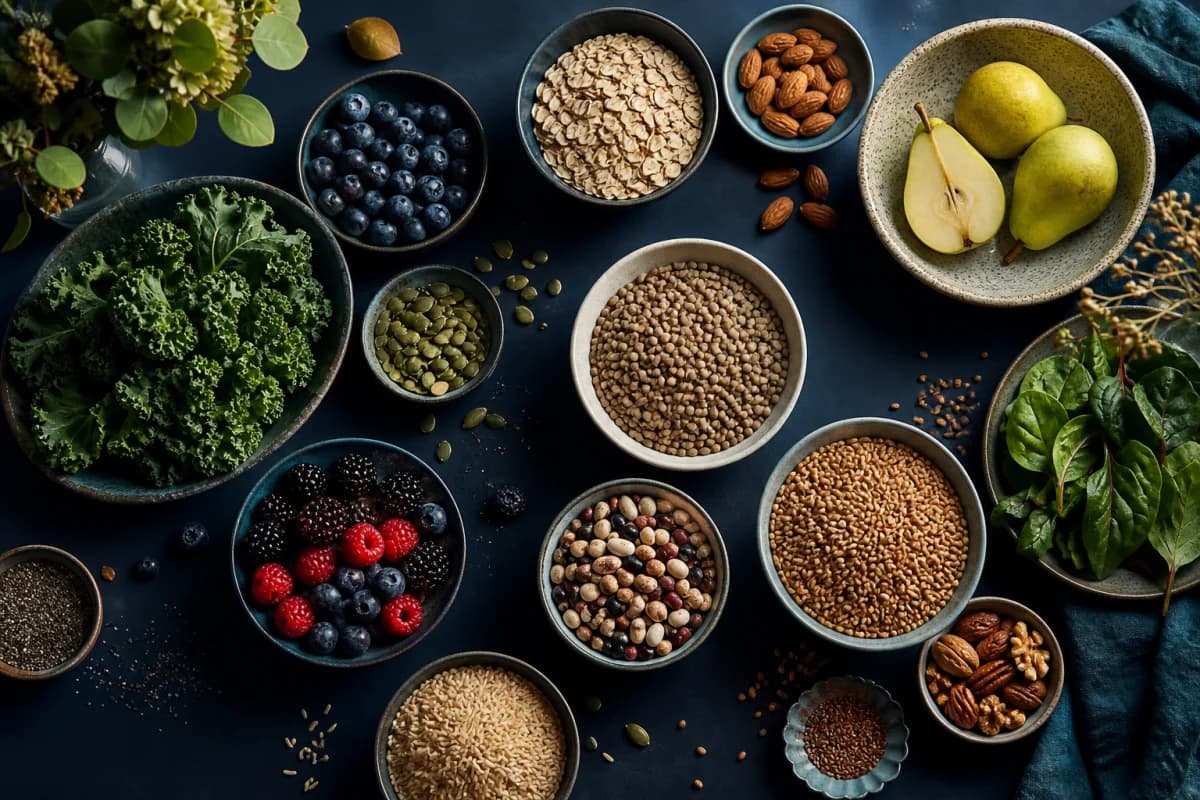
Legumes, bran-rich whole grains, berries, pears, vegetables, nuts and seeds are efficient sources.See reference 4
Why am I bloated?
The increase may be too fast or the chosen fibers highly fermentable for you.See reference 5
Does fiber help constipation?
Often, but the type matters and obstruction or pelvic-floor problems require different care.See reference 6
Is a supplement equivalent?
It can provide a specific fiber effect but lacks the full nutrient profile of whole foods.See reference 7
Do I need more water?
Adequate fluid matters, especially with bulking fibers, but forced overhydration is unnecessary.See reference 8
Can fiber lower cholesterol?
Viscous soluble fibers can modestly lower LDL cholesterol.See reference 9
Is more always better?
No. The best intake is effective, varied and well tolerated.See reference 10
Connect the protocol to your wider health picture
LongevityMate helps organize measurements, habits, symptoms and trends so one tool stays in context instead of becoming the whole plan.
See how LongevityMate worksGet the weekly longevity brief
The week's best longevity research in plain English. Free, every Tuesday.
References
- 1. Carbohydrate quality and human health
The LancetSystematic review
- 2. Dietary fiber intake and mortality
Clinical NutritionMeta-analysis
- 3. Dietary fiber and health outcomes: umbrella review
American Journal of Clinical NutritionSystematic review
- 4. Dietary Guidelines for Americans 2020-2025
U.S. Departments of Agriculture and Health and Human ServicesGuideline
- 5. Dietary reference intakes for fiber
National AcademiesGuideline
- 6. Diet, nutrition and the prevention of chronic diseases
World Health OrganizationGuideline
- 7. Fiber supplementation and chronic constipation
American Journal of Clinical NutritionMeta-analysis
- 8. Effects of soluble fiber on LDL cholesterol
American Journal of Clinical NutritionMeta-analysis
- 9. Fiber and irritable bowel syndrome
American Journal of GastroenterologySystematic review
- 10. Healthy diet
World Health OrganizationOfficial guidance
Editorial transparency
- Published by
- LongevityMate Editorial Team
- Published
- Updated
Medical disclaimer
This guide provides general health education. It does not diagnose a condition, prescribe treatment, replace individualized medical or dental care, or guarantee a health or longevity outcome.