
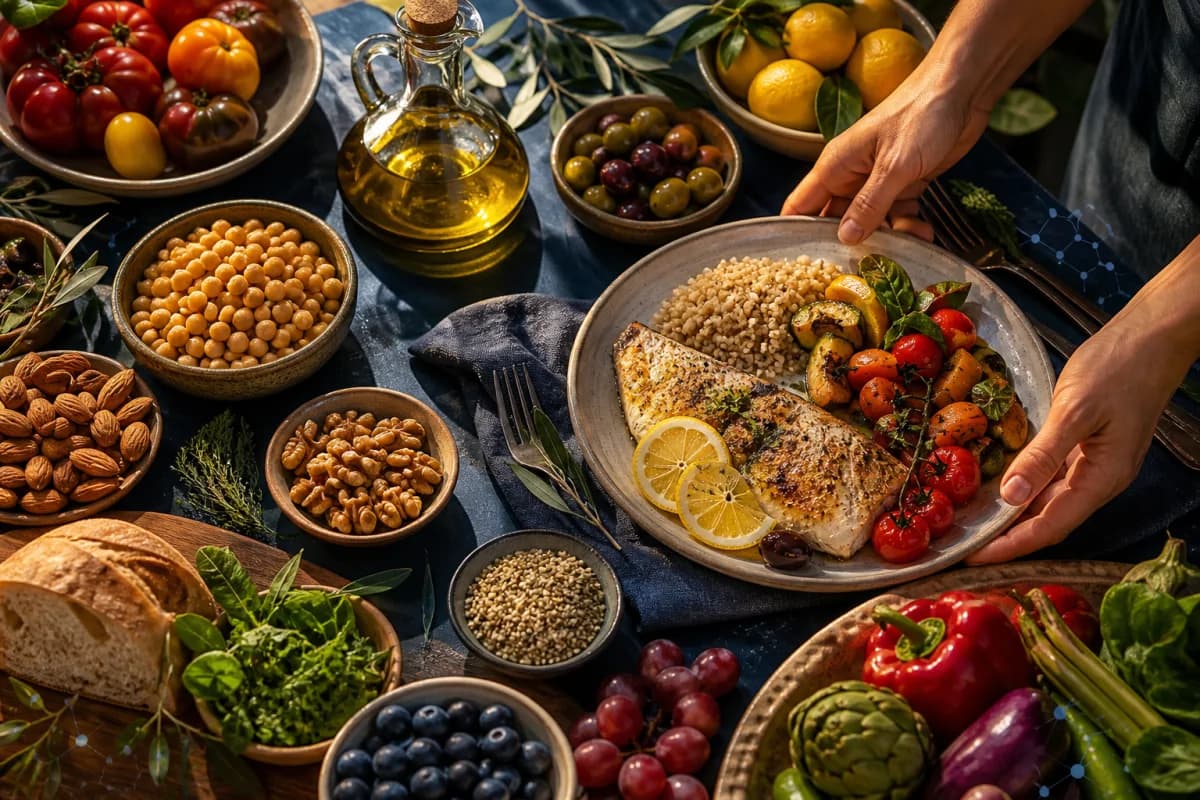
The 10 rules to remember
- Treat it as a whole dietary pattern, not a list of superfoods.See reference 1
- Make vegetables, legumes, whole grains, nuts and fruit the base.See reference 2
- Use extra-virgin olive oil as a main added fat, not an unlimited supplement.See reference 3
- Choose fish regularly if acceptable and affordable.See reference 4
- Use beans, lentils, eggs, dairy, tofu or poultry to meet protein needs.See reference 5
- Limit processed meat, refined grains, sweets and sugar-sweetened drinks.See reference 6
- Wine is not required and should not be started for health.See reference 7
- Calories still matter for weight change even when food quality is high.See reference 8
- Adapt the pattern to culture, allergies, budget and medical needs.See reference 9
- Judge the pattern over weeks, not one perfect meal.See reference 10
First principles: why a dietary pattern matters
Foods are consumed together. Fibre, unsaturated fats, micronutrients, protein and energy density interact, so single-nutrient claims miss the system.See reference 1,See reference 2
Replacing matters: olive oil or nuts are most useful when they replace butter, refined snacks or processed meat—not when simply added to excess energy.See reference 2,See reference 3
The strongest randomized outcome evidence comes from people at elevated cardiovascular risk, so claims for young healthy adults and lifespan extension remain indirect.See reference 3,See reference 4
A practical food framework
- Food group
- Plants
- Emphasize
- Vegetables, fruit, legumes
- Practical frequency
- Daily; legumes several times weekly
- Boundary
- Variety over perfectionSee reference 1
- Food group
- Fats
- Emphasize
- Extra-virgin olive oil, nuts, seeds
- Practical frequency
- Regular, portion-aware
- Boundary
- Energy denseSee reference 2
- Food group
- Protein
- Emphasize
- Fish, legumes, eggs, yogurt, poultry
- Practical frequency
- Across meals
- Boundary
- Meet individual needsSee reference 3
- Food group
- Limit
- Emphasize
- Processed meat, sweets, refined snacks
- Practical frequency
- Occasional
- Boundary
- No moral labelsSee reference 4
A four-week transition
- Week
- 1
- Add
- Vegetables at two meals
- Replace
- Sugary drinks with water
- Prepare
- Olive-oil dressingSee reference 1
- Week
- 2
- Add
- Two legume meals
- Replace
- Processed meat
- Prepare
- Bean or lentil dishSee reference 2
- Week
- 3
- Add
- Fish or plant protein
- Replace
- Refined snacks
- Prepare
- Nuts and fruitSee reference 3
- Week
- 4
- Add
- Whole grains
- Replace
- Butter-heavy defaults
- Prepare
- Repeatable menuSee reference 4
Shop, cook and eat simply
- Buy frozen and canned vegetables and legumes when they reduce friction.See reference 1
- Choose low-sodium options or rinse canned foods when sodium matters.See reference 2
- Build two repeatable breakfasts, lunches and dinners before seeking novelty.See reference 3
- Use herbs, spices, citrus and olive oil for flavour.See reference 4
- Plan protein at each main meal, especially in older age or training.See reference 5
- Review hunger, weight trend, lipids and glucose context after 8-12 weeks.See reference 6
What the evidence supports
- Outcome
- Cardiovascular events
- Best interpretation
- Major trials support benefit in higher-risk groups
- Confidence
- Moderate to high
- Boundary
- Results depend on comparator and populationSee reference 1
- Outcome
- Blood pressure and lipids
- Best interpretation
- The pattern can improve several risk factors
- Confidence
- Moderate
- Boundary
- Medication and weight change contributeSee reference 2
- Outcome
- Weight
- Best interpretation
- Can support weight loss when energy intake falls
- Confidence
- Moderate
- Boundary
- Not automatically low calorieSee reference 3
- Outcome
- Longevity
- Best interpretation
- Higher adherence associates with lower mortality
- Confidence
- Moderate observational
- Boundary
- No diet can guarantee lifespanSee reference 4
Meal timing and the Mediterranean pattern
Food quality and total intake matter more than copying a Mediterranean clock. Use meal timing that supports appetite, training, sleep and medication safety.See reference 4,See reference 5
Earlier eating may help some metabolic outcomes, but the Mediterranean trials did not require one universal fasting window.See reference 5,See reference 6
A short walk after meals can complement the pattern without changing its definition.See reference 6,See reference 7
How to know it is working
Track weekly servings of vegetables, legumes, whole grains, nuts, fish and processed meat rather than scoring isolated days.See reference 7,See reference 8
Use body-weight trend only if weight change is a goal; olive oil and nuts are nutritious but energy dense.See reference 8,See reference 9
Review blood pressure and clinically appropriate lipids or glucose over months, not after one meal.See reference 9,See reference 10
Common Mediterranean diet myths
- Claim
- It requires wine
- Better answer
- Alcohol is optional and not recommended to start
- Why
- Risk exists at low intakeSee reference 1
- Claim
- Olive oil is unlimited
- Better answer
- Use it as a replacement in suitable amounts
- Why
- It remains energy denseSee reference 2
- Claim
- It is only Italian or Greek food
- Better answer
- Its principles adapt across cuisines
- Why
- Food groups matter more than recipesSee reference 3
- Claim
- Pasta and bread are forbidden
- Better answer
- Whole-grain and portion context matter
- Why
- It is not a low-carb dietSee reference 4
- Claim
- One food creates the benefit
- Better answer
- The tested exposure is a pattern
- Why
- Components work togetherSee reference 5
What the science cannot yet tell us
PREDIMED required correction and republication after randomization irregularities; the corrected analyses still supported the main conclusion.See reference 2,See reference 6
Diet trials cannot blind participants and adherence measurements are imperfect.See reference 3,See reference 8
The term Mediterranean diet covers different scores and menus, so not every marketed version matches trial evidence.See reference 5,See reference 10
Adapt the pattern to the person
People with food allergies, swallowing problems, eating disorders, kidney disease requiring potassium or protein limits, warfarin management, diabetes medicines, or major gastrointestinal disease need individualized changes. Do not start alcohol for cardiovascular benefit.See reference 1,See reference 9,See reference 10
Who should get individualized guidance first?
A dietitian can adapt the pattern for kidney disease, diabetes medication, pregnancy, malnutrition or an eating disorder.See reference 1,See reference 9
Unintentional weight loss, persistent gastrointestinal symptoms or difficulty eating needs assessment rather than stricter food rules.See reference 2,See reference 10
Cardiovascular risk may still require medication even when diet quality improves.See reference 4,See reference 8
Track five pattern-level signals
- Vegetable and fruit servings.See reference 1
- Legume and whole-grain meals.See reference 2
- Processed meat and ultra-processed snack frequency.See reference 3
- Protein distribution and appetite.See reference 4
- Blood pressure, weight and relevant laboratory trends.See reference 5
Frequently asked questions
What foods are in a Mediterranean diet?
Vegetables, fruit, legumes, whole grains, nuts, seeds, olive oil and varied protein sources form the base.See reference 3
Do I need to drink wine?
No. Wine is not required and starting alcohol for health is not recommended.See reference 4
Can it help with weight loss?
Yes when the pattern helps create a sustainable energy deficit, but high-quality foods can still exceed energy needs.See reference 5
Is olive oil healthy?
Extra-virgin olive oil is a core unsaturated fat in the pattern, especially when it replaces saturated fats.See reference 6
How often should I eat fish?
Regular fish intake fits the pattern; exact frequency should reflect preference, pregnancy guidance, sustainability and access.See reference 7
Can vegetarians follow it?
Yes. Legumes, tofu, eggs, dairy, nuts and seeds can provide protein within a Mediterranean-style pattern.See reference 8
Is it low carbohydrate?
No. It includes legumes, fruit and whole grains while limiting refined carbohydrates.See reference 9
How quickly do markers change?
Some risk factors can change within weeks, while cardiovascular outcomes and durable habits require longer follow-up.See reference 10
Connect food patterns to real outcomes
LongevityMate helps place nutrition habits beside weight, blood pressure, activity and laboratory trends so the pattern can be judged in context.
See how LongevityMate worksGet the weekly longevity brief
The week's best longevity research in plain English. Free, every Tuesday.
References
- 1. Primary prevention of cardiovascular disease with a Mediterranean diet
New England Journal of MedicineRandomized trial
- 2. Mediterranean diet in secondary prevention of cardiovascular disease: CORDIOPREV
The LancetRandomized trial
- 3. Mediterranean-style diet for primary prevention of cardiovascular disease
Cochrane Database of Systematic ReviewsSystematic review
- 4. Mediterranean diet and multiple health outcomes
European Journal of Clinical NutritionMeta-analysis
- 5. Dietary patterns and all-cause mortality
JAMA Internal MedicineObservational study
- 6. Dietary Guidelines for Americans 2020-2025
U.S. Departments of Agriculture and Health and Human ServicesGuideline
- 7. Alcohol consumption and cardiovascular disease
World Health OrganizationOfficial guidance
- 8. Nuts and cardiovascular disease outcomes
BMC MedicineMeta-analysis
- 9. Olive oil consumption and cardiovascular disease risk
Journal of the American College of CardiologyObservational study
- 10. Mediterranean diet and weight loss
American Journal of MedicineSystematic review
Editorial transparency
- Published by
- LongevityMate Editorial Team
- Published
- Updated
Medical disclaimer
This guide provides general nutrition education. It does not diagnose disease, prescribe a therapeutic diet, manage medicines or replace individualized advice from a qualified clinician or dietitian.