
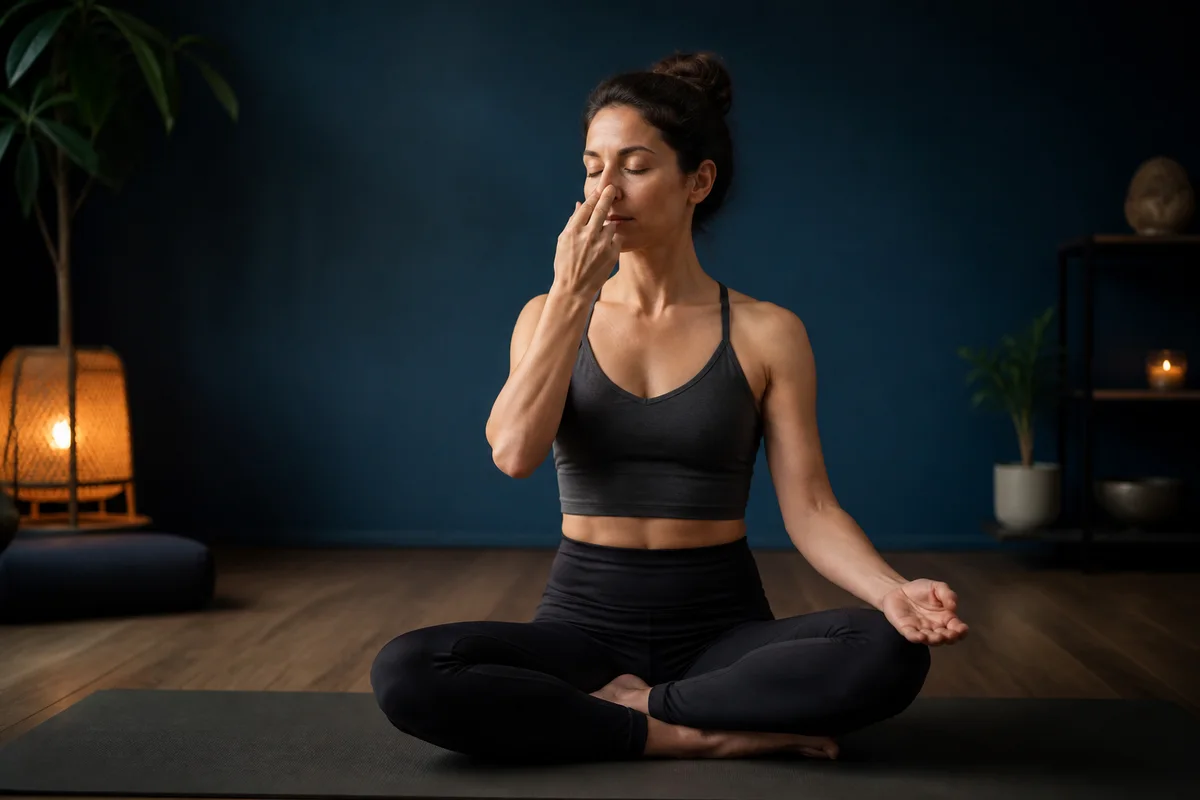
The 10 rules to remember
- Yoga is a family of practices, so evidence for one style or condition cannot validate every class.See reference 1
- Postures, breathing and relaxation can have different effects and should be dosed separately.See reference 2
- Yoga can modestly improve selected pain and function outcomes, but active comparators narrow the difference.See reference 3
- Some blood-pressure reductions are reported, yet trial quality and heterogeneity limit certainty.See reference 4
- Older adults may improve balance and mobility, but evidence that yoga prevents falls is less certain.See reference 5
- Slow breathing is not the same as rapid forceful pranayama or prolonged breath holding.See reference 6
- Beginner instruction and modification reduce risk; advanced appearance is not a health outcome.See reference 7
- Yoga should not replace antihypertensive, psychiatric, pain or sleep treatment.See reference 8
- Headstands and forceful breathing appear repeatedly in published serious adverse-event reports.See reference 9
- Yoga has not been shown to extend human lifespan.See reference 10
First principles: what this tool can actually change
Postures load joints and muscles through range, balance and isometric effort; breathing changes ventilation and autonomic input; attention and relaxation change arousal and pain processing. 'Yoga' is therefore not one mechanism or one dose.See reference 1,See reference 2
Slow breathing can lengthen exhalation and reduce respiratory rate without causing large carbon-dioxide loss. Rapid overbreathing can lower carbon dioxide and provoke tingling, dizziness, panic or fainting.See reference 3,See reference 4
The useful practice is the smallest combination that improves the chosen outcome without displacing strength, aerobic work, sleep or clinical care. Spiritual meaning may be personally important but is not evidence for a medical claim.See reference 5,See reference 6
A practical protocol
- Stage
- Arrive
- What to do
- 2 minutes of easy breathing and symptom check
- Why it matters
- Sets a safe baselineSee reference 1
- Stage
- Move
- What to do
- 15-20 minutes of beginner postures and balance
- Why it matters
- Builds range, control and confidenceSee reference 2
- Stage
- Breathe
- What to do
- 5 minutes slow comfortable nasal breathing
- Why it matters
- Trains regulation without hyperventilationSee reference 3
- Stage
- Close
- What to do
- 2-5 minutes quiet rest and record response
- Why it matters
- Reveals delayed dizziness or painSee reference 4
Timing and frequency
- When
- Weekly start
- Action
- 20-30 minutes, 2-3 sessions per weekSee reference 5
- When
- Before intense exercise
- Action
- Use brief dynamic yoga; avoid fatiguing holdsSee reference 6
- When
- Evening
- Action
- Choose gentle postures and slow breathing, not activating rapid techniquesSee reference 7
- When
- Progression
- Action
- After two symptom-free weeks, add 5-10 minutes or one harder elementSee reference 8
What to measure
- Signal
- Function or pain
- How
- Same task and 0-10 score
- Interpretation
- Use the outcome that motivated practiceSee reference 7
- Signal
- Balance
- How
- Supported single-leg or validated functional test
- Interpretation
- Safety matters more than pose depthSee reference 8
- Signal
- Breathing tolerance
- How
- Rate, comfort and dizziness
- Interpretation
- Strain is not respiratory progressSee reference 9
- Signal
- Adverse effects
- How
- Pain, falls, vision change, panic or neurologic symptoms
- Interpretation
- Modify or stop promptlySee reference 10
What the evidence supports
Systematic reviews support small short-term improvements in pain and disability for chronic low-back pain compared with passive controls.See reference 1,See reference 3
Yoga-based exercise can improve balance and mobility in older adults, although direct evidence for fewer falls or stronger bones remains uncertain.See reference 2,See reference 4
Breathing and relaxation components may help stress and blood pressure as adjuncts, but study quality and protocol variability prevent a universal prescription.See reference 5,See reference 6
Evidence strength by claim
- Claim
- Improves flexibility, balance and selected function
- Confidence
- Moderate
- Important boundary
- Depends on style, instruction and baselineSee reference 1,See reference 2
- Claim
- Modestly helps chronic low-back pain
- Confidence
- Moderate
- Important boundary
- Not superior to every active exerciseSee reference 3,See reference 4
- Claim
- Lowers blood pressure as an adjunct
- Confidence
- Low to moderate
- Important boundary
- Do not reduce medication without a clinicianSee reference 5,See reference 6
- Claim
- Cures disease or extends lifespan
- Confidence
- Not established
- Important boundary
- No direct clinical-event or lifespan evidenceSee reference 7,See reference 8,See reference 9,See reference 10
Limitations and common overclaims
Yoga trials often use small samples, incomplete blinding, many styles and self-reported outcomes. Large pooled effects can hide low certainty and weak active-control comparisons.See reference 3,See reference 7
Instructor quality, adaptation and participant expectations are difficult to standardize, so an internet sequence is not equivalent to a supervised clinical program.See reference 5,See reference 8
Case reports cannot estimate how often rare adverse events occur, but they identify plausible hazards from inversions, extreme ranges and forceful breathing.See reference 9,See reference 10
How to make it stick
Choose a beginner class that explicitly welcomes modifications and asks about health conditions. Avoid teachers who frame pain or dizziness as purification.See reference 1,See reference 2
Keep a 'two-repetition reserve' for postures: finish the hold while breathing and alignment remain controlled rather than at failure.See reference 3,See reference 4
Use yoga to support a wider week that still includes progressive strength and aerobic activity. Add complexity only when it serves a clear goal.See reference 5,See reference 6
Troubleshooting
- Problem
- Wrist or knee pain
- Likely issue
- Load or angle exceeds current capacity
- Better next step
- Use supports, shorten range or choose another poseSee reference 2,See reference 3
- Problem
- Dizziness during breathing
- Likely issue
- Overbreathing or breath holding
- Better next step
- Return to normal breathing seated or lying downSee reference 4,See reference 5
- Problem
- Back pain worsens
- Likely issue
- Pose or dose is unsuitable
- Better next step
- Stop the provoking movement and seek tailored guidanceSee reference 6,See reference 7
- Problem
- Pressure to do advanced poses
- Likely issue
- Instruction is not respecting individual risk
- Better next step
- Choose a safer teacher or programSee reference 8,See reference 9,See reference 10
Safety and when to stop
Practice where a fall will not cause injury and use supports. Avoid unsupervised headstands, shoulder stands, extreme spinal ranges, forceful rapid breathing and prolonged breath holds if you are a beginner. Seek individualized guidance for pregnancy, glaucoma or retinal disease, uncontrolled blood pressure, osteoporosis, joint replacement, recent surgery, vestibular problems or neurologic disease. Stop for chest pain, faintness, vision change, severe headache, new weakness or numbness, sharp joint or spinal pain, or breathlessness that does not settle.See reference 1,See reference 5,See reference 9
Who is most likely to benefit
Beginner yoga is reasonable for people who want a combined movement and regulation practice and prefer a low-impact, scalable format.See reference 2,See reference 4
Condition-specific programs can help selected people with chronic low-back pain, hypertension or balance limitations when they complement appropriate care.See reference 5,See reference 7
People seeking maximal strength, aerobic capacity or proven fall prevention should not use yoga as the only training modality.See reference 8,See reference 10
Track five things
- Style, duration and session frequency.See reference 1
- The symptom or function target.See reference 2
- Pose modifications and effort.See reference 3
- Breathing rate and comfort.See reference 4
- Pain, dizziness, falls or other adverse effects.See reference 5
Frequently asked questions
How often should a beginner do yoga?
Two or three 20-30 minute sessions per week is a manageable start. Consistency matters more than daily advanced practice.See reference 1
What is a safe pranayama for beginners?
Use slow comfortable nasal breathing without forced depth or long holds; stop if lightheaded or anxious.See reference 2
Is yoga enough exercise?
Usually not by itself. A complete plan also includes enough aerobic activity and progressive strength work.See reference 3
Can yoga help back pain?
Some structured programs modestly improve chronic low-back pain and function, but poses should be adapted and red flags assessed.See reference 4
Can yoga lower blood pressure?
It may modestly help as an adjunct. Continue prescribed treatment and use validated blood-pressure measurements.See reference 5
Should yoga poses hurt?
No. Effort and stretch are expected, but sharp, electric, unstable or escalating pain means modify or stop.See reference 6
Are headstands healthy?
They are not required for health and carry extra neck, fall and eye-pressure concerns. Beginners should not treat them as a goal.See reference 7
Does yoga improve longevity?
Yoga may support movement and stress management, but no direct trial shows that it extends lifespan.See reference 8
Connect the protocol to your wider health picture
LongevityMate helps organize measurements, habits, symptoms and trends so one tool stays in context instead of becoming the whole plan.
See how LongevityMate worksGet the weekly longevity brief
The week's best longevity research in plain English. Free, every Tuesday.
References
- 1. Yoga: Effectiveness and Safety
National Center for Complementary and Integrative HealthOfficial guidance
- 2. Yoga for treating low back pain
Systematic review and meta-analysisMeta-analysis
- 3. Yoga for chronic non-specific low back pain
Cochrane Database of Systematic ReviewsSystematic review
- 4. Yoga interventions for managing hypertension
Frontiers in Public HealthMeta-analysis
- 5. Yoga-based exercise improves balance and mobility in people 60 and over
Age and AgeingMeta-analysis
- 6. Effect of yogic breathing on heart rate and blood pressure
Indian Heart JournalMeta-analysis
- 7. Effect of breathwork on stress and mental health
Scientific ReportsMeta-analysis
- 8. Yoga as antihypertensive lifestyle therapy
Mayo Clinic ProceedingsMeta-analysis
- 9. Yoga and its risks: adverse events in case reports
Journal of Integrative MedicineSystematic review
- 10. Yoga and balance, falls and bone metabolism
Osteoporosis InternationalSystematic review
Editorial transparency
- Published by
- LongevityMate Editorial Team
- Published
- Updated
Medical disclaimer
This guide provides general health education. It does not diagnose a condition, prescribe treatment, replace individualized medical care, or guarantee a health or longevity outcome.