
The rules to remember
- Define one symptom targetSee reference 1,See reference 2
- Record current sleep position and waking symptomsSee reference 2,See reference 3
- Choose one adjustable supportSee reference 3,See reference 4
- Aim for comfortable neutral alignmentSee reference 4,See reference 5
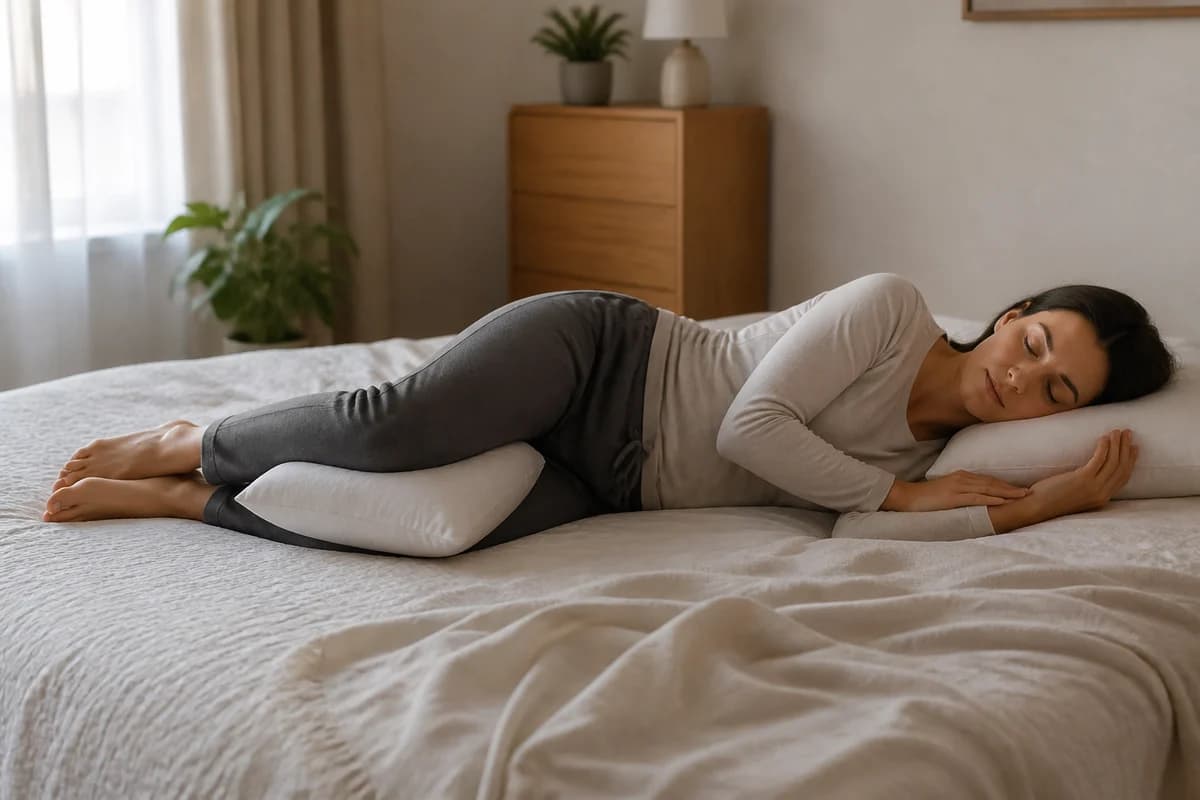
- Use a knee pillow for side-sleep hip rotation if helpfulSee reference 5,See reference 6
- Use a stable torso wedge for refluxSee reference 6,See reference 7
- Avoid stacking unstable pillowsSee reference 7,See reference 8
- Test for one to two weeksSee reference 8,See reference 9
- Seek assessment for neurologic or apnea signsSee reference 9,See reference 10
- Check the official guidance and evidence boundaries before escalating the protocol.See reference 10,See reference 1
First principles: what this can actually change
Supports redistribute load and change spinal, shoulder, hip and airway geometry.See reference 1,See reference 2
The right height depends on body shape, mattress compression and sleep position.See reference 2,See reference 3
Comfort improvement is plausible, but pain and sleep apnea have multiple causes that a pillow cannot diagnose.See reference 3,See reference 4
A practical protocol
- Stage
- Define
- What to do
- Define one symptom target
- Why it matters
- Reduce avoidable errorSee reference 1,See reference 2
- Stage
- Screen
- What to do
- Record current sleep position and waking symptoms
- Why it matters
- Reduce avoidable errorSee reference 2,See reference 3
- Stage
- Apply
- What to do
- Choose one adjustable support
- Why it matters
- Keep the dose repeatableSee reference 3,See reference 4
- Stage
- Apply
- What to do
- Aim for comfortable neutral alignment
- Why it matters
- Keep the dose repeatableSee reference 4,See reference 5
- Stage
- Review
- What to do
- Use a knee pillow for side-sleep hip rotation if helpful
- Why it matters
- Keep the dose repeatableSee reference 5,See reference 6
- Stage
- Review
- What to do
- Use a stable torso wedge for reflux
- Why it matters
- Keep only what helpsSee reference 6,See reference 7
Timing and frequency
- Decision
- Starting frequency
- Practical answer
- Use nightly during a one- to two-week trial, changing only one support at a time.See reference 2,See reference 3
- Decision
- First review
- Practical answer
- 1–2 weeksSee reference 3,See reference 4
- Decision
- Best timing
- Practical answer
- Set the support before sleep and judge it by overnight comfort plus waking function.See reference 4,See reference 5
- Decision
- Stop rule
- Practical answer
- Stop for worsening pain, new weakness or numbness, breathing difficulty, falls or repeated loss of sleep.See reference 5,See reference 6,See reference 7
What to measure
- Signal
- Waking neck or back symptoms
- How to use it
- Record a baseline and compare at the review point
- Caveat
- Use the same method and conditionsSee reference 3,See reference 4
- Signal
- Awakenings and comfort
- How to use it
- Track a weekly trend
- Caveat
- Expect normal variationSee reference 4,See reference 5
- Signal
- Adherence
- How to use it
- Record the exact dose and timing
- Caveat
- No exposure means no fair testSee reference 5,See reference 6
- Signal
- Interpretation
- How to use it
- Ask whether the result changes a real decision
- Caveat
- A snoring app cannot diagnose obstructive sleep apnea or prove airway safety.See reference 6,See reference 7
What the evidence actually shows
Systematic review suggests some pillow designs improve waking neck symptoms and alignment, while sleep-posture evidence for low-back pain remains limited.See reference 1,See reference 2,See reference 3
Results do not support one pillow material, height or position for everyone, and wedges are not substitutes for proven apnea treatment.See reference 4,See reference 5,See reference 6
Most studies measure short-term symptoms, physiology or biomarkers rather than clinical events or lifespan. The evidence supports a bounded experiment, not a longevity guarantee.See reference 6,See reference 7,See reference 8
Evidence strength by claim
- Claim
- Waking neck or back symptoms
- Evidence
- Moderate for selected neck symptoms; limited for broad sleep claims
- Verdict
- Systematic review suggests some pillow designs improve waking neck symptoms and alignment, while sleep-posture evidence for low-back pain remains limited.See reference 1,See reference 2
- Claim
- Awakenings and comfort
- Evidence
- Mixed or context-dependent
- Verdict
- Results do not support one pillow material, height or position for everyone, and wedges are not substitutes for proven apnea treatment.See reference 3,See reference 4
- Claim
- Safety
- Evidence
- Depends on screening and dose
- Verdict
- Avoid positions that cause numbness, weakness, breathing difficulty or severe pain. Wedges and pillows must not create entrapment, falls or unstable infant sleep environments.See reference 5,See reference 7
- Claim
- Longer life
- Evidence
- Not directly tested
- Verdict
- Do not turn an intermediate outcome into a lifespan promise.See reference 6,See reference 8
Limits and common overclaims
Pillow studies are small and products differ.See reference 2,See reference 3
Self-selected posture may reflect pain rather than cause it.See reference 3,See reference 4
Mattress and body shape change the same pillow's effect.See reference 4,See reference 5
A four-step implementation plan
- Define the exact reason you are trying sleep posture support.See reference 1
- Record a baseline for waking neck or back symptoms.See reference 2
- Use the same protocol until the 1–2 weeks review point.See reference 3
- Continue only if benefit outweighs cost, time, discomfort and risk.See reference 4
Troubleshooting
- Problem
- No benefit
- What to do
- Check adherence, dose and whether waking neck or back symptoms is the right outcomeSee reference 2
- Problem
- Discomfort
- What to do
- Reduce the dose and stop for warning symptomsSee reference 3
- Problem
- Confusing data
- What to do
- Use the same measurement conditions and a longer trendSee reference 4
- Problem
- Too much burden
- What to do
- Choose the simpler intervention that solves the same problemSee reference 5
Safety and who should be cautious
Avoid positions that cause numbness, weakness, breathing difficulty or severe pain. Wedges and pillows must not create entrapment, falls or unstable infant sleep environments. Stop for worsening pain, new weakness or numbness, breathing difficulty, falls or repeated loss of sleep.See reference 5,See reference 6,See reference 7
Who is most likely to benefit
Adults with position-dependent comfort, nocturnal reflux or a clinician-defined positional issue may benefit from a time-limited support trial.See reference 2,See reference 3
It is less useful when adopted only because a score, trend or influencer made sleep posture support seem mandatory.See reference 4,See reference 5
People with symptoms, diagnosed disease, pregnancy, recent surgery or complex medicines should adapt the protocol with an appropriate clinician.See reference 6,See reference 7
Track five things
- Waking neck or back symptomsSee reference 1
- Awakenings and comfortSee reference 2
- The exact dose and timingSee reference 3
- Symptoms and adverse effectsSee reference 4
- Whether the result changes a real decisionSee reference 5
Frequently asked questions
What is Sleep posture supports?
A pillow or wedge changes joint position, pressure and comfort; it does not create one universally correct sleeping posture. Evidence suggests pillow design can influence waking neck symptoms, while posture evidence for back pain is limited. Wedges have separate use cases for reflux or positional breathing problems.See reference 1,See reference 2
How often should I use sleep posture support?
Use nightly during a one- to two-week trial, changing only one support at a time.See reference 2,See reference 3
How long before sleep posture support works?
Use 1–2 weeks as the first meaningful review point. Immediate sensations or device scores are not durable health outcomes.See reference 3,See reference 4
What should I track?
Track waking neck or back symptoms, awakenings and comfort, adherence and adverse effects under similar conditions.See reference 4,See reference 5
Is sleep posture support safe?
Avoid positions that cause numbness, weakness, breathing difficulty or severe pain. Wedges and pillows must not create entrapment, falls or unstable infant sleep environments.See reference 5,See reference 6
When should I stop?
Stop for worsening pain, new weakness or numbness, breathing difficulty, falls or repeated loss of sleep.See reference 6,See reference 7
Does sleep posture support increase lifespan?
No human trial proves that this tool extends an individual's lifespan. Its value depends on whether it improves a relevant symptom, behavior, function or established risk factor.See reference 7,See reference 8
Can it replace sleep, exercise, nutrition or medical care?
No. It is an optional layer around the fundamentals and should not delay evaluation of persistent or serious symptoms.See reference 8,See reference 9
Connect the protocol to your wider health picture
LongevityMate helps organize habits, symptoms, measurements and trends so one intervention stays in context instead of becoming the whole plan.
See how LongevityMate worksGet the weekly longevity brief
The week's best longevity research in plain English. Free, every Tuesday.
References
- 1. Relationship Between Sleep Posture and Low Back Pain: A Systematic Review.
Musculoskeletal careSystematic review
- 2. The effects of pillow designs on neck pain, waking symptoms, neck disability, sleep quality and spinal alignment in adults: A systematic review and meta-analysis.
Clinical biomechanics (Bristol, Avon)Meta-analysis
- 3. A review of supine position related obstructive sleep apnea: Classification, epidemiology, pathogenesis and treatment.
Sleep medicine reviewsEvidence review
- 4. Sleep position and shoulder pain.
Medical hypothesesEvidence review
- 5. Relationship between sleep position and glaucoma progression.
Current opinion in ophthalmologyEvidence review
- 6. Are temporomandibular disorders associated with habitual sleeping body posture or nasal septal deviation?
European archives of oto-rhino-laryngology : official journal of the European Federation of Oto-Rhino-Laryngological Societies (EUFOS) : affiliated with the German Society for Oto-Rhino-Laryngology - Head and Neck SurgeryEvidence review
- 7. Sleep apnea
National Heart, Lung, and Blood InstituteOfficial guidance
- 8. Acid reflux and GERD in adults
National Institute of Diabetes and Digestive and Kidney DiseasesOfficial guidance
- 9. Back pain
National Institute of Arthritis and Musculoskeletal and Skin DiseasesOfficial guidance
- 10. Neck pain
National Health ServiceOfficial guidance
Editorial transparency
- Published by
- LongevityMate Editorial Team
- Published
- Updated
Medical disclaimer
This guide provides general health education. It does not diagnose a condition, prescribe treatment, replace individualized medical care, or guarantee a health or longevity outcome.