
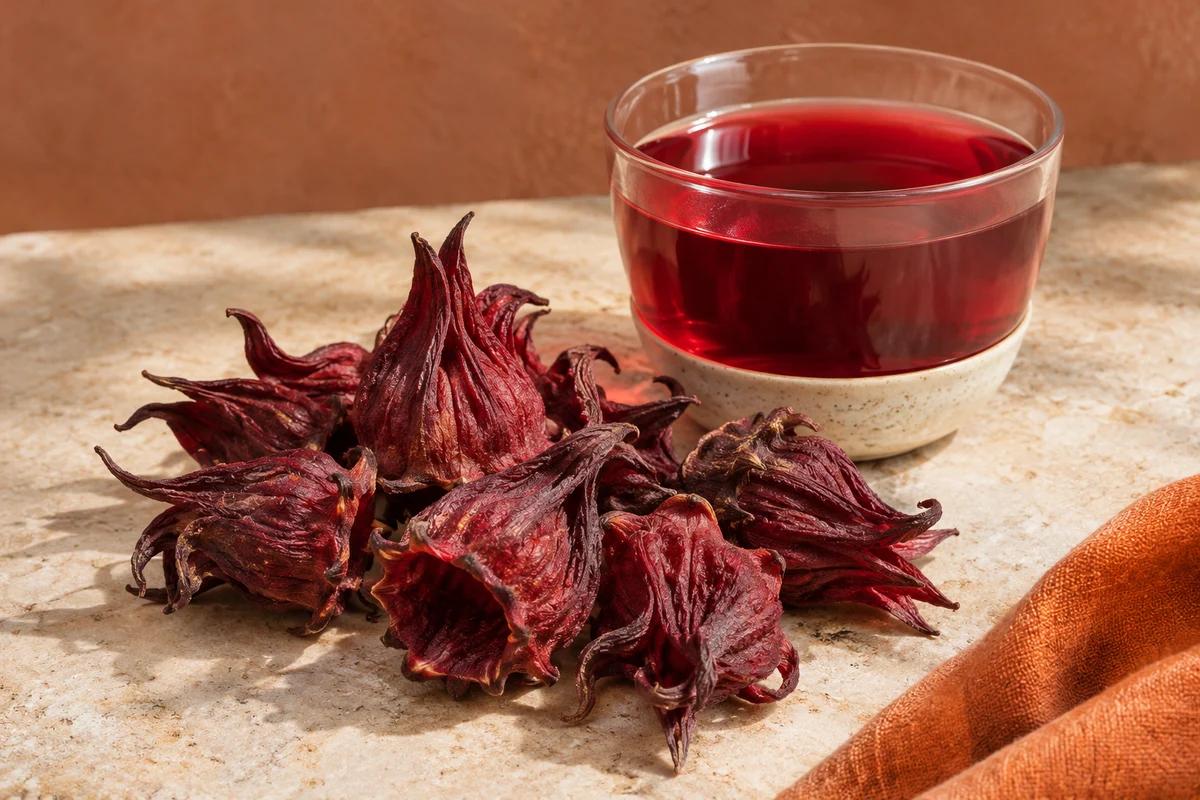
Look for roselle and the plant part
Roselle is the hibiscus used for the tart red drink also called sour tea. The study used the calyx, the cup of sepals around the base of the flower that becomes fleshy as the fruit develops. The petals of an ornamental hibiscus and a mixed herbal tea labelled “hibiscus” can be different preparations.See reference 1,See reference 2
For a comparison with a study, look for the botanical name, plant part and whether the label describes dried calyces, a tea blend or an extract. A quantity of extract describes the product in the capsule. It cannot establish how much of the material in a brewed tea the capsule provides.See reference 1,See reference 2,See reference 3
What the studies measured
- Study
- Brewed tea trial in 65 adults who completed six weeks.
- Result
- Mean systolic blood pressure fell by about 7.2 mmHg in the tea group and 1.3 mmHg in the placebo group. The difference for diastolic pressure was inconclusive.
- Limit
- Participants were not taking blood pressure medicines. The trial measured blood pressure over weeks.See reference 2
- Study
- 2022 systematic review of randomized trials in adults.
- Result
- The pooled comparison with placebo suggested a lower systolic pressure. The diastolic result was less clear.
- Limit
- The results varied widely across trials, which used different preparations and enrolled different groups.See reference 3
What to discuss before using a concentrated product
The tea trial cannot tell you how a capsule will affect someone taking blood pressure medicine. If you are considering a concentrated extract alongside medication, bring its ingredient list and serving details to your pharmacist or clinician. Continue prescribed medicines as directed by your care team.See reference 2,See reference 3,See reference 4
Short trials give limited information about regular use over months and about uncommon adverse effects. A change in average blood pressure over a few weeks does not establish an effect on heart attacks or strokes.See reference 2,See reference 3
Common questions
Is a hibiscus capsule equivalent to a cup of tea?
The amount and composition depend on the plant part, preparation and strength. The brewed-tea trial cannot supply a conversion to a capsule serving.See reference 1,See reference 2,See reference 3
Which blood pressure number changed in the tea trial?
The clearest difference was in systolic pressure, the top number. The between-group result for diastolic pressure was inconclusive.See reference 2
Does the study tell me how much hibiscus to take?
The study compared one tea preparation for a short period. It cannot establish a personal serving, dose or treatment plan.See reference 2,See reference 3,See reference 4
Get the weekly longevity brief
The week's best longevity research in plain English. Free, every Tuesday.
References
- 1. Roselle: Botanical Identity, Calyces and Uses
North Carolina State Extension Gardener Plant ToolboxOfficial guidance
- 2. Hibiscus sabdariffa Tea in Adults With Elevated Blood Pressure
McKay and colleagues, Journal of Nutrition via USDA Agricultural Research ServiceRandomized trial
- 3. Effects of Hibiscus sabdariffa on Blood Pressure and Cardiometabolic Markers
Ellis and colleagues, Nutrition ReviewsMeta-analysis
- 4. FDA 101: Dietary Supplements
U.S. Food and Drug AdministrationOfficial guidance
Editorial transparency
- Published by
- LongevityMate Editorial
- Reviewed by
- Editorial evidence review (AI-assisted)
- Published
- Updated
Medical disclaimer
For general education. A qualified health professional can interpret your results and advise on testing, medicines or supplements.