
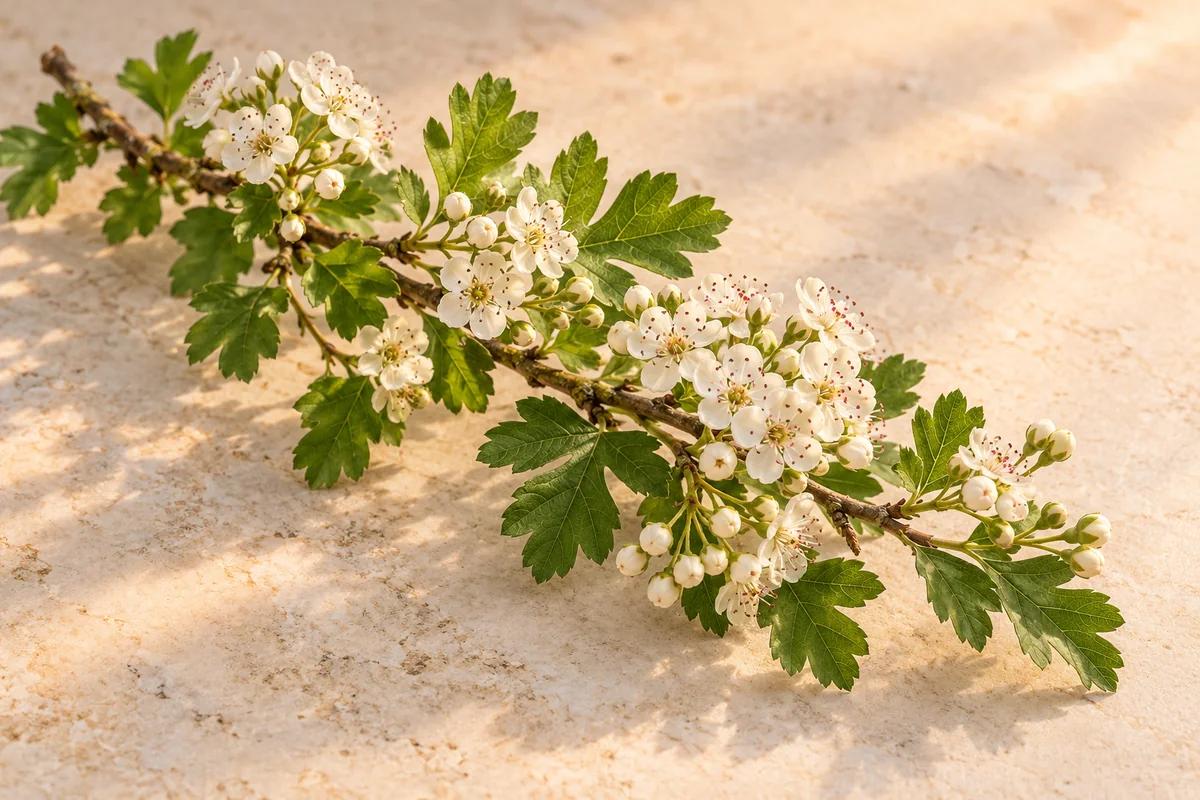
Start with the plant part and exact extract
Hawthorn products can differ in species, plant part, extraction and constituents. The prominent WS 1442 trials studied a defined leaf-and-flower extract. A tea, fruit preparation, root product or mixed supplement does not become equivalent because hawthorn appears on its label.See reference 4
What the main human studies actually asked
- Evidence
- 2008 Cochrane review
- People and exposure
- 14 trials; 10 trials with 855 participants entered meta-analysis
- Finding and limit
- Some symptom and exercise measures improved. Meaningful clinical-event data were largely absent; searches ended in 2006See reference 2
- Evidence
- SPICE trial
- People and exposure
- 2,681 adults with chronic heart failure; WS 1442, 900 mg daily, for 24 months alongside usual therapy
- Finding and limit
- No significant benefit for the primary combined outcome of cardiac death, heart attack or worsening-heart-failure hospitalisationSee reference 3
- Evidence
- HERB CHF trial
- People and exposure
- 120 adults; 450 mg twice daily for six months alongside conventional therapy
- Finding and limit
- No significant improvement in the primary six-minute walking outcome; more adverse events were reported with hawthornSee reference 4
Better symptoms and fewer major events are different claims
The Cochrane review’s favourable symptom findings answer a narrower question than preventing death or admission. Its authors also noted variation in background treatment. It should not be presented as a modern proof that hawthorn improves survival.See reference 2
SPICE reported a primary-outcome hazard ratio of 0.95 with a 95% confidence interval from 0.82 to 1.10. That interval includes no difference. An exploratory subgroup signal cannot replace the trial’s unsuccessful primary result or establish a personal benefit.See reference 3
Studied amounts describe trials, not a recommended dose
The trial amounts describe defined extracts in selected patients receiving conventional care. They do not identify a self-treatment dose or show that a shop product is equivalent.See reference 4
Safety depends on the product and clinical setting
NCCIH lists possible dizziness, nausea, vomiting, diarrhoea and muscle pain, and uncertainty in pregnancy and breastfeeding. It also describes a study raising concern about early heart-failure progression. Review any proposed product with the treating clinician or pharmacist, especially when medicines are involved.See reference 1
SPICE followed selected patients for two years; HERB CHF found more adverse events over six months. Neither result guarantees safety across users, medicines or products.See reference 3,See reference 4
Tejocote root adds a separate product-authenticity problem
The FDA has identified certain products labelled as tejocote, or Crataegus mexicana root, that instead contained toxic yellow oleander. Its current alert names tested products and gives instructions for affected consumers. This finding does not mean that every hawthorn product contains oleander, but it makes plant-part and product identity essential.See reference 5
A photograph, familiar plant name or quality claim cannot verify what is inside a bottle. Check the exact product against the regulator’s current alert rather than assuming that leaf-and-flower trial results establish the authenticity or safety of a root product.See reference 5
Keep the useful details
- Match evidence to the exact preparation and outcome.See reference 2,See reference 3,See reference 4
- Keep a supplement decision within an existing heart-care plan.See reference 1
- Check the separate root-product alert when relevant.See reference 5
Common questions
Has hawthorn been proven to reduce deaths from heart failure?
The large SPICE trial did not meet its primary clinical-event outcome. A subgroup finding does not establish that broad claim.See reference 3
Can berry tea stand in for WS 1442?
The trials assessed defined extract preparations. Their results do not establish an equivalent effect from a different plant part or preparation.See reference 3,See reference 4
Is the yellow-oleander warning about all hawthorn?
No. The FDA alert concerns particular tested, adulterated products. It remains important to check the exact product and current instructions.See reference 5
Get the weekly longevity brief
The week's best longevity research in plain English. Free, every Tuesday.
References
- 1. Hawthorn: usefulness and safety
NCCIH, U.S. National Institutes of Health; updated April 2025Official guidance
- 2. Hawthorn extract for treating chronic heart failure
Guo, Pittler and Ernst, Cochrane; 2008Systematic review
- 3. The efficacy and safety of Crataegus extract WS 1442 in patients with heart failure: the SPICE trial
Holubarsch and colleagues, European Journal of Heart Failure; 2008Randomized trial
- 4. Hawthorn Extract Randomized Blinded Chronic Heart Failure (HERB CHF) Trial
Zick and colleagues, European Journal of Heart Failure; 2009Randomized trial
- 5. Warning about certain products containing toxic yellow oleander
U.S. Food and Drug Administration; updated September 2026Official guidance
Editorial transparency
- Published by
- LongevityMate Editorial
- Review
- Editorial evidence review (AI-assisted)
- Published
- Updated
Medical disclaimer
General education only. AI-assisted editorial evidence review is not a qualified clinical assessment. This guide does not diagnose a condition, interpret a personal result, choose treatment or recommend a supplement dose. Discuss testing, symptoms, medicines and supplements with a qualified health professional.