
An extract is not a pure-ingredient amount
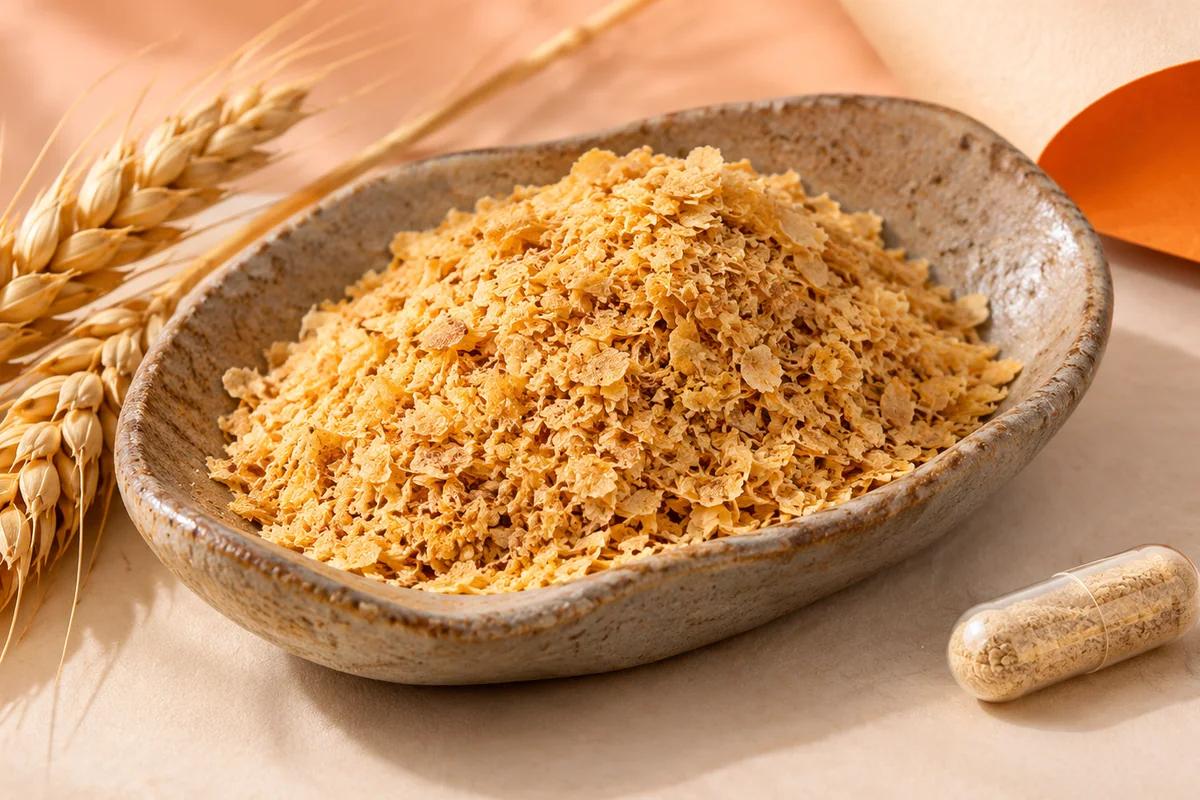
Human studies have used spermidine-rich wheat-germ extracts. The 2018 safety study’s extract also supplied spermine and putrescine. The weight of an extract, the amount of spermidine and the contents of a multi-ingredient capsule are different quantities; compare the actual ingredient information rather than a headline capsule weight.See reference 2
Selected human evidence and its boundaries
- Study
- 2018 safety study
- Studied exposure and population
- 30 older adults with subjective cognitive decline; a wheat-germ extract providing 1.2 mg/day of spermidine for 3 months.
- Finding and limit
- Selected safety measures and tolerability were similar to placebo. Small, short-term safety evidence, not a lifespan study.See reference 2
- Study
- SmartAge, 2022
- Studied exposure and population
- 100 adults aged 60–90 with subjective cognitive decline; extract providing 0.9 mg/day for 12 months.
- Finding and limit
- No significant improvement in the main memory measure or main secondary outcomes. Exploratory signals require confirmation.See reference 1
- Study
- Radiotherapy proof-of-concept, 2026
- Studied exposure and population
- A separate clinical setting involving head-and-neck radiotherapy.
- Finding and limit
- The abstract reports less dry mouth at 3 months. It does not establish a healthy-aging or memory benefit.See reference 3
Autophagy is a mechanism, not a consumer outcome
Autophagy is part of how cells process and recycle their components. Animal and cellular findings help form hypotheses, but do not measure how much longer a person lives or whether memory improves. SmartAge tested a human cognitive outcome and did not confirm its primary benefit.See reference 1
Nor can a comparison between people eating different diets isolate the effect of a spermidine capsule. An association, a laboratory pathway and a randomized supplement trial answer different questions. This is a distinction in study design, not evidence that all possible effects are absent.See reference 1,See reference 2
The newer disease-specific study does not settle healthy aging
The July 2026 paper combines laboratory work with a randomized proof-of-concept study around radiotherapy. Its reported reduction in dry mouth concerns that treatment setting. This guide uses the public abstract for that finding and does not claim a full protocol or long-term cancer-safety review.See reference 3
It is not a reason to self-add spermidine during cancer care. That is a treatment decision for the oncology team, who can assess the exact product, other treatments and the evidence relevant to the person.See reference 3
Tolerability findings have limits
The small 2018 trial found no differences in the selected clinical chemistry, hematology and self-reported health measures assessed. That cannot establish rare-event risk, safety at larger amounts or safety for indefinite use.See reference 2
Check the source material and allergen declaration: wheat-germ extract is not interchangeable with a wheat-free purified product. The cited trials do not establish suitability in pregnancy, childhood or alongside all medicines and conditions. Personal use in those circumstances needs qualified advice rather than extrapolation from selected older adults.See reference 1,See reference 2
A regulatory document is not proof of a benefit
Read the actual status of a filing before accepting a marketing summary. For example, FDA’s record for wheat-germ extract notice 889 says evaluation ceased at the notifier’s request. That is not an FDA conclusion that the supplement improves memory, prevents disease or extends life. Rules also differ between jurisdictions.See reference 4
Questions that improve a product comparison
Ask whether the evidence tested the same extract or purified ingredient, how much spermidine it actually supplied, which outcome was measured, and whether the result was primary or exploratory. SmartAge disclosed commercial relationships and extract-development support; those disclosures deserve attention alongside the methods and null result.See reference 1,See reference 2
Common questions
Did the longer memory trial show that spermidine works?
It did not find a significant improvement in its primary memory outcome. Exploratory findings are not a confirmed memory benefit.See reference 1
Are the study amounts a recommended dose?
No. They describe the named research formulations and protocols. They are not a personal supplement plan or an established longevity dose.See reference 1,See reference 2
Get the weekly longevity brief
The week's best longevity research in plain English. Free, every Tuesday.
References
- 1. Effects of Spermidine Supplementation on Cognition and Biomarkers in Older Adults With Subjective Cognitive Decline
Schwarz and colleagues, JAMA Network OpenRandomized trial
- 2. Safety and tolerability of spermidine supplementation in mice and older adults with subjective cognitive decline
Schwarz and colleagues, AgingRandomized trial
- 3. Oral Spermidine Supplementation Preserves Submandibular Gland Function After Radiotherapy: Mechanistic Insights and Use in a Phase II Randomized Clinical Trial
MedComm, primary study abstractRandomized trial
- 4. GRAS Notice 889: Spermidine rich wheat germ extract
U.S. Food and Drug AdministrationOfficial guidance
Editorial transparency
- Published by
- LongevityMate Editorial
- Review
- Editorial evidence review (AI-assisted)
- Published
- Updated
Medical disclaimer
General education only. AI-assisted editorial evidence review is not a qualified clinical assessment. This guide does not diagnose a condition, interpret a personal result, choose treatment or recommend a supplement dose. Discuss results, symptoms, medicines and supplements with a qualified health professional.