
Read the units before comparing two results
- Report line
- NRBC absolute or NRBC#
- What it counts
- Cells in a stated volume of blood. Examples of reporting units include cells per µL or thousands of cells per µL.
- What to compare
- Compare with the lab’s interval for that unit and age group.See reference 1,See reference 3
- Report line
- NRBC% or NRBC per 100 WBC
- What it counts
- The number of nucleated red cells counted relative to 100 white blood cells (WBCs).
- What to compare
- The white blood cell count is the denominator. Two people can have the same relative result and different absolute counts.See reference 3
- Report line
- Blood film or manual differential
- What it counts
- A lab professional examines a stained sample under a microscope. A lab may use this to check a flagged automated result.
- What to compare
- Check whether the number came from an automated count or a manual review, especially when comparing a small result over time.See reference 3,See reference 4
Why age changes the reference interval
NRBCs may be present in newborn blood. In a large neonatal study, reference distributions varied by gestational age and time since birth. A cord blood or day-of-birth result belongs with the lab’s newborn reference information.See reference 2
Older children and adults usually have few or no detectable NRBCs. Sensitive analysers can detect small amounts that older manual methods may miss. One lab’s study of otherwise normal outpatient CBC samples found small flagged results in a minority of specimens. That finding supports using the interval on your own report.See reference 1,See reference 3
What a flagged result adds to the CBC
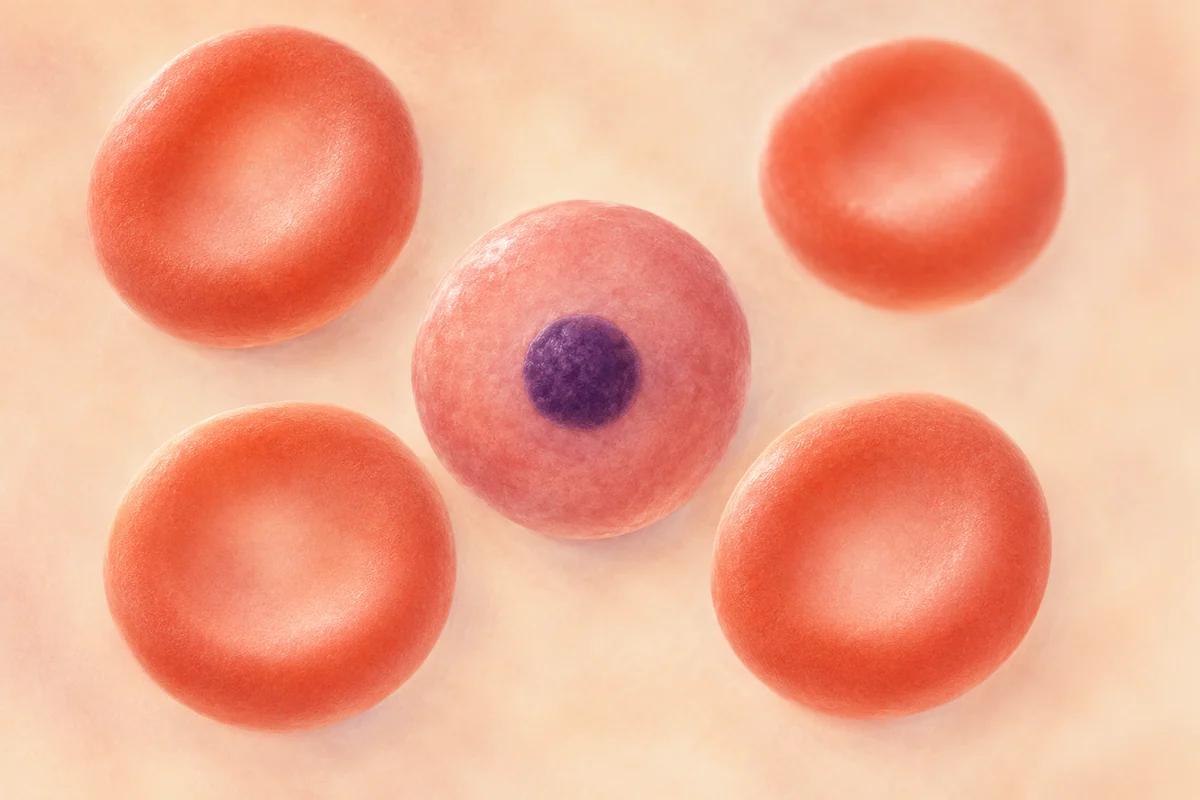
NRBCs may appear in blood when red cell production is under stress, including after blood loss, increased red cell breakdown or low oxygen. Bone marrow disorders can also be associated with circulating NRBCs. The count alone leaves the cause uncertain.See reference 1,See reference 3
Some counters can mistake cells with nuclei for white blood cells. Other analysers distinguish NRBCs and can report a corrected white blood cell count. The lab chooses when a manual film review is useful. Use its reported WBC value and comments when discussing the CBC.See reference 3,See reference 4
For a flagged result, bring the full CBC and any earlier reports to the clinician who ordered the test. Useful questions include which NRBC line was flagged, what interval applies, and how it fits with the haemoglobin, white blood cell count and any blood film comments.See reference 1,See reference 3
Common questions
Does 0 NRBC mean my bone marrow makes no red cells?
A zero result means the method found no measurable circulating NRBCs in the sample. Mature red blood cells normally circulate after losing their nucleus.See reference 1,See reference 3
Is NRBC% the percentage of all red blood cells?
On a report that uses NRBC per 100 WBC, the denominator is white blood cells. The absolute count describes cells per volume of blood.See reference 3
Can a small flagged NRBC count identify a disease?
Many circumstances can affect this result. The lab method, the reference interval and the rest of the CBC help the ordering clinician decide what the flag means.See reference 1,See reference 3
Get the weekly longevity brief
The week's best longevity research in plain English. Free, every Tuesday.
See your blood results in context
If you already have blood test results, the paid LongevityMate app can help you view related markers together. It provides educational context, not a diagnosis or a replacement for your clinician.
Explore blood test analysisReferences
- 1. Circulating Nucleated Red Blood Cells: An Updated Reference Interval
Archives of Pathology & Laboratory MedicineObservational study
- 2. Reference ranges for blood concentrations of nucleated red blood cells in neonates
NeonatologyObservational study
- 3. Cutoff Value for Correcting White Blood Cell Count for Nucleated Red Blood Cells
Laboratory MedicineEvidence review
- 4. Automated counting of nucleated red blood cells in blood samples of newborns
Clinical and Laboratory HaematologyObservational study
Editorial transparency
- Published by
- LongevityMate Editorial
- Reviewed by
- Editorial evidence review (AI-assisted)
- Published
- Updated
Medical disclaimer
General education. A qualified health professional can interpret personal results and advise on diagnosis, treatment or supplement use.