
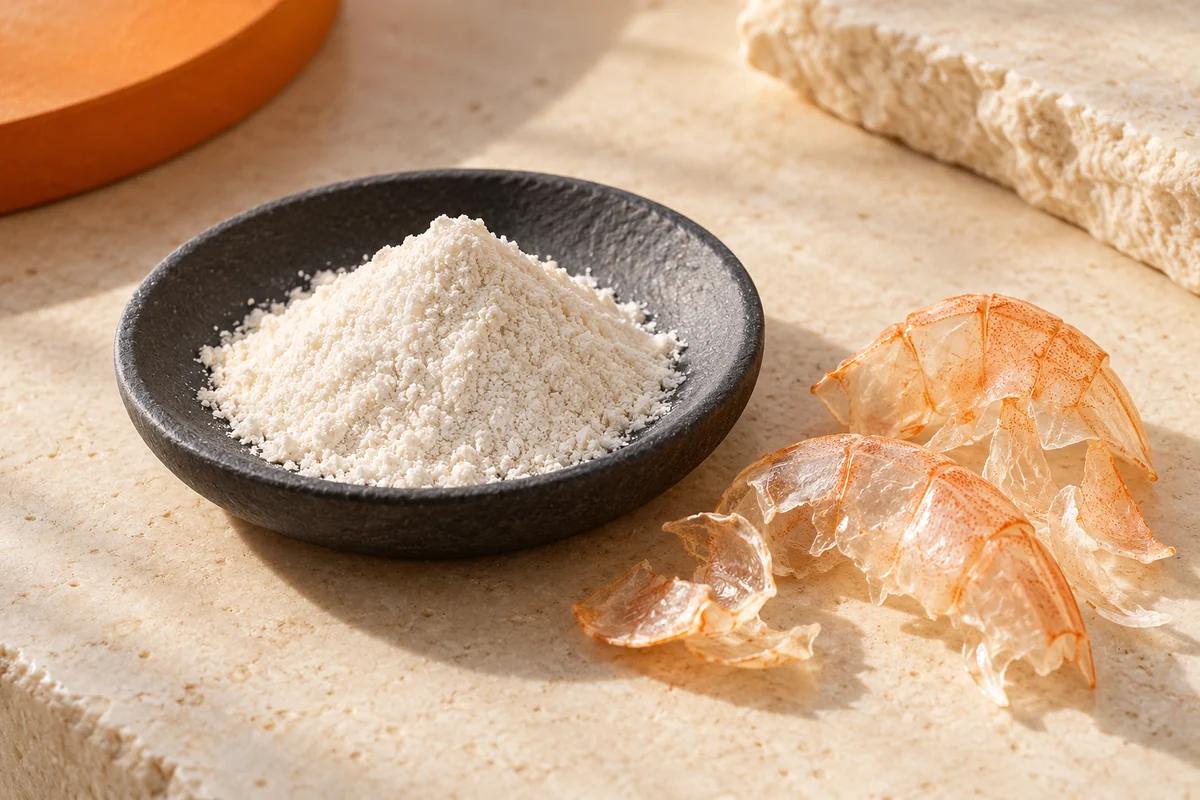
The ingredient name does not identify every product
Commercial chitosan is commonly made from crustacean shells. Fungal sources also exist: the raw material and processing matter, so a chitosan label alone cannot confirm shellfish origin or its absence. Evidence about material identity is separate from evidence that an oral supplement helps a person lose weight.See reference 1,See reference 6
Weight change and fat trapping are different outcomes
- Evidence
- 2004 randomised trial
- Population and studied exposure
- 250 adults with overweight or obesity; 3 g/day for 24 weeks, alongside lifestyle advice
- Finding and limit
- Mean weight change was −0.4 kg with chitosan versus +0.2 kg with placebo. The authors judged the difference clinically insignificantSee reference 2
- Evidence
- 2005 fat-excretion experiment
- Population and studied exposure
- 12 men and 12 women; 2.5 g/day during a short controlled-diet comparison
- Finding and limit
- Extra faecal fat averaged 1.8 g/day in men and was absent in women. The investigators judged fat trapping clinically insignificantSee reference 3
- Evidence
- 2008 Cochrane review
- Population and studied exposure
- 15 trials, 1,219 adults; included trials lasted at least four weeks
- Finding and limit
- The pooled weight difference was about 1.7 kg, but larger, longer or better-quality trials found much smaller effectsSee reference 4
A statistically detectable effect can still be unhelpful
In the 250-person trial, the weight difference reached statistical significance, but it was only about 0.6 kg over 24 weeks. That is a group average under a study protocol, not a promised result or proof that a different product will produce the same change.See reference 2
The Cochrane review is from 2008, not a new 2026 result. It found variable study quality and no trial measuring effects on illness or death. A small change on a scale cannot be presented as demonstrated long-term health improvement.See reference 4
A laboratory mechanism is not a licence to ignore food intake
The small fat-excretion experiment tested a direct consequence of the “fat trapping” claim in people. It did not show a substantial fat-blocking effect. Its short duration, small sample and sex-specific findings also make it unsuitable for predicting an individual’s long-term weight change.See reference 3
The studied amounts in the table describe research. They are not recommended doses, and the evidence does not establish that taking more creates a worthwhile benefit.See reference 2,See reference 3,See reference 4
Digestive effects, allergy questions and medicines
NIH ODS lists gas, bloating, mild nausea, constipation, indigestion and heartburn. It also notes a theoretical allergy concern for people with shellfish allergy. A processed material should not be assumed allergy-safe from its name; bring the exact source and ingredient list to an appropriate professional review.See reference 1
A published case report described a marked increase in warfarin effect after chitosan use, with recurrence when it was restarted. This is a potential interaction signal, not an estimate of how often it happens or proof of the proposed vitamin K mechanism. Anyone using warfarin should discuss chitosan with their treating team rather than trying a spacing rule from this guide.See reference 5
What a product-quality check can and cannot settle
Check the source, chitosan amount, other ingredients and the claim being made. A blend is not the same intervention as chitosan alone. Quality information can describe what a product contains; it cannot turn small or inconsistent clinical findings into proof of weight-loss effectiveness.See reference 1,See reference 2,See reference 4
Short adult trials also cannot establish safety for children, pregnancy, breastfeeding or years of continuous use. The useful question is whether the evidence justifies exposure for the intended purpose, rather than which research amount to copy.See reference 2,See reference 3,See reference 4
Common questions
Is chitosan a proven fat blocker?
Direct human fat-excretion testing found a clinically insignificant effect. That does not support treating it as a way to cancel dietary fat.See reference 3
How much weight will I lose?
The studies cannot predict that. Better-quality trials show small average effects, and the 24-week trial did not find clinically meaningful weight loss.See reference 2,See reference 4
Is every chitosan product made from shellfish?
No. Crustacean and fungal sources exist. The exact product source matters, and the name alone cannot settle an allergy question.See reference 1,See reference 6
Can I take it safely with warfarin by separating the timing?
This guide has not established a safe timing rule. A case report raises a possible interaction and warrants discussion with the treating team.See reference 5
Get the weekly longevity brief
The week's best longevity research in plain English. Free, every Tuesday.
References
- 1. Dietary supplements for weight loss: chitosan
NIH Office of Dietary SupplementsOfficial guidance
- 2. The effect of chitosan on body weight: randomised trial in 250 adults
Ni Mhurchu and colleagues; International Journal of ObesityRandomized trial
- 3. Chitosan supplementation and fat absorption in men and women
Gades and Stern; Journal of the American Dietetic AssociationNonrandomized human study
- 4. Chitosan for overweight or obesity
Jull and colleagues; CochraneSystematic review
- 5. Chitosan potentiation of warfarin effect
Huang, Sung and Chiang; Annals of PharmacotherapyObservational study
- 6. Review of chitosan basic substances: material identity and sources
European Food Safety AuthorityOfficial guidance
Editorial transparency
- Published by
- LongevityMate Editorial
- Review
- Editorial evidence review (AI-assisted)
- Published
- Updated
Medical disclaimer
General education only. AI-assisted editorial evidence review is not a qualified clinical assessment. This guide does not diagnose a condition, interpret a personal result, choose treatment or recommend a supplement dose. Discuss testing, symptoms, medicines and supplements with a qualified health professional.