
The rules to remember
- Define a specific symptom or indicationSee reference 1,See reference 2
- Identify the exact device and waveformSee reference 2,See reference 3
- Check regulatory status and evidenceSee reference 3,See reference 4
- Use prescribed settingsSee reference 4,See reference 5
- Start conservatively for consumer useSee reference 5,See reference 6
- Keep implants and contraindications in mindSee reference 6,See reference 7
- Track pain and functionSee reference 7,See reference 8
- Review after two to four weeksSee reference 8,See reference 9
- Stop rather than stacking unexplained programsSee reference 9,See reference 10
- Check the official guidance and evidence boundaries before escalating the protocol.See reference 10,See reference 1
First principles: what this can actually change
Time-varying electromagnetic fields can induce small electrical currents in tissue.See reference 1,See reference 2
Biological effects depend on waveform, intensity, frequency, exposure and target tissue.See reference 2,See reference 3
Evidence for one regulated bone-healing device cannot be generalized to every wellness mat or frequency program.See reference 3,See reference 4
A practical protocol
- Stage
- Define
- What to do
- Define a specific symptom or indication
- Why it matters
- Reduce avoidable errorSee reference 1,See reference 2
- Stage
- Screen
- What to do
- Identify the exact device and waveform
- Why it matters
- Reduce avoidable errorSee reference 2,See reference 3
- Stage
- Apply
- What to do
- Check regulatory status and evidence
- Why it matters
- Keep the dose repeatableSee reference 3,See reference 4
- Stage
- Apply
- What to do
- Use prescribed settings
- Why it matters
- Keep the dose repeatableSee reference 4,See reference 5
- Stage
- Review
- What to do
- Start conservatively for consumer use
- Why it matters
- Keep the dose repeatableSee reference 5,See reference 6
- Stage
- Review
- What to do
- Keep implants and contraindications in mind
- Why it matters
- Keep only what helpsSee reference 6,See reference 7
Timing and frequency
- Decision
- Starting frequency
- Practical answer
- Use only according to the studied, prescribed or clearly documented device protocol.See reference 2,See reference 3
- Decision
- First review
- Practical answer
- 2–4 weeks for symptom use; clinician-defined for bone healingSee reference 3,See reference 4
- Decision
- Best timing
- Practical answer
- Consistency with the specific protocol matters more than morning or evening timing.See reference 4,See reference 5
- Decision
- Stop rule
- Practical answer
- Stop for worsening pain, dizziness, palpitations, skin symptoms, device heating or any implant malfunction concern.See reference 5,See reference 6,See reference 7
What to measure
- Signal
- Target pain or function
- How to use it
- Record a baseline and compare at the review point
- Caveat
- Use the same method and conditionsSee reference 3,See reference 4
- Signal
- Clinician-defined healing outcome
- How to use it
- Track a weekly trend
- Caveat
- Expect normal variationSee reference 4,See reference 5
- Signal
- Adherence
- How to use it
- Record the exact dose and timing
- Caveat
- No exposure means no fair testSee reference 5,See reference 6
- Signal
- Interpretation
- How to use it
- Ask whether the result changes a real decision
- Caveat
- Device field strength and waveform are not interchangeable across products.See reference 6,See reference 7
What the evidence actually shows
Systematic reviews suggest possible pain benefit in knee osteoarthritis and mixed evidence in fracture healing, with substantial protocol heterogeneity.See reference 1,See reference 2,See reference 3
Whole-body recovery, sleep, energy and lifespan claims are not established, and animal or cellular findings cannot validate consumer programs.See reference 4,See reference 5,See reference 6
Most studies measure short-term symptoms, physiology or biomarkers rather than clinical events or lifespan. The evidence supports a bounded experiment, not a longevity guarantee.See reference 6,See reference 7,See reference 8
Evidence strength by claim
- Claim
- Target pain or function
- Evidence
- Moderate for narrow indications; limited for general wellness
- Verdict
- Systematic reviews suggest possible pain benefit in knee osteoarthritis and mixed evidence in fracture healing, with substantial protocol heterogeneity.See reference 1,See reference 2
- Claim
- Clinician-defined healing outcome
- Evidence
- Mixed or context-dependent
- Verdict
- Whole-body recovery, sleep, energy and lifespan claims are not established, and animal or cellular findings cannot validate consumer programs.See reference 3,See reference 4
- Claim
- Safety
- Evidence
- Depends on screening and dose
- Verdict
- Use medical guidance with pacemakers, insulin pumps, implanted stimulators, pregnancy, active bleeding, unexplained symptoms or active cancer near the treatment area. Do not delay diagnosis or rehabilitation.See reference 5,See reference 7
- Claim
- Longer life
- Evidence
- Not directly tested
- Verdict
- Do not turn an intermediate outcome into a lifespan promise.See reference 6,See reference 8
Limits and common overclaims
Devices and dosimetry vary widely.See reference 2,See reference 3
Small trials and risk of publication bias reduce confidence.See reference 3,See reference 4
Regulated authorization is indication-specific rather than broad endorsement.See reference 4,See reference 5
A four-step implementation plan
- Define the exact reason you are trying PEMF therapy.See reference 1
- Record a baseline for target pain or function.See reference 2
- Use the same protocol until the 2–4 weeks for symptom use; clinician-defined for bone healing review point.See reference 3
- Continue only if benefit outweighs cost, time, discomfort and risk.See reference 4
Troubleshooting
- Problem
- No benefit
- What to do
- Check adherence, dose and whether target pain or function is the right outcomeSee reference 2
- Problem
- Discomfort
- What to do
- Reduce the dose and stop for warning symptomsSee reference 3
- Problem
- Confusing data
- What to do
- Use the same measurement conditions and a longer trendSee reference 4
- Problem
- Too much burden
- What to do
- Choose the simpler intervention that solves the same problemSee reference 5
Safety and who should be cautious
Use medical guidance with pacemakers, insulin pumps, implanted stimulators, pregnancy, active bleeding, unexplained symptoms or active cancer near the treatment area. Do not delay diagnosis or rehabilitation. Stop for worsening pain, dizziness, palpitations, skin symptoms, device heating or any implant malfunction concern.See reference 5,See reference 6,See reference 7
Who is most likely to benefit
People with a clinician-defined indication and a device matching the evidence are more plausible candidates than healthy users seeking vague optimization.See reference 2,See reference 3
It is less useful when adopted only because a score, trend or influencer made PEMF therapy seem mandatory.See reference 4,See reference 5
People with symptoms, diagnosed disease, pregnancy, recent surgery or complex medicines should adapt the protocol with an appropriate clinician.See reference 6,See reference 7
Track five things
- Target pain or functionSee reference 1
- Clinician-defined healing outcomeSee reference 2
- The exact dose and timingSee reference 3
- Symptoms and adverse effectsSee reference 4
- Whether the result changes a real decisionSee reference 5
Frequently asked questions
What is Pulsed electromagnetic field therapy?
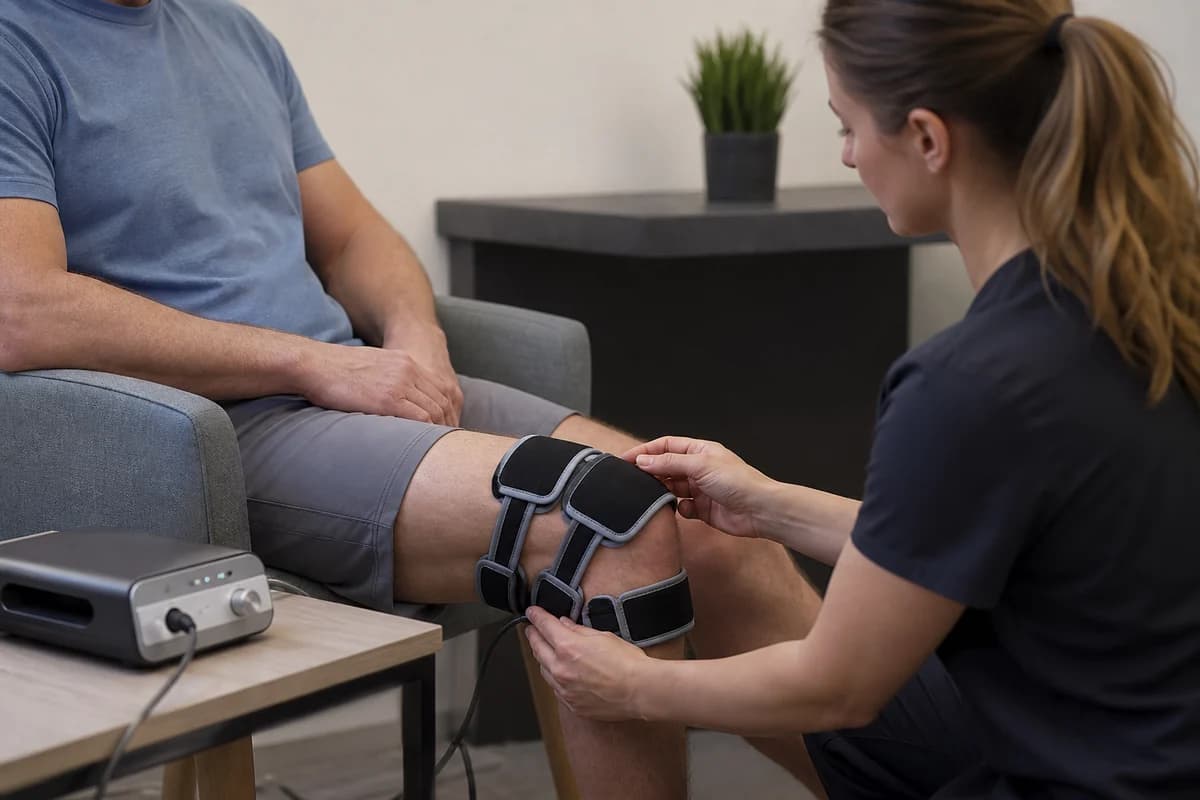
Pulsed electromagnetic field devices produce time-varying magnetic fields. Some prescribed bone-growth stimulators have narrow regulated indications, while evidence for consumer whole-body recovery, energy or longevity claims is weak and highly device-specific.See reference 1,See reference 2
How often should I use PEMF therapy?
Use only according to the studied, prescribed or clearly documented device protocol.See reference 2,See reference 3
How long before PEMF therapy works?
Use 2–4 weeks for symptom use; clinician-defined for bone healing as the first meaningful review point. Immediate sensations or device scores are not durable health outcomes.See reference 3,See reference 4
What should I track?
Track target pain or function, clinician-defined healing outcome, adherence and adverse effects under similar conditions.See reference 4,See reference 5
Is PEMF therapy safe?
Use medical guidance with pacemakers, insulin pumps, implanted stimulators, pregnancy, active bleeding, unexplained symptoms or active cancer near the treatment area. Do not delay diagnosis or rehabilitation.See reference 5,See reference 6
When should I stop?
Stop for worsening pain, dizziness, palpitations, skin symptoms, device heating or any implant malfunction concern.See reference 6,See reference 7
Does PEMF therapy increase lifespan?
No human trial proves that this tool extends an individual's lifespan. Its value depends on whether it improves a relevant symptom, behavior, function or established risk factor.See reference 7,See reference 8
Can it replace sleep, exercise, nutrition or medical care?
No. It is an optional layer around the fundamentals and should not delay evaluation of persistent or serious symptoms.See reference 8,See reference 9
Connect the protocol to your wider health picture
LongevityMate helps organize habits, symptoms, measurements and trends so one intervention stays in context instead of becoming the whole plan.
See how LongevityMate worksGet the weekly longevity brief
The week's best longevity research in plain English. Free, every Tuesday.
References
- 1. Effects of pulsed electromagnetic fields on bone fractures: a systematic review update.
European journal of physical and rehabilitation medicineSystematic review
- 2. Pulsed Electromagnetic Therapy: Literature Review and Current Update.
Brazilian dental journalEvidence review
- 3. Efficacy and safety of the pulsed electromagnetic field in osteoarthritis: a meta-analysis.
BMJ openMeta-analysis
- 4. Pulsed Electromagnetic Fields in Bone Healing: Molecular Pathways and Clinical Applications.
International journal of molecular sciencesEvidence review
- 5. Pulsed Electromagnetic Field Stimulation of Bone Healing and Joint Preservation: Cellular Mechanisms of Skeletal Response.
Journal of the American Academy of Orthopaedic Surgeons. Global research & reviewsEvidence review
- 6. Effectiveness of Pulsed Electromagnetic Fields on Bone Healing: A Systematic Review and Meta-Analysis of Randomized Controlled Trials.
BioelectromagneticsMeta-analysis
- 7. Non-invasive bone growth stimulator classification
U.S. Food and Drug AdministrationOfficial guidance
- 8. Osteoarthritis
National Institute of Arthritis and Musculoskeletal and Skin DiseasesOfficial guidance
- 9. Medical devices
U.S. Food and Drug AdministrationOfficial guidance
- 10. Chronic pain
Centers for Disease Control and PreventionOfficial guidance
Editorial transparency
- Published by
- LongevityMate Editorial Team
- Published
- Updated
Medical disclaimer
This guide provides general health education. It does not diagnose a condition, prescribe treatment, replace individualized medical care, or guarantee a health or longevity outcome.