
What the direct trials studied
- Study
- Joy et al., 2013
- Participants and comparison
- 24 resistance-trained young men; 48 g protein on training days; eight weeks
- Interpretation
- Both groups trained; no clear between-group difference. Large serving, short duration, no unsupplemented comparisonSee reference 1
- Study
- Moon et al., 2020
- Participants and comparison
- 24 resistance-trained men; 24 g rice or whey protein daily; eight weeks
- Interpretation
- No significant between-group differences in key strength or body-composition outcomes. Specific products and a selected populationSee reference 2
Training gains do not isolate the supplement’s effect
In the 2013 trial, participants in both groups followed a resistance-training program. Improvements over time therefore cannot be credited solely to rice protein. Without a group receiving the same training without added protein, the study cannot establish how much benefit the powder added.See reference 1
Increnovo funded the 2013 study, and two authors had that company affiliation. The paper declared no competing interests. These disclosures belong beside the small sample and short follow-up when judging how confidently the findings apply elsewhere.See reference 1
No detected difference is a limited conclusion
The 2020 randomized, double-blind study was retrospectively registered and funded by Axiom Foods. The paper says the sponsor had no role in data collection, analysis, interpretation or manuscript preparation. One author disclosed a patent interest.See reference 2
It tested group differences, not a defined equivalence margin; a small sample can miss differences. Results in trained men over eight weeks do not establish long-term outcomes in women, older adults or people with illness.See reference 2
Consider the diet and training as well as the ingredient
NIH’s exercise fact sheet explains that protein supplies amino acids needed to maintain and repair muscle, and that both protein quantity and quality matter. A supplement is one way to add protein; ordinary foods also supply it. The useful question is what the overall diet provides for the person’s circumstances.See reference 3
Training studies measure selected performance or body-composition outcomes. Those are different from preventing disease or extending life. This guide does not establish a longevity benefit or a personal protein target from a short rice-versus-whey comparison.See reference 3
Protein grams are different from powder grams
NIH’s consumer guidance describes the serving size, ingredient amounts and other ingredients listed on a U.S. supplement label. Check the stated protein grams for the stated powder serving. Two scoops with similar weight can supply different protein amounts or contain different sweeteners, flavors and other ingredients.See reference 4
For an illustrative label, 20 g protein in 25 g powder is 80% protein by mass. A 20 g powder portion would therefore contain 16 g protein if that label proportion applies. This arithmetic describes that hypothetical label; it is not a recommended serving or a verified product analysis.
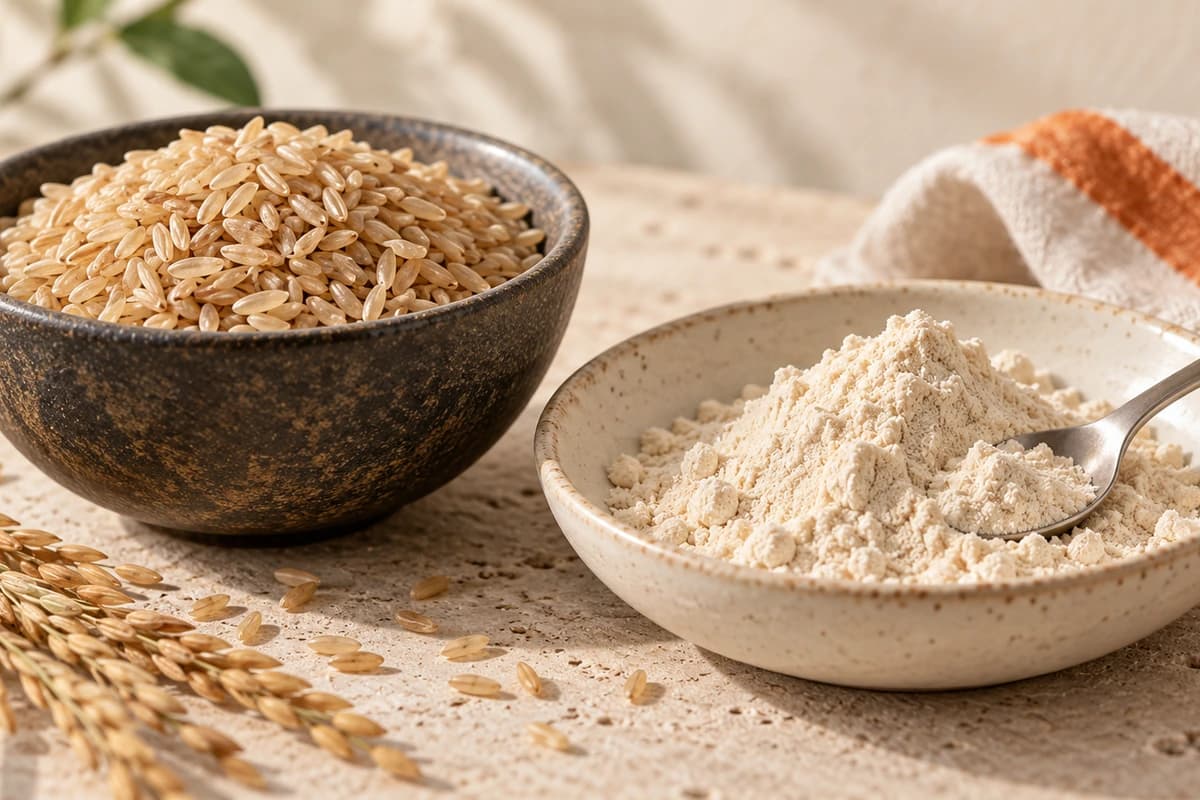
The artwork shows rice grains beside an unbranded powder. It identifies the source ingredient rather than demonstrating protein purity, testing a commercial product or showing how much someone should take.
A plant ingredient does not guarantee a suitable product
NCCIH notes that shop products can differ from study preparations, supplements can interact with medicines, and evidence is often limited in children, pregnancy and breastfeeding. Check the whole ingredient list with the care team when allergy, medicines or a medical condition is relevant.See reference 5
The label alone cannot establish product quality. NIH describes manufacturing controls intended to protect identity, purity and composition. A training trial on one powder does not verify the contents or contamination testing of a different product.See reference 4
Keep the useful details
- Read the study population and preparation beside the result.See reference 1
- Compare stated protein grams for the same powder weight.See reference 4
- Keep total dietary protein and training in view.See reference 3
Common questions
Did these trials prove rice protein is equivalent to whey?
No. No clear group difference under the tested conditions does not establish universal equivalence.See reference 2
Is 24 g powder the same as 24 g protein?
No. Use the protein amount and serving weight on the label. Powder can contain other ingredients.See reference 4
Do the trial amounts tell me my dose?
No. Study amounts describe the research protocol. Personal needs depend on diet, circumstances and professional advice.See reference 3
Get the weekly longevity brief
The week's best longevity research in plain English. Free, every Tuesday.
References
- 1. Effects of eight weeks of whey or rice protein supplementation
Joy et al., 2013Randomized trial
- 2. Effects of daily 24-gram doses of rice or whey protein
Moon et al., 2020Randomized trial
- 3. Dietary supplements for exercise and athletic performance: protein
NIH Office of Dietary SupplementsOfficial guidance
- 4. Dietary supplements: consumer background information
NIH Office of Dietary SupplementsOfficial guidance
- 5. Using dietary supplements wisely
NCCIHOfficial guidance
Editorial transparency
- Published by
- LongevityMate Editorial
- Published
- Updated
Medical disclaimer
General education only. This guide does not diagnose a condition, interpret your personal result, choose a treatment or recommend a supplement dose. Discuss testing, symptoms, medicines and supplements with a qualified health professional.